UK Casino Payment Methods in 2026: Picking the One That Fits How You Play
 Available in GB
The cashier screen is where most players stop reading the small print, and it is exactly where the small print bites hardest. A payment method decides how fast your winnings reach you, whether your welcome offer survives the first deposit, and how much of your banking life the operator ever gets to see. Pick the wrong one and you can disqualify a bonus before placing a single bet, or wait five working days for money that a different route would have delivered in an hour.
This guide breaks down every payment method accepted at UKGC-licensed casinos in 2026. Not a ranked list, a decision framework. Debit cards versus e-wallets versus open banking versus mobile billing. What each one does to withdrawal speed, what it costs you in bonus exclusions, and which restrictions the UK Gambling Commission baked into the rules four years ago that still shape the cashier today. You walk away knowing which method matches your priorities and what the operators would rather not spell out.
Table of Contents
- How UK Casino Payment Methods Work in 2026
- UK Gambling Regulations and Payment Methods
- Debit Cards: The Universal Baseline
- E-Wallets: Speed vs Bonus Eligibility
- Open Banking and Instant Transfers
- Mobile Wallets and Phone Bill Payments
- Prepaid Vouchers and Alternative Options
- Speed Comparison: Fastest to Slowest
- How to Choose the Right Payment Method
- Responsible Gambling and Payment Controls
How UK Casino Payment Methods Work in 2026
Fifteen payment methods work at UK-licensed casinos as of 2026, but they sort into five categories with fundamentally different trade-offs. Debit cards are the universal baseline: accepted everywhere, bonus-eligible, familiar. E-wallets deliver the fastest withdrawals but frequently void your welcome offer before you start. Open banking connects your bank account directly to the casino without storing a card number, settling in hours. Mobile wallets like Apple Pay and Google Pay add biometric convenience on your phone but often exclude bonuses. Prepaid vouchers keep your bank details entirely private but cannot receive withdrawals at most UK operators.
The catch that competitors bury in the fine print: around eighty percent of UK casinos exclude at least some e-wallet deposits from bonus eligibility. The reason is not caprice. E-wallets enable rapid multi-account bonus abuse across operators, and anti-money laundering protocols treat them as higher risk than direct bank connections. That exclusion means a Skrill deposit can cost you a two-hundred-pound welcome package, turning a fast method into an expensive one.
Speed matters only if you understand where the delay actually lives. Every modern payment method deposits instantly. The variance is in withdrawals, and even there the bottleneck is not the payment network. Most UK operators hold withdrawals in a pending queue for twenty-four to forty-eight hours while fraud checks and account verification run. Only after the casino approves the payout does your chosen payment method determine settlement time: zero to four hours for e-wallets and open banking, one to three working days for debit cards, two to five for traditional bank transfers. Weekend and bank holiday processing gaps add another day or two to card and bank routes.
Security and privacy layer differently depending on method. Debit cards require you to share the card number with the casino, though 3D Secure authentication keeps the transaction itself secure. E-wallets act as intermediaries, so the operator never sees your bank details. Open banking uses direct API connections under PSD2 regulations, logging into your bank without storing credentials and initiating payment in one session. Mobile wallets like Apple Pay and Google Pay tokenize your card number, transmitting a one-time code instead of the real digits. Paysafecard offers the most privacy: buy a voucher code at a corner shop, use it at the casino, no name or bank account involved until you withdraw.
Why Payment Method Choice Matters
The UK Gambling Commission banned credit cards for all gambling on 14 April 2020. The stated aim was preventing players from gambling with borrowed money, a harm-reduction measure that removed one entire payment category overnight. That ban is still in force in 2026, and it is the clearest example of how UK regulation shapes what you see in the cashier. Every payment method accepted at a UKGC-licensed casino must be a debit card, an e-wallet funded from your own money, a direct bank transfer, a prepaid voucher, or a mobile payment charged to your phone bill. Credit routing through any of these channels remains prohibited.
Bonus eligibility rules are the second layer most players miss. Operators exclude certain payment methods from promotions not because the method itself is flawed but because historical abuse patterns forced their hand. A player opening five Skrill accounts under different names and claiming five welcome bonuses at one casino is trivially easy to execute and hard to detect in real time. Debit card deposits, by contrast, tie directly to a verified bank account in the customer’s name, making multi-accounting far more difficult. That is why cards almost always qualify for bonuses while e-wallets often do not.
The third variable is control. Deposit-only methods like Boku and Paysafecard impose natural spending limits: you can only deposit what you loaded onto the voucher or what your mobile carrier allows per day. Revolut and other fintech banks offer built-in gambling blocks, letting you disable casino transactions entirely in the app. Traditional debit cards have no such native controls, though your bank may offer spending category blocks on request. If you are concerned about managing gambling spend, choosing a method with friction baked in can be more effective than relying on willpower alone.
The Five Main Categories
Debit cards sit at the foundation. Visa and Mastercard debit are accepted at every UKGC-licensed operator, with minimum deposits typically one to ten pounds and instant settlement. Withdrawals take one to three working days after the casino approves them. Cards almost always qualify for welcome bonuses. The trade-off is speed: you wait longer for payouts than e-wallet users, and you share your card number with the casino database.
E-wallets prioritize speed and privacy. PayPal, Skrill, Neteller, MuchBetter, MiFinity, ecoPayz and AstroPay all deposit instantly and withdraw in zero to twenty-four hours once the casino releases funds. Your card and bank details stay with the e-wallet provider, never reaching the operator. The cost is frequent bonus exclusion and, for some wallets, monthly inactivity fees if you stop using the account. PayPal is the most trusted brand in the UK but accepted at only around forty UKGC casinos as of 2026, with availability declining.
Open banking and instant transfers connect your bank account directly to the casino through regulated APIs. Trustly is the dominant provider in the UK market. You log into your bank during the deposit, the payment initiates, and no separate account or card storage is required. Deposits are instant, withdrawals typically land the same day or within twenty-four hours. No fees, high limits, and generally bonus-eligible. The downside is availability: fewer UK operators support Trustly than support cards or mainstream e-wallets, though adoption is growing.
Mobile wallets and phone bill payments split into two types. Apple Pay and Google Pay tokenize your debit card for biometric authentication on your phone, depositing instantly with Face ID or a fingerprint. Withdrawals go back to the underlying card in one to three days. Both are often excluded from bonuses. Boku and pay-by-mobile services charge deposits directly to your phone bill or deduct from pay-as-you-go credit, with a thirty-pound-per-transaction cap and instant confirmation via SMS. These are deposit-only: you cannot withdraw to your phone bill, so winnings must exit via an alternative method.
Prepaid vouchers and fintech alternatives round out the landscape. Paysafecard is a sixteen-digit code you buy at retail and use at the casino cashier. Forty-pound transaction limit without a registered account, one thousand pounds with verification. Deposit-only at most UK casinos due to anti-money laundering regulations: winnings are paid to a debit card, e-wallet, or bank account. Revolut functions as a standard debit card at UK operators but offers multi-currency accounts and an optional gambling block feature in the app, appealing to players who want built-in spending controls.
Understanding Deposits vs Withdrawals
Deposits across all modern methods are instant. Whether you use a Visa debit card, PayPal, Trustly, Apple Pay or Boku, the funds land in your casino balance within seconds to minutes. The bottleneck that frustrates most players is not the deposit but the withdrawal, and the delay has two components: the casino pending period and the payment method settlement time.
Every UK-licensed operator holds your first withdrawal in a pending queue for identity verification. Passport or driving license, proof of address, proof of payment method: these checks are mandatory under Know Your Customer regulations and typically take twenty-four to forty-eight hours. Some operators clear repeat withdrawals faster if no red flags appear, but affordability checks and source-of-funds requests can add days to high-value or frequent payouts. Stricter UKGC enforcement in 2026 means more friction here, not less.
After the casino approves the withdrawal, payment method settlement time varies widely. E-wallets like PayPal, Skrill and Neteller settle in zero to twenty-four hours. Open banking via Trustly typically clears the same day. Debit cards take one to three working days. Traditional bank transfers run two to five working days. Weekend and bank holiday processing adds another day or two to card and bank routes because settlement depends on banking-hours infrastructure. An e-wallet withdrawal requested Friday afternoon might land Saturday morning; a debit card withdrawal requested the same time will not start processing until Monday and might not arrive until Wednesday.
Can I use a credit card at UK online casinos in 2026?
No. Credit cards have been banned for all gambling at UKGC-licensed operators since 14 April 2020 under Licence Condition and Code of Practice 5.1. The ban covers online and land-based gambling, and it extends to credit card transactions routed through e-wallets or mobile wallets. Only debit cards, e-wallets funded from your own money, bank transfers, prepaid vouchers and mobile billing are permitted. The rationale is harm reduction: preventing players from gambling with borrowed money.

Master Comparison Table
| Payment Method | Deposit Speed | Withdrawal Speed | Min Deposit | Bonus Eligible? | Withdrawal Capable? | Key Limitation |
|---|---|---|---|---|---|---|
| Visa Debit | Instant | 1–3 days | £1–£10 | Yes | Yes | Slower withdrawals than e-wallets |
| Mastercard Debit | Instant | 1–3 days | £1–£10 | Yes | Yes | Slower withdrawals than e-wallets |
| PayPal | Instant | 0–24 hours | £5–£10 | Sometimes | Yes | Only ~40 UK casinos accept it |
| Skrill | Instant | 0–24 hours | £10–£20 | Rarely | Yes | Frequently bonus-excluded; £5.50 inactivity fee |
| Neteller | Instant | 0–24 hours | £10–£20 | Rarely | Yes | Frequently bonus-excluded |
| MuchBetter | Instant | 0–24 hours | £10 | Sometimes | Yes | Declining UK availability |
| MiFinity | Instant | 0–24 hours | £10 | Sometimes | Yes | Declining UK availability |
| ecoPayz (Payz) | Instant | 0–24 hours | £10 | Sometimes | Yes | Complex tiered fee structure |
| AstroPay | Instant | 0–24 hours | £10 | Sometimes | Yes (e-wallet mode) | Hybrid voucher/wallet, niche UK presence |
| Trustly | Instant | 0–24 hours | £10–£20 | Yes | Yes | Fewer operators support it |
| Bank Transfer | Instant (Faster Payments) | 2–5 days | £10 | Yes | Yes | Slowest withdrawal method |
| Apple Pay | Instant | 1–3 days (to card) | £10 | Rarely | Yes | iOS-only; frequently bonus-excluded |
| Google Pay | Instant | 1–3 days (to card) | £10 | Rarely | Yes | Android-only; frequently bonus-excluded |
| Boku / Pay by Mobile | Instant | N/A | £10 | Yes | No | £30 transaction cap; deposit-only |
| Paysafecard | Instant | N/A (most operators) | £10 | Yes | No (most operators) | Deposit-only; £40 limit without account |
UK Gambling Regulations and Payment Methods
The UK Gambling Commission does not dictate which payment methods casinos must accept, but it shapes the landscape through licensing conditions that operators must follow. The credit card ban is the most visible example. LCCP 5.1 prohibits all UKGC-licensed operators from accepting credit card deposits, a rule introduced to prevent gambling with borrowed money and reduce gambling-related harm. That ban remains in full force in 2026 with no planned rollback.
Beyond the credit card ban, the Commission requires operators to implement robust Know Your Customer and anti-money laundering checks. These KYC requirements explain why your first withdrawal at any UK casino triggers an identity verification process: passport, driving license, proof of address, and proof of payment method. The operator must verify you are who you claim to be and that the funds you deposited came from a legitimate source. Payment methods that make multi-accounting or anonymous funding easier face stricter scrutiny, which is why e-wallets are more frequently excluded from bonuses than debit cards tied to verified bank accounts.

The Credit Card Ban (April 2020)
Announced in January 2020 and effective from 14 April 2020, the credit card ban closed a loophole the Commission identified in its 2018-2019 review of remote gambling regulations. Research showed that twenty-four percent of online gamblers who used credit cards for deposits were problem gamblers or at risk, compared to ten percent of debit card users. The link between credit card gambling and financial harm was statistically clear, and the Commission acted to remove the option entirely.
The ban applies to all forms of gambling licensed by the UKGC: online casinos, sportsbooks, bingo, poker, and land-based betting shops. It covers credit card transactions initiated directly at the operator and those routed through intermediaries like e-wallets or payment processors. If the ultimate source of funds is a credit card, the transaction is prohibited. Operators who breach the ban face license review, fines, or suspension.
Four years on, the ban has not been reversed. Industry groups initially warned it would push players toward unlicensed offshore operators or informal credit arrangements, but compliance has been near-universal among UKGC-licensed brands. Debit card use rose to fill the gap, and payment method diversity expanded as operators added more e-wallet and open banking options to retain customer convenience without violating the rule.
What the UKGC Controls
The Gambling Commission regulates who can offer gambling in Great Britain, not which payment technologies they deploy. Operators choose their cashier options based on commercial partnerships, customer demand, and fraud-prevention priorities. The UKGC intervenes only when a payment method or practice creates harm, undermines licensing objectives, or breaches existing conditions.
LCCP mandates that operators identify customers, verify their age and identity before allowing withdrawals, and monitor for suspicious transaction patterns. These requirements ripple into payment method selection. A method that allows anonymous deposits or trivial multi-accounting will face tighter controls or exclusion from promotions. A method with strong identity linkage and fraud detection, like a debit card tied to a UK bank account in the customer’s own name, faces fewer restrictions.
The Commission also enforces segregation of customer funds from operating capital, meaning the money in your casino balance must be held separately from the operator’s business funds and protected if the operator collapses. This requirement does not vary by payment method, but it reinforces why withdrawal delays exist: before releasing funds, the operator must confirm the transaction is legitimate, the identity is verified, and no fraud flags have triggered.
Know Your Customer (KYC) Requirements
Every UK-licensed casino must verify your identity before processing your first withdrawal. The standard evidence package includes a government-issued photo ID (passport or driving license), proof of address dated within the last three months (utility bill, bank statement, or council tax letter), and proof of payment method (screenshot of your bank app showing your name and card number, or equivalent for e-wallets). Some operators request additional documents if your deposit and withdrawal methods differ, or if your transaction volume or betting patterns trigger enhanced due diligence.
KYC checks typically take twenty-four to forty-eight hours, though some operators clear them faster if you submit crisp, legible documents that match their database records exactly. Delays occur when documents are rejected for poor image quality, mismatched names, or expired validity. Repeat withdrawals at the same casino after initial verification usually process faster, but high-value payouts or sudden increases in deposit frequency can trigger re-verification or source-of-funds requests.
Source-of-funds checks escalated in frequency after the Commission tightened affordability guidance in 2026. If you deposit several thousand pounds in a short period or request a large withdrawal, the operator may ask for bank statements, payslips, tax returns, or proof of inheritance or property sale. These checks aim to confirm you can afford the losses without financial harm, and they apply regardless of payment method. The difference is that some methods make the checks easier: a debit card deposit already ties to your verified bank account, while an e-wallet deposit funded from a source the casino cannot see will invite more questions.
Open Banking and PSD2
Open banking in the UK operates under the second Payment Services Directive (PSD2), a European regulation retained in British law after Brexit. PSD2 requires banks to provide secure API access to licensed third-party payment providers, enabling direct account-to-account transfers without storing login credentials or payment details. Trustly, the dominant open banking provider at UK casinos, uses this infrastructure to initiate payments on your behalf after you authenticate through your own bank’s login screen.
The process works like this: you select Trustly at the casino cashier, choose your bank from a list, and get redirected to your bank’s website or app. You log in with your usual credentials (which Trustly never sees), review the payment details, and authorize the transfer. The bank sends confirmation to Trustly, Trustly notifies the casino, and your deposit appears instantly. No Trustly account is created, no card number is stored, and the payment route is direct bank-to-casino with bank-level encryption throughout.
Withdrawals via open banking reverse the flow. The casino initiates a payout to your bank account, Trustly processes it through the same API infrastructure, and funds typically arrive the same day or within twenty-four hours. This speed advantage over traditional bank transfers (which run through slower BACS rails) makes open banking attractive for players who want fast payouts without opening a separate e-wallet account.
Do I need to verify my identity to withdraw from a UK casino?
Yes. All UKGC-licensed operators must verify your identity before processing your first withdrawal. Expect to provide a photo ID (passport or driving license), proof of address dated within three months, and proof of payment method. The process typically takes twenty-four to forty-eight hours. Subsequent withdrawals are usually faster, though high-value payouts or sudden changes in deposit patterns can trigger re-verification or source-of-funds requests under affordability rules tightened in 2026.
Debit Cards: The Universal Baseline
Debit cards are accepted at every UKGC-licensed casino. Visa and Mastercard dominate, with Maestro discontinued in the UK market. Minimum deposits start at one pound at some operators, typically five to ten pounds at most, with transaction maximums around three thousand pounds. Deposits are instant, authenticated via 3D Secure (a one-time code sent by SMS or generated in your banking app). Withdrawals take one to three working days after the casino approves the payout, settling through the standard Visa or Mastercard network rails.
The baseline advantage of debit cards is universal compatibility and bonus eligibility. Almost every welcome offer, reload bonus, and promotional campaign at UK casinos accepts debit card deposits without restriction. The reason is straightforward: a debit card ties to a verified bank account in your name, making multi-account bonus abuse far harder to execute than with e-wallets. Operators trust the identity linkage, so they extend bonus eligibility in return.
Visa Debit
Visa operates the largest card payment network globally, and Visa debit is the most widely accepted casino payment method in the UK. Every UKGC-licensed operator lists it in the cashier. Security is industry-standard: 3D Secure authentication for deposits, end-to-end encryption for card data transmission, and Visa’s own fraud monitoring layer that flags unusual transaction patterns in real time.
Minimum deposits vary by operator but typically sit at one to ten pounds. Maximum single transactions often cap at three thousand pounds, though high-roller rooms and VIP cashiers may raise that limit on request. Deposits settle instantly once you confirm the 3D Secure code. Withdrawals take one to three working days after the casino releases funds, with weekends and bank holidays adding a day or two if your withdrawal request lands Friday afternoon.
The practical catch with Visa debit is not cost or compatibility but speed. You will wait longer for payouts than an e-wallet user, and you share your card number with the casino database. Tokenization is not standard for web-based debit card deposits (unlike Apple Pay or Google Pay, where your real card number never transmits). That said, UKGC operators must meet PCI DSS security standards, so card data is encrypted and segregated. If speed is secondary and bonus eligibility is a priority, Visa debit is the safest default.
Mastercard Debit
Mastercard debit mirrors Visa in acceptance, security, and processing times. Every UK casino that takes cards accepts both networks. The authentication protocol is Mastercard Identity Check, functionally identical to Visa’s 3D Secure: a one-time code via SMS or app, entered during deposit to confirm the transaction is authorized by the cardholder.
Limits and fees are comparable. One to ten pound minimums, three-thousand-pound typical maximums, instant deposits, one-to-three-day withdrawals after casino approval. Some players report marginally faster settlement with Mastercard over Visa on specific banking apps, but the variance is negligible and depends more on the issuing bank’s processing schedule than the card network itself.
Mastercard debit qualifies for bonuses at the same rate as Visa: nearly universal eligibility. The choice between Visa and Mastercard is often arbitrary, driven by which network your bank issued rather than any functional difference in casino cashiers. Both are baseline-reliable, slower on withdrawals than e-wallets or open banking, and straightforward on costs (no fees from the payment network, though your bank may charge for international transactions if you deposit at an operator licensed offshore).
How Debit Card Payments Work
Debit card deposits at UK casinos initiate through a payment gateway integrated into the cashier. You enter your card number, expiry, and CVV. The gateway routes the transaction to your bank via the Visa or Mastercard network. Your bank checks the card is valid, the account holds sufficient funds, and no fraud flags are active, then prompts you for 3D Secure authentication. You enter the one-time code, your bank approves the transaction, and the casino receives confirmation within seconds. Funds land in your casino balance instantly.
Withdrawals reverse the process but take longer. You request a payout, the casino verifies your identity (on first withdrawal) and checks for fraud or suspicious patterns, then approves the release. The operator instructs the payment gateway to credit your card, the gateway routes the instruction through the card network to your bank, and your bank settles the funds into your account. That multi-step approval and settlement cycle takes one to three working days, with weekends adding delay if your bank does not process card credits outside business hours.
3D Secure authentication is mandatory under PSD2 Strong Customer Authentication rules retained in UK law. It adds friction to deposits (you cannot complete a transaction without your phone or card reader), but it also blocks most unauthorized use. If someone steals your card number online, they cannot deposit at a casino without also having access to your phone or banking app to retrieve the authentication code.
Pros and Cons
Debit cards deliver universal acceptance and near-certain bonus eligibility at the cost of slower withdrawals and less privacy. You wait one to three days for payouts where an e-wallet user waits hours. You share your card number with the casino database, though encryption and PCI DSS compliance mitigate data breach risk. You gain familiarity: most UK adults hold a Visa or Mastercard debit card, so no separate account setup is required.
The lack of fees is another advantage. Operators do not charge for debit card deposits or withdrawals. Your bank may impose fees if you deposit at an offshore-licensed casino processing in a foreign currency, but domestic UKGC operators settle in GBP with no currency conversion markup. E-wallets, by contrast, often charge inactivity fees or currency conversion spreads if you hold balances in multiple currencies.
The speed disadvantage is the trade-off. If you prioritize getting paid fast, debit cards lose to e-wallets and open banking by a clear margin. If you prioritize not voiding your welcome bonus or avoiding a separate payment account with its own login and verification, debit cards win. For most UK players, a debit card is the fallback when a preferred faster method either excludes the bonus or is not supported by the operator.
Are there fees for depositing or withdrawing at UK casinos?
Most UKGC-licensed casinos do not charge fees for debit card deposits or withdrawals. The payment method itself (Visa, Mastercard) also charges no fee to the player. Your bank may impose charges for gambling transactions or foreign currency conversions if the casino processes in a currency other than GBP, but domestic operators typically process in pounds with no markup. Check your bank’s fee schedule if unsure; charges vary by issuer, not by casino.
E-Wallets: Speed vs Bonus Eligibility
E-wallets prioritize withdrawal speed and privacy over bonus eligibility. Funds held in PayPal, Skrill, Neteller, MuchBetter, MiFinity, ecoPayz or AstroPay sit separate from your bank account, so depositing at a casino does not require sharing card or bank details with the operator. Withdrawals land in your e-wallet balance within zero to twenty-four hours after the casino releases them, then you withdraw from the wallet to your bank in another one to three days if needed. That two-step process still beats debit card direct settlement by a day or more in most cases.
The cost is frequent bonus exclusion. Around eighty percent of UK casino operators exclude at least one e-wallet from welcome bonus eligibility, most commonly Skrill and Neteller. The rationale ties to anti-money laundering protocols and historical bonus abuse. A player opening multiple e-wallet accounts under different email addresses and claiming multiple welcome bonuses at one casino is trivial to execute and hard for the operator to detect in real time. Debit card deposits, by contrast, tie to a verified bank account in the customer’s name, making such abuse far more difficult. Operators respond by excluding e-wallets from promotions or requiring an alternative deposit method to qualify for the bonus.
Not all e-wallets face equal exclusion rates. PayPal is excluded less often than Skrill or Neteller, likely because PayPal’s brand reputation and tighter account verification make abuse harder. MuchBetter and MiFinity are sometimes excluded and sometimes not, depending on the operator. The only reliable way to know is to check the bonus terms before depositing. A line reading "deposits via Skrill, Neteller, and PayPal do not qualify for this promotion" is common, and it applies even if the cashier accepts those wallets for normal deposits.
Why are e-wallets like Skrill and Neteller often excluded from casino bonuses?
Operators exclude e-wallets from bonuses to prevent multi-account bonus abuse and to meet anti-money laundering requirements. A player can open several Skrill or Neteller accounts under different names and claim multiple welcome bonuses at one casino with minimal detection risk. Debit card deposits tie directly to a verified bank account, making such abuse far harder. The exclusion rate is around eighty percent of UK casinos for at least one e-wallet, most commonly Skrill and Neteller. PayPal faces exclusion less often due to stricter account verification.
PayPal
PayPal is the most trusted e-wallet brand in the UK, with over four hundred million accounts globally and a presence in the UK since 1999. Around forty UKGC-licensed casinos accepted PayPal as of 2026, though availability has declined slightly in recent testing (one of four casinos tested in September 2026 supported it, down from broader historical coverage). PayPal is FCA-authorized as a payment institution, operating under UK financial regulation.
Deposits are instant, with minimums typically five to ten pounds. You log into your PayPal account at the casino cashier, authorize the payment, and funds land in your casino balance within seconds. Withdrawals to verified PayPal accounts clear within twenty-four hours in most cases, making PayPal one of the faster payout routes among e-wallets. Withdrawals must go to the same PayPal account you used for deposit, and the account must be in your own name to pass UKGC identity verification.
PayPal is sometimes excluded from bonuses but less frequently than Skrill or Neteller. Roughly half of UK operators that accept PayPal extend welcome bonus eligibility to it, while the other half exclude it alongside other e-wallets. That middling exclusion rate reflects PayPal’s stronger account verification (linked bank accounts and cards are checked during signup) and brand trust, which reduce abuse risk compared to Skrill or Neteller where verification is lighter.
The catch with PayPal is availability. Only around forty UK-licensed casinos support it, and testing in 2026 showed declining presence. If your preferred operator does not list PayPal in the cashier, your only alternatives are other e-wallets with worse bonus eligibility, or debit cards with slower withdrawals. PayPal’s withdrawal speed and privacy (the operator never sees your card or bank details) make it attractive when available, but its limited UK coverage means it cannot serve as a universal solution.
Is PayPal accepted at all UKGC-licensed casinos?
No. Around forty UK-licensed casinos accept PayPal as of 2026, and recent testing shows availability declining (one of four tested casinos in September 2026 supported it). PayPal is FCA-authorized and widely trusted, but operators choose cashier options based on commercial partnerships and cost structures. If your preferred casino does not list PayPal, alternatives include Trustly for similar speed or debit cards for better bonus eligibility. Check the cashier before assuming PayPal will be available.
Skrill
Skrill is an FCA-regulated e-money institution owned by Paysafe Financial Services Limited, operating since 2001 (originally branded Moneybookers). Historically accepted at over one hundred UK-licensed operators, Skrill is one of the most widely available e-wallets in the casino market. Deposits are instant, minimums typically ten to twenty pounds. Withdrawals clear in zero to twenty-four hours to your Skrill balance, then one to three days to withdraw from Skrill to your bank if needed.
The bonus exclusion rate for Skrill is among the highest of any payment method. Most UK operators that accept Skrill explicitly exclude it from welcome bonuses and reload promotions. The reason is not Skrill’s security or reliability but its historical association with multi-account bonus abuse. A player can open a Skrill account with minimal verification, fund it from an anonymous source, deposit at multiple casinos under different identities, and claim bonuses repeatedly. Operators close that loophole by excluding Skrill from eligibility entirely.
Skrill charges a five-pound-fifty monthly inactivity fee if you do not use the account for twelve consecutive months. The fee is deducted from your Skrill balance, and it resets each time you make a deposit, withdrawal, or transaction. If you plan to use Skrill infrequently, that fee can eat into small balances. PayPal does not charge an inactivity fee, which is one reason some players prefer it despite narrower casino acceptance.
Multi-currency support is a Skrill advantage if you play at operators licensed in multiple jurisdictions. You can hold GBP, EUR, and USD in separate Skrill balances and deposit in the appropriate currency without conversion fees. Debit card deposits at a foreign-currency casino trigger currency conversion at your bank’s exchange rate, often with a markup. Skrill’s own conversion rate is competitive but not free: expect a small spread if you convert currencies within the wallet.
Neteller
Neteller is Skrill’s sister brand, both owned by Paysafe and both FCA-regulated e-money institutions. Functionally, Neteller and Skrill are nearly identical. Instant deposits, zero-to-twenty-four-hour withdrawals, ten-to-twenty-pound minimums, multi-currency support, similar fee structures including inactivity charges. Acceptance at UK casinos is comparable: both are widely available, both are frequently excluded from bonuses, both face the same anti-money laundering scrutiny.
The choice between Skrill and Neteller is often arbitrary. Some operators accept one but not the other; some accept both. If bonus eligibility is identical (usually both excluded), the decision comes down to which wallet you already have or which offers a slightly better currency conversion rate for your specific deposit. In practice, most players who hold a Neteller account also hold a Skrill account, using whichever one the casino supports and neither expecting bonus eligibility.
Neteller offers a Net+ prepaid Mastercard you can load from your Neteller balance and use for ATM withdrawals or retail purchases. Skrill offers a similar prepaid card. These cards let you access e-wallet funds without transferring to your bank first, useful if you want to spend winnings directly. The cards themselves are debit cards, not e-wallet transactions, so using a Net+ card to deposit at a casino may or may not count as a Neteller deposit for bonus exclusion purposes. Check the operator’s terms if you intend to use the prepaid card route for deposits.
MuchBetter
MuchBetter is a mobile-first e-wallet launched in 2017 by MIR Limited, an FCA-authorized e-money institution. The wallet operates exclusively through a mobile app with biometric login (Face ID or fingerprint), positioning itself as a gaming-focused alternative to Skrill and PayPal. Deposits are instant, confirmed via a one-tap dynamic security code generated in the app. Minimum deposits are typically ten pounds.
UK casino acceptance of MuchBetter has declined noticeably as of 2026. Testing in September 2026 found zero of four UK-licensed casinos supported it, down from broader coverage in prior years. The reason for the decline is unclear but may relate to commercial partnership changes or operator cost structures favoring more established wallets. If you already hold a MuchBetter account, check the cashier before assuming it will be available.
Bonus eligibility for MuchBetter varies by operator. Some casinos treat it identically to Skrill and Neteller (excluded from bonuses), others allow it, and a few exclude it from specific promotions but not others. The inconsistency reflects MuchBetter’s smaller market share: operators have not settled on a uniform policy the way they have for Skrill. If the bonus terms do not explicitly mention MuchBetter, contact support before depositing to confirm eligibility.
MuchBetter markets gamification features like cashback rewards and loyalty points tied to transaction volume. These incentives can offset the lack of casino bonuses if you use the wallet frequently, though the value depends on how much you deposit and whether the cashback rate beats the expected value of the excluded welcome bonus. For most players, a two-hundred-pound matched deposit bonus lost to exclusion will outweigh months of small cashback earnings.
MiFinity
MiFinity Limited holds FCA e-money authorization (reference number 900513) and operates a multi-currency e-wallet targeting online gambling customers. The wallet supports GBP, EUR, USD, and several other currencies, with instant deposits and zero-to-twenty-four-hour withdrawals when accepted. Minimum deposits are typically ten pounds. MiFinity also offers a prepaid Mastercard you can load from your wallet balance.
Availability at UK casinos has declined as of 2026. Sources note that "more operators now hide it in the cashier behind alternative e-wallets, and a few have dropped it entirely." Videoslots remains one of the few major UK operators still prominently supporting MiFinity. If your preferred casino does not list MiFinity upfront, it may still be available under a "more options" or "other e-wallets" dropdown, but do not assume presence without checking.
Bonus eligibility for MiFinity follows the same inconsistent pattern as MuchBetter: sometimes allowed, sometimes excluded, varying by operator and promotion. The wallet’s lower UK profile means operators treat it case-by-case rather than applying a blanket policy. Check the bonus terms or contact support before depositing if eligibility matters to you.
MiFinity’s tiered account structure (Standard, Silver, Gold) unlocks higher transaction limits and lower fees as you verify identity documents and increase transaction volume. The base Standard account holds basic functionality but caps daily deposits and withdrawals at lower levels than verified tiers. If you plan to use MiFinity for larger transactions, expect to provide ID and proof of address to unlock higher limits.
ecoPayz (Payz)
EcoPayz rebranded to Payz but both names remain in use across casino cashiers as of 2026. The wallet is operated by PSI-Pay Ltd, an FCA-authorized e-money institution (reference number 900011). Instant deposits, zero-to-twenty-four-hour withdrawals, ten-pound typical minimums. Multi-currency support with GBP, EUR, USD and others. EcoPayz also offers the ecoCard prepaid Mastercard for ATM and retail use.
The wallet’s tiered account structure (Classic, Silver, Gold, Platinum, VIP) is more complex than most competitors. Higher tiers unlock better currency conversion rates, higher transaction limits, and lower fees, but progression requires identity verification and minimum transaction volume thresholds. Casual users will sit at Classic level, where limits and fees are higher than at Gold or Platinum. If you deposit frequently or in large amounts, the effort to reach a higher tier may be worthwhile.
Bonus eligibility for ecoPayz sits in the middle: less frequently excluded than Skrill or Neteller, more frequently excluded than debit cards. Some operators allow it, others exclude it case-by-case. The rebranding to Payz has created confusion in bonus terms, with some operators listing "ecoPayz" as excluded and others listing "Payz," and it is unclear whether both names refer to the same exclusion or are treated separately. Contact support if the terms mention one name but not the other.
EcoPayz acceptance at UK casinos is steady but not universal. It is less prominent than Skrill or Neteller but more widely available than MuchBetter or MiFinity. If your priority is an e-wallet that balances availability, speed, and a reasonable chance at bonus eligibility, ecoPayz sits in the middle of the pack.
AstroPay
AstroPay LLP is an FCA-authorized payment institution offering a hybrid prepaid voucher and e-wallet service. The OneTouch e-wallet mode operates like PayPal or Skrill: instant deposits, zero-to-twenty-four-hour withdrawals, multi-currency support. The prepaid voucher mode works like Paysafecard: you purchase a code and use it at the casino cashier for deposit without creating an account. E-wallet mode allows withdrawals back to your AstroPay balance; voucher mode does not.
UK casino acceptance of AstroPay is limited. Around ten UKGC-licensed operators support it as of 2026, with TikiTaka and BetLabel among the better-known names. AstroPay is far more popular in Latin American markets, where it fills a payment gap for players without access to international card networks or mainstream e-wallets. In the UK, it remains a niche option useful primarily when your preferred method is unavailable or excluded from a specific bonus.
Bonus eligibility for AstroPay varies widely by operator. Some casinos treat it like a prepaid voucher (bonus-eligible, similar to Paysafecard), others treat it like an e-wallet (excluded), and a few distinguish between OneTouch deposits (excluded) and voucher deposits (eligible). The lack of standardized policy reflects AstroPay’s low UK market share. Check the terms or contact support before assuming eligibility.
Withdrawal speeds when using AstroPay e-wallet mode are comparable to other e-wallets: zero to twenty-four hours to your AstroPay balance after the casino releases funds. BetLabel is noted for supporting withdrawals back into AstroPay with crypto payout options clearing inside twenty-four hours. If you already hold an AstroPay account, it is worth checking whether your casino supports it, but it is not worth opening an AstroPay account solely for UK casino use when more widely accepted alternatives exist.
Choosing Between E-Wallets
If bonus eligibility matters, avoid Skrill and Neteller. Around eighty percent of UK casinos exclude them, and the exclusion is usually explicit in the terms. PayPal faces exclusion less often (roughly fifty-fifty), making it a better choice if your casino supports it. MuchBetter, MiFinity, ecoPayz, and AstroPay sit in the middle: sometimes excluded, sometimes not, varying by operator. Debit cards remain the safest bet for bonus eligibility, with near-universal acceptance.
If withdrawal speed is the priority and you are willing to forfeit the bonus, any e-wallet beats debit cards by a day or more. PayPal, Skrill, Neteller, and ecoPayz all settle within zero to twenty-four hours after the casino releases funds. MuchBetter and MiFinity offer similar speed when supported. The choice then comes down to which wallet your casino accepts and whether you already hold an account. Opening a new e-wallet solely to save a day on one withdrawal is rarely worth the setup friction.
Inactivity fees tilt the comparison if you gamble infrequently. Skrill and Neteller both charge monthly fees after twelve months of no transactions. PayPal does not. If you plan to deposit once or twice a year, PayPal avoids the fee erosion. If you deposit monthly, the fee will never trigger, and Skrill or Neteller’s broader casino acceptance outweighs PayPal’s narrower coverage.
Currency conversion matters if you play at operators licensed in multiple jurisdictions. Skrill, Neteller, and ecoPayz all support multi-currency balances with competitive conversion rates. PayPal also supports multiple currencies but charges a spread on conversions. Debit card deposits at a foreign-currency casino trigger conversion at your bank’s exchange rate, often with a markup. If you frequently play at EUR or USD casinos from the UK, an e-wallet with low conversion fees can save more than the cost of a voided bonus.
Open Banking and Instant Transfers
Open banking connects your bank account directly to the casino without storing login credentials or payment details, using secure APIs regulated under PSD2. Trustly dominates this category in the UK market. You select Trustly at the cashier, choose your bank, log into your bank’s own website or app, authorize the payment, and the deposit lands instantly. No separate Trustly account is created, no card number is stored, and the transaction is a direct bank-to-casino transfer with bank-level encryption throughout.
Withdrawals via Trustly reverse the flow: the casino initiates a payout, Trustly processes it through the same API infrastructure, and funds typically land in your bank account the same day or within twenty-four hours. That speed matches e-wallets without requiring a separate payment account, and because the payment originates directly from your verified bank account, bonus eligibility is generally preserved. Trustly deposits almost always qualify for welcome bonuses, avoiding the exclusion trap that catches e-wallet users.
The catch is availability. Fewer UK operators support Trustly than support Visa, Mastercard, or Skrill. Testing in October 2026 found two of four UK-licensed casinos (SpinYoo and DAZN Bet) still accepted it, down from broader historical coverage. Operators adopt Trustly based on commercial partnerships and cost structures, and the lower adoption rate means you cannot rely on it being present at every casino. If your preferred operator does not list Trustly, your alternatives are debit cards (bonus-eligible but slower) or e-wallets (faster but often bonus-excluded).
What’s the difference between Trustly and a regular bank transfer?
Trustly uses open banking APIs under PSD2 to initiate instant bank-to-casino transfers without storing your login credentials. You log into your bank during the deposit, authorize the payment, and funds land instantly. Withdrawals typically clear the same day or within twenty-four hours. Traditional bank transfers require you to manually log into your bank, enter the casino’s account details and a reference code, and wait two to five working days for settlement through slower BACS rails. Trustly is faster, simpler, and bonus-eligible at most UK casinos.
Trustly
Trustly Group AB is a Swedish fintech company founded in 2008, specializing in account-to-account payments across Europe including the UK. The company holds FCA authorization as a payment institution and operates under Swedish regulatory oversight by Finansinspektionen. Trustly is widely described as "the name behind most" open banking at UK casinos, though actual operator adoption varies.
Deposits via Trustly are instant. You select it at the casino cashier, choose your bank from a dropdown (most major UK banks are supported), and get redirected to your bank’s login page. You authenticate with your usual online banking credentials (Trustly never sees these), review the payment details, and authorize the transfer. Your bank confirms the transaction to Trustly, Trustly notifies the casino, and funds appear in your casino balance within seconds. No Trustly account signup is required, and no payment details are stored after the transaction completes.
Withdrawals via Trustly settle significantly faster than traditional bank transfers. Most UK operators clear Trustly payouts within the same day or twenty-four hours after releasing funds, bypassing the two-to-five-day BACS settlement cycle that traditional transfers endure. This speed advantage over debit cards (one to three days) makes Trustly attractive for players who want fast payouts without opening an e-wallet account or risking bonus exclusion.
Trustly does not charge players for deposits or withdrawals. The casino pays the transaction fee, and that cost is typically lower than card processing fees, which is why some operators incentivize Trustly use with faster pending-period approvals or highlighted placement in the cashier. Your bank does not charge for outgoing Faster Payments initiated through Trustly, and the payment routes through domestic UK banking infrastructure rather than international card networks.
Bonus eligibility for Trustly is near-universal. Because the payment originates from your verified bank account and the transaction is traceable to your identity, operators treat Trustly deposits identically to debit cards for bonus purposes. You are depositing your own money from a source the casino can verify, which eliminates the multi-account abuse risk that causes e-wallet exclusions. If the bonus terms exclude Trustly, that is an outlier worth contacting support to clarify.
How Open Banking Works
Open banking in the UK rests on PSD2 regulations requiring banks to provide secure API access to licensed third-party payment providers. Trustly holds that license, allowing it to initiate payments on your behalf after you authenticate. The technical flow starts when you select Trustly at the casino cashier. The casino sends a payment request to Trustly with the amount and a unique transaction ID. Trustly presents you with a list of supported banks, you select yours, and Trustly redirects you to your bank’s login page via a secure OAuth-style connection.
You enter your online banking credentials directly on your bank’s website or app (Trustly never sees these credentials). Your bank authenticates you using its own security protocols (password, two-factor authentication, biometric checks). Once authenticated, your bank displays the payment details: recipient, amount, and reference. You review and authorize the payment. Your bank then sends a confirmation message to Trustly via the PSD2 API, Trustly confirms to the casino, and the casino credits your balance instantly.
No card number, account number, or login credential is stored by Trustly or the casino. The API connection is read-once, meaning Trustly cannot initiate future payments without you logging into your bank again and authorizing each transaction individually. This architecture is why open banking is considered more secure than storing a card on file: even if Trustly’s servers were breached, the attacker would gain no reusable payment credentials.
Withdrawals work similarly but in reverse. The casino instructs Trustly to send a payout to your bank account. Trustly initiates the transfer through the same API, your bank receives the incoming Faster Payment, and funds settle into your account within hours rather than days. The speed advantage over traditional bank transfers comes from Trustly using Faster Payments infrastructure (designed for near-instant settlement) instead of BACS (batch-processed overnight, two-to-three-day clearing).
Open Banking vs Traditional Bank Transfer
Traditional bank transfers at UK casinos require you to manually log into your online banking, navigate to the payments section, enter the casino’s sort code and account number (provided by the cashier), type a unique reference code (also provided), and submit the transfer. The payment routes through BACS or Faster Payments depending on your bank and the transaction amount. BACS settles in two to three working days, Faster Payments in up to two hours but often instantly. After depositing, you contact the casino with your transaction reference so they can match the incoming funds to your account. The entire process is manual and slower than card or e-wallet deposits.
Trustly automates that flow and removes the manual coordination. You do not enter account details or reference codes; Trustly handles routing. You do not wait for the casino to match your payment; confirmation is instant. Deposits via Trustly land in your balance within seconds, identical to card or e-wallet speed. Withdrawals via traditional bank transfer take two to five working days because the casino processes them through BACS in batch cycles. Withdrawals via Trustly take zero to twenty-four hours because Trustly uses Faster Payments infrastructure with real-time settlement.
Security is comparable. Both methods require you to authenticate with your bank using your own credentials. Neither exposes your card number or bank details to the casino. The difference is convenience and speed: Trustly removes manual steps and accelerates settlement at both ends. If your casino supports Trustly, it is objectively faster than requesting a traditional bank transfer withdrawal and waiting for the operator to process it through BACS.
Bonus eligibility is identical. Both Trustly and traditional bank transfers deposit from your verified bank account, so operators treat them as low-risk for multi-account abuse. You will not find bonus terms excluding bank transfers or Trustly the way they exclude Skrill or Neteller. The trade-off is availability: traditional bank transfer is accepted at every UK casino (even if rarely used), while Trustly is supported at a smaller subset of operators. If your casino does not list Trustly, request a manual bank transfer withdrawal and accept the longer settlement time.
Pros and Cons
Trustly delivers fast payouts, bonus eligibility, and bank-level security without requiring a separate payment account. Deposits are instant, withdrawals clear same-day or within twenty-four hours, and you share no card number or stored payment details with the casino. Fees are zero from the player’s perspective. If your casino supports it, Trustly is faster than debit cards and safer for bonus eligibility than e-wallets.
The downside is limited availability. Only a subset of UK operators integrate Trustly, and recent testing suggests that subset is not growing. If Trustly is unavailable, your next-best alternatives are debit cards (slower withdrawals but universal acceptance and bonus-eligible) or PayPal (faster withdrawals but narrower acceptance and sometimes bonus-excluded). Trustly cannot serve as a universal solution the way Visa or Mastercard can.
Bank compatibility is another consideration. Trustly supports most major UK banks (HSBC, Barclays, Lloyds, NatWest, Santander, and others), but smaller challenger banks or credit unions may not appear in the dropdown. If your bank is not listed, you cannot use Trustly and must fall back to a card or alternative method. Check the bank list at the cashier before assuming compatibility.
Mobile Wallets and Phone Bill Payments
Mobile payment methods split into two categories with different trade-offs. Apple Pay and Google Pay tokenize your debit card for biometric authentication on your phone, depositing instantly via Face ID, Touch ID, or fingerprint. These are not separate payment methods but tokenized card transactions, so withdrawals settle to the underlying card in one to three working days. Both are frequently excluded from welcome bonuses despite their speed and security advantages.
Boku and pay-by-mobile services charge deposits directly to your phone bill (for contract customers) or deduct from pay-as-you-go credit (for prepaid SIM users). Confirmation is instant via SMS, limits cap at thirty pounds per transaction, and the method is deposit-only: you cannot withdraw to your phone bill. Boku deposits generally qualify for bonuses because they tie to your phone number and carrier account, both harder to spoof than e-wallet registrations. The strict thirty-pound cap makes Boku useful for spending control but impractical for larger deposits.
Apple Pay
Apple Pay is Apple Inc.’s mobile wallet service, launched in 2014 and available on iPhone, iPad, Apple Watch, and Mac. In the casino context, Apple Pay is a tokenized debit card transaction: you add your Visa or Mastercard debit card to Apple Wallet, then authenticate deposits at the casino cashier using Face ID, Touch ID, or your device passcode. The casino receives a one-time token instead of your real card number, and the payment settles through the Visa or Mastercard network to your underlying card issuer.
Deposits via Apple Pay are instant. Minimum amounts are typically ten pounds, maximums around three thousand pounds matching the underlying card’s limits. The authentication process is faster than manually entering card details and confirming a 3D Secure code: one tap, a biometric scan, and the deposit completes within seconds. That convenience is Apple Pay’s main advantage, especially on mobile devices where typing a sixteen-digit card number is cumbersome.
Withdrawals from UK casinos do not go "to Apple Pay" because Apple Pay is not a stored-balance account. Withdrawals settle to the debit card you tokenized in Apple Wallet, taking one to three working days using standard card network settlement. This is identical to withdrawing directly to a debit card, because Apple Pay is just a secure front-end for your card. If you want faster withdrawals, you need an e-wallet or Trustly, not Apple Pay.
Bonus eligibility is where Apple Pay frequently loses. Many UK operators exclude Apple Pay deposits from welcome bonuses, treating it identically to e-wallet exclusions despite Apple Pay being a tokenized card transaction. The rationale is unclear: Apple Pay ties to a verified card in your name, so multi-account abuse is no easier than with direct debit card deposits. The exclusion may be a legacy policy from operators copying e-wallet exclusion lists without distinguishing between payment types, or it may reflect cost structures where operators prefer direct card deposits to minimize processing fees.
Five UK casinos noted for accepting Apple Pay in 2026 are BoyleSports, William Hill, Highbet, Betway, and 888 Casino, all UKGC-licensed with instant Apple Pay deposits and payouts clearing within days of request. If your casino supports Apple Pay and does not exclude it from bonuses, it is the fastest way to deposit on an iPhone. If your casino excludes Apple Pay from the welcome bonus, use your underlying debit card directly to preserve eligibility, even though it requires more typing.
Google Pay
Google Pay (formerly Android Pay) is Google LLC’s mobile wallet, functionally identical to Apple Pay but for Android devices. You add your Visa or Mastercard debit card to Google Pay, then authenticate casino deposits with a fingerprint, face unlock, or PIN. The casino receives a tokenized transaction, your real card number is never transmitted, and settlement runs through the standard Visa or Mastercard network to your underlying card.
Deposits via Google Pay are instant, minimums typically ten pounds, and authentication is faster than manual card entry. Withdrawals settle to the underlying debit card in one to three working days, identical to Apple Pay and direct debit card withdrawals. Google Pay is not a stored-balance wallet, so you cannot withdraw "to Google Pay"; payouts go to the card you tokenized.
Bonus eligibility mirrors Apple Pay: frequently excluded despite being a tokenized card transaction. Operators lump Google Pay into mobile wallet exclusion lists alongside Apple Pay, often without distinguishing that both are card-front-ends rather than separate e-wallet accounts. If your casino excludes Google Pay from the welcome bonus, deposit with the underlying debit card directly to preserve eligibility. If Google Pay deposits qualify, use it for the biometric convenience on Android phones.

Google Pay is slightly more widely compatible across Android device manufacturers than Apple Pay is within the Apple ecosystem, but casino acceptance rates are similar: both are supported at a subset of UK operators, with availability growing slowly. The five casinos noted for accepting Apple Pay also generally support Google Pay, though individual cashier implementations vary. Check your casino’s deposit page to confirm both method availability and bonus eligibility before assuming either.
Boku and Pay by Mobile
Boku Inc. is a US-based mobile payment company operating in the UK via carrier billing partnerships with major mobile networks. Payforit is the UK mobile payment standard underlying Boku and similar services. Zimpler is a Swedish competitor also operating in the UK. All three enable pay-by-mobile deposits: you enter your mobile number at the casino cashier, confirm the transaction via SMS, and the charge is added to your monthly phone bill (for contract customers) or deducted from your pay-as-you-go credit (for prepaid SIM users).
Deposits are instant, typically with a ten-pound minimum and a thirty-pound-per-transaction cap. That thirty-pound limit is imposed by UK mobile carriers to control fraud and limit financial exposure, and it applies across all Boku deposits regardless of operator. Daily limits also hover around thirty pounds, meaning you can deposit ten pounds three times or thirty pounds once, then hit the cap until the next day. This structure makes Boku impractical for high rollers or anyone wanting to deposit more than thirty pounds at a time.
Boku and pay-by-mobile are deposit-only. You cannot withdraw to your phone bill. Winnings must exit via a debit card, e-wallet, bank transfer, or another withdrawal-capable method. The operator will ask you to verify an alternative payment method on your first withdrawal, adding a verification step that card and e-wallet users already completed. If you deposit exclusively via Boku, expect the first withdrawal to take longer while identity checks process.
Bonus eligibility for Boku is generally preserved. Around sixty-four UK casino sites accept Boku as of 2026, and most extend welcome bonus eligibility to it because Boku deposits tie to your phone number and carrier account, both harder to spoof than e-wallet registrations. Operators trust the identity linkage, similar to debit cards. If a casino excludes Boku from a specific promotion, that is an outlier worth checking with support.
Privacy is a Boku selling point. The casino receives your phone number, not your card number or bank details. Your mobile carrier processes the payment and knows you made a gambling transaction, but the casino never sees your financial accounts. That separation appeals to players who want to limit how much banking information reaches the operator’s database, though KYC checks at withdrawal time will still require full identity verification.
What is the transaction limit for Boku pay by mobile deposits?
Boku deposits at UK casinos are capped at thirty pounds per transaction, with a daily limit typically around thirty pounds as well. These limits are imposed by UK mobile carriers to control fraud and financial exposure. You can deposit ten pounds three times or thirty pounds once, then hit the cap until the next day. Boku is deposit-only; withdrawals must use a debit card, e-wallet, or bank transfer. If you need to deposit more than thirty pounds at a time, use a debit card or e-wallet instead.
Mobile Payment Limitations
The thirty-pound Boku cap is the most obvious limitation. If you regularly deposit fifty or one hundred pounds, Boku cannot accommodate that in a single transaction, and splitting deposits across multiple days adds friction. Debit cards and e-wallets accept deposits from ten pounds to several thousand pounds per transaction, making them far more flexible for varied bankroll sizes.
Deposit-only status is the second catch. Every UK casino requires a withdrawal-capable payment method on file before processing your first payout. If you deposit exclusively via Boku, you must add and verify a debit card, e-wallet, or bank account at withdrawal time. That verification adds a day or two to your first payout, eroding the convenience advantage Boku offered at deposit. Frequent players who withdraw regularly will find debit cards or e-wallets more streamlined because the same method handles both directions.
Bonus exclusions for Apple Pay and Google Pay undermine their convenience benefit. If using Apple Pay voids a two-hundred-pound welcome bonus, the time saved typing your card number costs you far more than it is worth. The exclusion is not universal (some operators allow mobile wallet deposits for bonuses), but it is common enough that you must check the terms before depositing. Boku generally avoids this exclusion, but the thirty-pound cap limits how much bonus you can claim in a single session.
Carrier billing delays appear on phone bills one to two months after the deposit. Contract customers will see Boku charges itemized on their next monthly bill. Pay-as-you-go users have credit deducted immediately, but the transaction still appears in carrier statements weeks later. If you need to track gambling spend in real time or conceal transactions from a joint account holder reviewing the phone bill, Boku creates a paper trail just as visible as debit card statements.
Prepaid Vouchers and Alternative Options
Prepaid vouchers prioritize privacy and spending control over convenience and speed. Paysafecard is the dominant prepaid option at UK casinos: a sixteen-digit code you buy at retail and use at the cashier for deposits. No bank details are shared, no account is required for basic use, and the voucher denomination caps your deposit at whatever amount you purchased. The cost is deposit-only status at most UK operators, meaning you cannot withdraw back to Paysafecard and must verify an alternative method to receive winnings.
Revolut occupies a hybrid space. It is a UK-licensed bank offering multi-currency accounts and Visa or Mastercard debit cards, so it functions as a standard debit card at casino cashiers. The distinguishing feature is Revolut’s app-based gambling block: you can disable all gambling transactions with a toggle, creating a self-imposed restriction stronger than relying on willpower. Deposits and withdrawals via Revolut settle at standard debit card speeds (instant deposits, two-to-five-day withdrawals), and bonus eligibility is identical to Visa or Mastercard because Revolut is processed as a card transaction.
Paysafecard
Paysafecard is a prepaid voucher service operated by Paysafe Prepaid Services Limited, part of the Paysafe Group that also owns Skrill and Neteller. The service launched in Austria in 2000 and is now available at over six hundred and fifty thousand retail locations globally, including corner shops, petrol stations, and supermarkets across the UK. You purchase a voucher with a sixteen-digit PIN code, then use that code at casino cashiers to deposit without sharing bank or card details.
Minimum deposits via Paysafecard are typically ten pounds, matching the smallest voucher denomination available at retail. Transaction limits depend on whether you register a my paysafecard account. Without an account, you are capped at forty pounds per transaction. With a registered account (requiring identity verification), the limit rises to one thousand pounds. The forty-pound unregistered cap makes Paysafecard useful for small casual deposits but impractical for larger bankrolls unless you verify your identity, which undermines the anonymity advantage.
Paysafecard is deposit-only at most UK casinos. You cannot withdraw to a Paysafecard voucher due to anti-money laundering regulations requiring operators to verify the identity of withdrawal recipients. Testing in September 2026 found only one of three UK-licensed casinos (DaznBet) paid winnings back to Paysafecard, and even that operator likely required identity verification before processing the payout. At casinos that do not support Paysafecard withdrawals, you must add and verify a debit card, e-wallet, or bank account to receive winnings.
The anonymity Paysafecard offers is limited. You can deposit without sharing banking details, keeping your card number and bank account private from the casino database. That privacy holds only until your first withdrawal, at which point UK operators must verify your identity under Know Your Customer regulations. Passport, proof of address, and proof of payment method (in this case, a receipt showing you purchased the Paysafecard voucher) are standard requirements. If you want to remain anonymous through the entire deposit-and-withdrawal cycle, no UKGC-licensed casino will accommodate that due to mandatory AML checks.
Paysafecard charges a five-pound monthly service fee on unused voucher balances after twelve months. If you buy a fifty-pound voucher, use forty pounds immediately, and forget about the remaining ten pounds for a year, Paysafecard will deduct five pounds from the balance and continue deducting monthly until the voucher is empty. The fee resets if you use the voucher within the twelve-month window. For players who deposit frequently, the fee never triggers. For casual users who buy a voucher and then stop gambling for months, the fee can erode leftover balances.
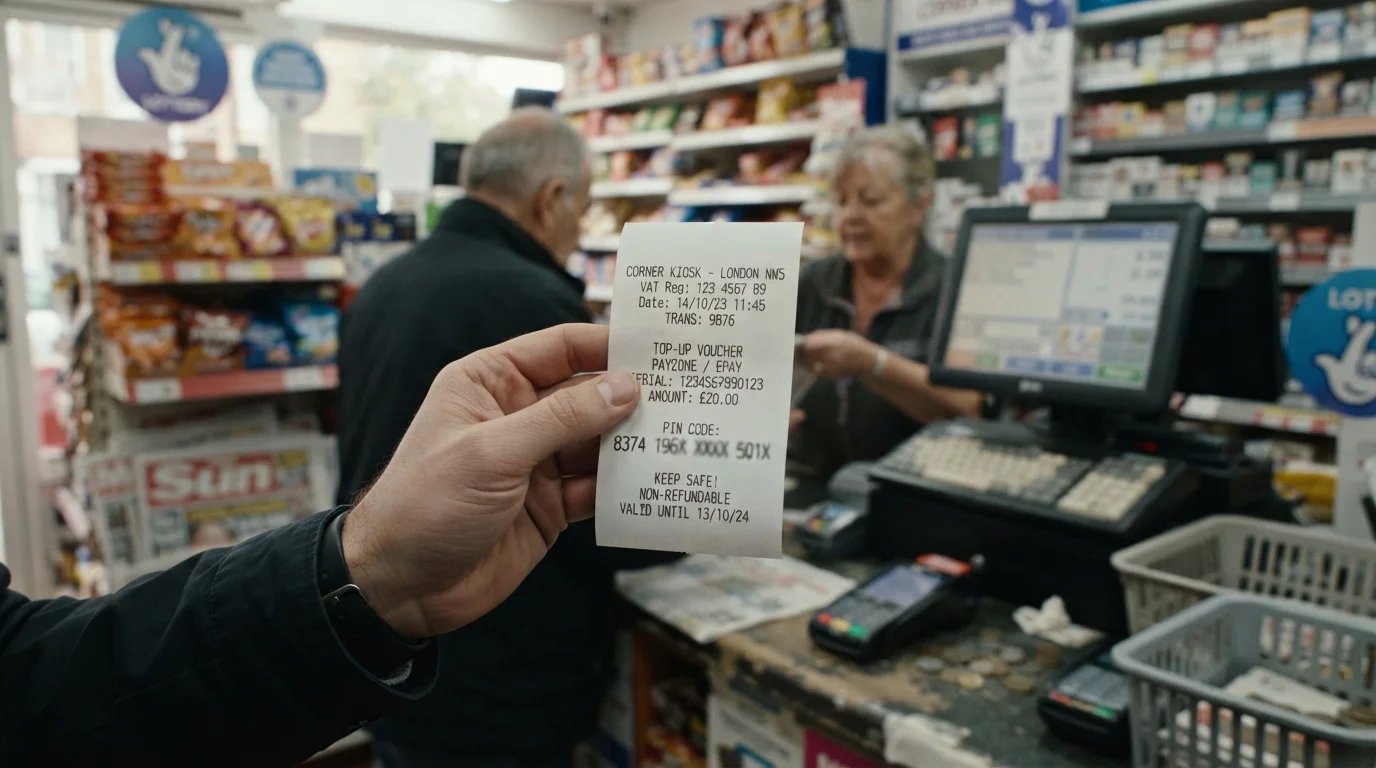
Bonus eligibility for Paysafecard is generally preserved. Operators treat prepaid vouchers similarly to debit cards: the deposit originates from funds you already own, and the voucher ties to a purchase receipt and eventually to your verified identity. Multi-account bonus abuse via Paysafecard is harder than via e-wallets because each voucher is a discrete purchase, leaving a paper trail. Most UK casinos that accept Paysafecard extend welcome bonus eligibility, though you should always check the specific terms to confirm.
Can I withdraw to Paysafecard if I deposit with it?
No, at most UK casinos. Paysafecard is deposit-only due to anti-money laundering regulations requiring identity verification for withdrawals. Testing found only one of three UK-licensed casinos (DaznBet) paid winnings back to Paysafecard. At operators that do not support Paysafecard withdrawals, you must add and verify a debit card, e-wallet, or bank account to receive payouts. The voucher’s anonymity only lasts until your first withdrawal, at which point KYC checks require full identity verification anyway.
Revolut
Revolut Ltd is a UK-based fintech company that received its UK banking license in 2021, operating as a regulated bank under FCA oversight. Revolut offers multi-currency accounts, Visa or Mastercard debit cards, and app-based financial management tools. At UK casinos, Revolut functions as a standard debit card: you deposit using your Revolut Visa or Mastercard, the casino processes it through the card network, and settlement follows normal card timelines (instant deposits, two-to-five-day withdrawals).
Minimum deposits via Revolut are typically ten to twenty pounds, matching standard debit card minimums. Maximums depend on the casino’s card limits, usually several thousand pounds per transaction. Deposits are instant once you confirm 3D Secure authentication. Withdrawals settle in two to five working days after the casino releases funds, identical to any Visa or Mastercard debit card withdrawal. Some operators support withdrawals back to the same Revolut card used for deposit; others require a separate bank transfer for payouts.
The gambling block feature distinguishes Revolut from traditional banks. In the Revolut app, you can toggle a setting that blocks all gambling-category transactions. Once enabled, any attempt to deposit at a casino using your Revolut card will be declined automatically. The block applies at the merchant category code level, so it catches online casinos, sportsbooks, and other gambling operators. Disabling the block requires opening the app and toggling the setting off again, creating a deliberate friction point that can help manage impulsive deposits.
Bonus eligibility for Revolut is identical to Visa or Mastercard debit cards. Operators process Revolut as a standard card transaction, so unless the bonus terms explicitly exclude "Revolut" by name (which is rare), your Revolut deposit qualifies for welcome bonuses and promotions. The casino sees a Visa or Mastercard transaction, not a Revolut transaction, because Revolut issues cards through those networks.
Five UK casinos noted for accepting Revolut in 2026 are Mr Vegas, 10bet, SpinYoo, MrQ, and Queen Vegas, all UKGC-licensed with ten-pound minimums and one-to-two-day withdrawal processing after casino approval. Revolut acceptance is effectively universal wherever Visa or Mastercard debit cards are accepted, which is every UKGC-licensed operator. The question is not whether Revolut works but whether your casino supports withdrawals back to the card or requires a separate bank transfer for payouts.
Multi-currency functionality is a Revolut advantage if you play at operators licensed in multiple jurisdictions. You can hold GBP, EUR, USD, and other currencies in separate Revolut balances and pay with the appropriate currency without conversion fees up to certain monthly limits. Debit cards issued by traditional banks trigger currency conversion at the bank’s exchange rate with a markup. Revolut’s conversion rate is competitive, though a fair-use limit applies: convert beyond the monthly threshold and Revolut charges a small percentage spread.
Can I use Revolut at UK online casinos?
Yes. Revolut functions as a standard Visa or Mastercard debit card at UKGC-licensed casinos. Deposits are instant, withdrawals take two to five working days, and bonus eligibility is identical to any debit card. Revolut’s gambling block feature lets you disable casino transactions in the app, creating a self-imposed restriction. Five noted Revolut-friendly casinos are Mr Vegas, 10bet, SpinYoo, MrQ, and Queen Vegas, though acceptance is effectively universal wherever debit cards are accepted.
When to Use Prepaid or Fintech Options
Paysafecard makes sense if you want to deposit without sharing card details with the casino database, you are comfortable with the forty-pound unregistered limit (or willing to verify identity for higher limits), and you already have an alternative withdrawal method set up. Buying a voucher at retail and using it for a single session imposes a natural spending cap: you can only deposit what you loaded onto the voucher, and once it is spent, you must physically return to a shop to purchase another. That friction can help control impulsive deposits better than a debit card with instant reloading.
Revolut suits players who want a modern banking app with built-in gambling controls and multi-currency functionality. The gambling block is stronger than a mental commitment to limit spending because it requires deliberate action (opening the app, navigating to settings, toggling the block off) rather than passive restraint. If you struggle with impulsive deposits, enabling the Revolut gambling block while sober and rational can prevent transactions during emotional or intoxicated moments. Disabling the block is inconvenient enough to create pause, but not so onerous that you cannot override it if you genuinely decide to play.
Neither Paysafecard nor Revolut offers withdrawal speed advantages. Paysafecard cannot receive withdrawals at most UK casinos, forcing you to use a slower alternative. Revolut withdrawals settle at standard debit card speeds, two to five working days. If fast payouts are your priority, e-wallets or Trustly beat both. If spending control or privacy at deposit time is the priority, Paysafecard or Revolut’s gambling block serve that need better than unrestricted debit cards.
Speed Comparison: Fastest to Slowest
Deposits are instant across all modern payment methods. Whether you use a Visa debit card, PayPal, Trustly, Apple Pay, or Boku, funds land in your casino balance within seconds to minutes. The meaningful speed comparison is withdrawals, and even there the bottleneck is not always the payment method. Most UK operators hold withdrawals in a pending queue for twenty-four to forty-eight hours while identity verification, fraud checks, and account reviews run. Only after the casino releases the payout does your chosen payment method determine settlement time.
Which payment method has the fastest withdrawal at UK casinos?
E-wallets like PayPal, Skrill, and Neteller, plus open banking via Trustly, offer the fastest withdrawals at UK casinos. All settle within zero to twenty-four hours after the casino releases funds. Visa Direct, PayPal, and Trustly can clear in one to four hours at the best operators. Debit cards take one to three working days, bank transfers take two to five working days. Casino pending periods (twenty-four to forty-eight hours for verification) apply regardless of method and often exceed the payment method’s own settlement time.
Instant Deposits Across All Modern Methods
Debit cards, e-wallets, open banking, mobile wallets, and prepaid vouchers all deposit instantly in 2026. You confirm the payment, authenticate with your chosen method (3D Secure, biometric, SMS code), and the funds appear in your casino balance within seconds. The technology infrastructure across Visa, Mastercard, PayPal, Trustly, and Boku all supports real-time transaction confirmation, so there is no meaningful speed difference at deposit time between these methods.
The single exception is traditional bank transfers initiated manually. If you log into your online banking, enter the casino’s account details and reference code, and submit a transfer, settlement depends on whether your bank routes the payment through Faster Payments (instant to two hours) or BACS (two to three working days). Most UK banks default to Faster Payments for domestic GBP transfers below certain thresholds, so even manual bank transfers often land instantly. Once the casino receives the funds and matches your payment to your account (which may take manual intervention), your balance updates. This coordination delay makes manual bank transfers slower than all other methods at deposit time, though the actual funds movement may be instant.
Withdrawal Speed Tiers
After the casino releases your payout, payment methods fall into four speed tiers based on typical settlement times reported across UK operators in 2026. These are settlement times after casino approval, not total time from withdrawal request to funds in your bank account. Add the casino’s pending period (usually twenty-four to forty-eight hours) to these figures to estimate end-to-end timing.
| Speed Tier | Payment Methods | Typical Settlement After Casino Approval | Real-World Variance |
|---|---|---|---|
| Fastest (0–4 hours) | PayPal, Trustly, Visa Direct | Same-day arrival common; some operators clear inside one hour | Requires operator to use fast-track payout processing; not available at all casinos |
| Fast (0–24 hours) | Skrill, Neteller, MuchBetter, MiFinity, ecoPayz, AstroPay | Funds land in e-wallet within hours; then 1–3 days to withdraw from e-wallet to bank if needed | Weekend requests may not process until Monday; verification holds add days on first withdrawal |
| Medium (1–3 days) | Visa debit, Mastercard debit, Revolut, Apple Pay, Google Pay | Business days only; weekend requests start processing Monday | Bank holidays extend by 1–2 days; international operators may take longer |
| Slow (2–5 days) | Traditional bank transfer (manual or BACS) | Batch-processed by operators; BACS settlement adds 2–3 days | Weekends and holidays routinely push this to a full week |
Understanding Pending Periods
The casino pending period is the delay between your withdrawal request and the operator’s decision to release funds. This period exists for fraud checks, identity verification, anti-money laundering reviews, and in some cases manual approval by finance staff. First withdrawals always enter a pending queue while the operator verifies your passport, proof of address, and payment method documents. Subsequent withdrawals may skip the queue if your account is fully verified and no red flags trigger, but operators reserve the right to review any payout.
Pending periods at UK casinos typically run twenty-four to forty-eight hours, though advertised timelines vary. Some operators promise instant withdrawals, meaning zero pending period if your account is verified and the payout is below a certain threshold (often five hundred to one thousand pounds). Others hold every withdrawal for at least twenty-four hours regardless of amount. High-value payouts (several thousand pounds or more) almost always enter manual review, adding a day or more to the pending period.
Affordability checks escalated in frequency during 2026 as the UKGC tightened enforcement of affordability guidance. If you request a large withdrawal or your deposit frequency spikes, the operator may place the payout on hold and request source-of-funds documentation: bank statements, payslips, tax returns, or proof of inheritance or property sale. These checks can add several days or even weeks if you do not respond promptly with clear documents. Payment method choice does not affect this process: a PayPal withdrawal held for affordability checks will still be held, and your zero-to-twenty-four-hour settlement time does not start until the operator clears the review and releases funds.
Weekend and Bank Holiday Delays
Payment methods that rely on banking-hours infrastructure add delays when your withdrawal request lands on a weekend or bank holiday. Debit card withdrawals settle through the Visa or Mastercard network, but your bank processes incoming credits only during business hours at many institutions. A debit card withdrawal released by the casino on Friday afternoon may not reach your bank account until Monday or Tuesday, even though the card network confirmed the transaction Friday.
Bank transfers are worse. BACS processes transactions in overnight batches on business days only. A BACS withdrawal initiated Friday will not start clearing until Monday night, settle Tuesday or Wednesday, and land in your account Wednesday or Thursday. A three-day settlement window becomes a five-day wait purely due to weekend timing. Faster Payments infrastructure operates seven days a week, but not all operators use Faster Payments for withdrawals, and even those that do may batch-process payout files only on weekdays.
E-wallets and open banking routes avoid most weekend delays because their settlement infrastructure operates continuously. PayPal, Skrill, Neteller, and Trustly process transactions seven days a week, so a withdrawal released Saturday afternoon can land in your e-wallet Saturday evening. The catch is that withdrawing from your e-wallet to your bank account after that still depends on your bank’s processing schedule. If you need cash in your bank account by Monday morning, requesting a debit card withdrawal Friday gives you better timing than requesting an e-wallet withdrawal Saturday (which lands in the wallet Saturday but might not reach your bank until Tuesday once you initiate the second withdrawal and your bank processes it).

How to Choose the Right Payment Method
The right payment method depends on which variable matters most: speed, bonus eligibility, privacy, spending control, or convenience. No single method wins on all dimensions. Debit cards maximize bonus eligibility and universal acceptance but lose on withdrawal speed. E-wallets maximize speed but often void your welcome bonus. Open banking splits the difference, offering fast payouts and bonus eligibility but limited operator support. Prepaid vouchers and deposit-only methods offer spending control but require alternative withdrawal routes.
If You Prioritize Speed
Use PayPal, Trustly, Skrill, or Neteller if your casino supports them and you are willing to forfeit the welcome bonus. All four settle withdrawals within zero to twenty-four hours after the casino releases funds, with PayPal and Trustly occasionally clearing inside one to four hours at operators using fast-track processing. Confirm before depositing that your operator supports withdrawals via the same method (some casinos accept e-wallet deposits but force bank transfer withdrawals).
Check the bonus terms first. If the welcome bonus is worth more than the time saved on one withdrawal, use a debit card to preserve eligibility, even if it means waiting an extra day or two for payouts. A two-hundred-pound matched deposit bonus lost to Skrill exclusion is not worth saving twenty-four hours on a one-hundred-pound withdrawal. Run the numbers: expected value of the bonus minus wagering difficulty versus the cost in days of your time waiting for slower settlement.
If Trustly is available and bonus-eligible, it is the best-of-both option: fast withdrawals (same-day or within twenty-four hours) and bonus eligibility preserved. Only two caveats: Trustly is supported at fewer UK casinos than Visa or PayPal, and if your bank is not in the Trustly dropdown, you cannot use it. Check the cashier before committing to a Trustly strategy.
If You Prioritize Bonus Eligibility
Use a Visa or Mastercard debit card. Near-universal bonus eligibility, accepted at every UK casino, familiar, no separate account to set up. Withdrawals take one to three working days, slower than e-wallets but predictable. Weekend and bank holiday delays add a day or two, so plan withdrawal timing if you need funds by a specific date.
Trustly and traditional bank transfers also preserve bonus eligibility when available, but Trustly’s limited operator support makes it unreliable as a primary method, and manual bank transfers are slower (two to five days) with more coordination friction. Debit cards are the reliable default for bonus preservation.
Avoid Skrill and Neteller entirely if the bonus matters. Eighty percent exclusion rate means you will lose the welcome offer at most UK casinos. PayPal sits in the middle: roughly fifty-fifty bonus eligibility, so check the terms before depositing. Apple Pay and Google Pay are frequently excluded despite being tokenized card transactions, so if you want to use a mobile wallet and keep the bonus, deposit with the underlying debit card directly instead.
If You Prioritize Privacy
Use Paysafecard for deposit privacy (no card or bank details shared with the casino) and accept that you must verify identity and use an alternative method for withdrawals. The voucher keeps your banking information out of the casino database until payout time, at which point KYC regulations force full disclosure anyway. Privacy at deposit is all Paysafecard offers; true anonymity through the entire cycle is not possible at UKGC-licensed operators.
E-wallets like PayPal, Skrill, or Neteller keep your card and bank details with the e-wallet provider, sharing only your e-wallet email or account ID with the casino. The operator never sees your card number or bank account, though they still verify your identity via passport and proof of address. This is more private than a debit card (where the casino stores your card number) but less private than Paysafecard (where the casino never learns your card or bank details exist until you provide withdrawal routing).
Open banking via Trustly keeps payment details ephemeral: you log into your bank once per transaction, the payment routes directly, and no card number or account number is stored by Trustly or the casino. Each transaction requires fresh authentication. This is arguably more secure than stored cards, though the casino still verifies your identity, so privacy in the KYC sense is no better than debit cards.
If You Prioritize Spending Control
Use Boku or Paysafecard if you want natural limits baked into the payment method. Boku caps at thirty pounds per transaction, forcing you to stop and reconsider before depositing more. Paysafecard caps at the voucher denomination you purchased: buy a fifty-pound voucher and you can only deposit fifty pounds until you physically return to a shop to buy another. That friction makes impulsive reloads harder than a debit card with instant unlimited deposits.
Revolut’s gambling block is the strongest self-imposed control if you want the option to play but need a deterrent against impulsive moments. Enable the block while sober, and any deposit attempt will be declined until you deliberately open the app, navigate to settings, and toggle the block off. That inconvenience creates pause. It is not foolproof (you can override it), but it is more effective than relying on willpower alone when emotional or intoxicated.
GamStop is the nuclear option: a UK-wide self-exclusion register that blocks access to all UKGC-licensed operators for a minimum of six months. Once registered, you cannot deposit via any payment method at any UK casino until the exclusion period ends. GamStop is free, instant to activate, and cannot be reversed early. If you recognize gambling is causing harm and need a total break, GamStop is more effective than any payment method restriction.
If You Prioritize Convenience
Use whichever method you already have. If you hold a debit card, use it. If you already have a PayPal account, use that. If your phone supports Apple Pay or Google Pay, use the mobile wallet. The friction of opening a new e-wallet account, verifying identity documents, and linking a bank account to a new payment service exceeds the convenience gain in most cases unless you play frequently.
Debit cards are the baseline convenience: you already own one, no setup required, works everywhere. Apple Pay and Google Pay add biometric convenience on mobile devices, depositing with one tap and a face scan instead of typing sixteen digits. E-wallets add a second account to manage, a second login to remember, and a second identity verification process to complete. Only set up an e-wallet if the speed advantage or bonus exclusion avoidance justifies the setup friction.
Trustly is maximally convenient if your casino supports it: no account, no stored details, log into your bank once per transaction, done. The catch is limited availability. If Trustly is unavailable, the next-most-convenient option is whichever method you already use for other online purchases, which for most UK adults is a Visa or Mastercard debit card.
Responsible Gambling and Payment Controls
The UK Gambling Commission’s 2020 credit card ban rests on a simple harm-reduction principle: preventing players from gambling with borrowed money. Research showed that twenty-four percent of online gamblers using credit cards were problem gamblers or at risk, compared to ten percent of debit card users. Removing credit cards from the cashier did not solve problem gambling, but it removed one mechanism that accelerated financial harm. That ban remains the clearest example of how payment method choice connects to gambling harm prevention.
Deposit-only methods like Boku and Paysafecard impose natural spending limits. Boku’s thirty-pound transaction cap means you cannot deposit two hundred pounds in a single impulsive session without manually repeating the deposit process six or seven times, each time receiving an SMS confirmation that makes the accumulating total visible. Paysafecard’s voucher denomination caps your deposit at whatever amount you loaded onto the card: spend the fifty-pound voucher and you must physically return to a shop to buy another, creating time and friction that interrupt chasing losses.
Revolut’s gambling block feature is the strongest app-based control available from a mainstream UK bank. Toggle the block on, and all gambling transactions are declined at the card network level. Disabling the block requires deliberate action: open the app, navigate to security settings, toggle gambling transactions back on. That inconvenience is enough to create pause during emotional or intoxicated moments when impulse overrides judgment. The block is not foolproof (you can disable it), but it is more effective than a mental commitment alone.
Deposit Limits
UKGC regulations require all licensed operators to offer deposit limit tools, allowing you to cap daily, weekly, or monthly deposits at a figure you set in advance. These limits apply regardless of payment method: if you set a fifty-pound daily limit, the casino will decline your sixth ten-pound debit card deposit of the day, and it will also decline a fifty-pound Skrill deposit if you already deposited once. Limits are configurable in your account settings and cannot be increased instantly (cooling-off periods of twenty-four to seventy-two hours apply before raises take effect).
Deposit limits are more effective when set during rational moments and left untouched. Setting a one-hundred-pound weekly limit on Monday, when you have no urge to gamble, prevents you from depositing two hundred pounds on Friday after a bad day at work. The limit is casino-specific, not payment-method-specific: if you play at three different casinos, you must set limits at each one individually. GamStop is the only tool that spans all UKGC operators simultaneously.
Payment method choice interacts with deposit limits in one subtle way: methods with instant reloading (debit cards, e-wallets) make it trivially easy to hit your limit quickly, while methods with friction (Boku, Paysafecard) slow the process. A fifty-pound daily limit paired with a debit card can be exhausted in five ten-pound deposits within minutes. The same fifty-pound limit paired with Paysafecard vouchers requires you to purchase and load five ten-pound codes, taking physical time and multiple retailer visits. The limit is the same, but the friction makes the pacing different.
GamStop and Payment Methods
GamStop is the UK’s national self-exclusion scheme, operated independently of the UKGC and funded by the gambling industry. Registration is free, instant, and blocks you from creating or accessing accounts at all UKGC-licensed operators for a minimum period of six months, one year, or five years (you choose the duration at signup). Once registered, you cannot deposit at any UK casino via any payment method, because the exclusion operates at the account level, not the payment level.
Payment methods do not bypass GamStop. If you are registered with GamStop and attempt to create an account at a UKGC-licensed casino, the operator checks your details against the GamStop database during signup and refuses to open the account. You never reach the cashier, so the payment method is irrelevant. A thirty-pound Paysafecard voucher bought at a Tesco is useless if GamStop blocks you from logging into the casino in the first place.
Offshore casinos not licensed by the UKGC are not connected to GamStop and do not check the register. If you self-exclude via GamStop and then deposit at a Curacao-licensed casino, the offshore operator will accept your payment. That is a regulatory arbitrage issue, not a payment method issue. Boku, PayPal, and Revolut all technically support GamStop: if you are on the register, UK-licensed operators will not let you through the door regardless of which payment method you hold.
Payment Blocking Features
Revolut’s gambling block is the most prominent payment-level control available from a mainstream UK financial institution as of 2026. Monzo, Starling, and other challenger banks offer similar features. Traditional high-street banks (HSBC, Barclays, Lloyds) generally do not offer one-click gambling blocks in their apps, though you can contact customer service to request a block on gambling merchant category codes. The request process is slower and less reversible than Revolut’s toggle, which is both an advantage (harder to undo impulsively) and a disadvantage (requires a phone call to customer service if you change your mind).
Visa and Mastercard do not offer payment blocking at the network level for gambling transactions. The block must be implemented by your card issuer (your bank). If your bank does not offer a gambling block, switching to Revolut or another fintech challenger that does offer the feature is the most straightforward route.
E-wallets do not generally offer gambling-specific blocks. PayPal, Skrill, and Neteller do not have a setting to disable gambling merchant payments while allowing other online purchases. If you hold a balance in an e-wallet and want to prevent yourself from using it at casinos, your only options are to withdraw the balance to your bank and delete the account, or to rely on self-exclusion at the operator level. GamStop remains the only cross-operator tool that works regardless of payment method.
Affordability Checks
Affordability checks are identity and source-of-funds requests triggered by large or frequent deposits. The UKGC tightened affordability guidance in 2026, requiring operators to intervene when a customer’s gambling spend suggests potential financial harm relative to their apparent income. If you deposit several thousand pounds in a short period, the operator may freeze your account and request evidence you can afford the losses: bank statements, payslips, tax returns, proof of savings, or evidence of inheritance or property sale.
Affordability checks apply regardless of payment method. A five-thousand-pound debit card deposit and a five-thousand-pound Skrill deposit both trigger the same review. The difference is traceability: a debit card deposit ties directly to your verified bank account, making it easier for the operator to assess your financial situation. An e-wallet deposit funded from a source the operator cannot see will invite more documentation requests, because the casino has no visibility into where the e-wallet balance originated.
If you expect to deposit large amounts, using a debit card or bank transfer may result in smoother affordability checks because the casino can trace the funds directly to your verified account. E-wallet deposits funded from savings, salary, or other legitimate sources are equally acceptable, but you will need to provide bank statements showing the transfer from your bank to the e-wallet to close the traceability loop. Payment method choice does not let you avoid affordability checks; it only affects how much documentation the operator requests to satisfy them.
Picking a payment method for UK online casinos in 2026 is a trade-off, not an optimisation. Debit cards are slow on withdrawals but safe on bonuses. E-wallets are fast on payouts but frequently excluded from promotions. Open banking offers the best of both when available but is supported at only a subset of operators. Prepaid vouchers and mobile billing add privacy or spending controls at the cost of withdrawal flexibility. No method wins on every dimension, so the right choice depends on which dimension you weight most heavily: speed, bonus eligibility, control, or convenience. The cashier is not where most players expect the decision to matter, but it is exactly where a misstep costs you either time or money.
Created by the ”Payments-casino-uk” editorial team.