
No-KYC Crypto Casinos in the UK: Where They Exist, What They Cost You, and When the ID Request Still Lands
 Available in GB

Type "crypto casino no KYC UK" into a search bar and you get a wall of ranked lists promising passport-free gambling, payouts in minutes, and total anonymity. Most of them skip the one sentence that matters before any of that: no casino licensed by the UK Gambling Commission will ever let you do this. Not one. The platforms that will are offshore, licensed somewhere warm and lightly regulated, and operating under rules that owe you very little when things go wrong.
That is not a reason to stop reading. It is a reason to read something written straight. The demand is real, the platforms are real, and plenty of UK players use them every day with no drama. But "no KYC" is a marketing phrase doing a lot of heavy lifting, and the gap between what the banner promises and what the terms of service actually permit is where people lose money. This guide maps the operators worth knowing, the point at which each one tends to ask for your documents anyway, and the protections you are quietly signing away at the door.
Table of Contents
- UK Crypto Casinos Without KYC: What You Need to Know First
- Understanding KYC Triggers and Verification Thresholds
- Best No-KYC Crypto Casinos for UK Players in 2026
- How to Evaluate Safety and Legitimacy Without UKGC Protection
- Crypto Options, Withdrawal Speeds, and Payment Mechanics
- Bonuses, Games, and What to Expect
- UK-Specific Considerations: Tax, Legality, and Practical Steps
- How to Choose the Right No-KYC Crypto Casino
UK Crypto Casinos Without KYC: What You Need to Know First
The offshore crypto casino industry runs on a promise that sounds simple: deposit cryptocurrency, play games, withdraw winnings, all without showing a passport or utility bill. The UK Gambling Commission will never permit that model within its jurisdiction. Understanding why that regulatory barrier exists, and what it means when you step outside it, matters more than any star rating.
Why UKGC-Licensed Casinos Cannot Accept Crypto or Operate Without KYC
The prohibition is not discretionary. The Gambling Act 2005 and the Licence Conditions and Codes of Practice require every UKGC licensee to verify the source of customer funds under the Money Laundering Regulations 2017. That verification obligation demands payment methods with a clear, traceable link to a real-world bank account. Cryptocurrency transactions are pseudonymous by design. A Bitcoin wallet address tells you nothing about who owns it, where the funds originated, or whether they came from legitimate sources. The UKGC cannot square that structural anonymity with its AML obligations, so as of 2026 cryptocurrency deposits remain categorically prohibited at every licensed UK operator.
The same framework mandates full identity verification at registration. Age, name, address, and proof-of-funds documentation are not optional extras triggered at withdrawal. They are gatekeepers before the first deposit. KYC is the compliance baseline, not an edge case. That makes genuine no-KYC gambling structurally impossible within UKGC oversight, regardless of payment method.
There is exploratory talk. Tim Miller, a UKGC executive, stated at the GAMLG Annual Conference in early 2026 that the Commission is investigating a potential pathway for crypto payments at licensed sites, conditional on the Financial Conduct Authority establishing a full authorization regime for crypto asset activities and enhanced AML infrastructure. No implementation timeline exists. The current position holds: zero UKGC casinos accept cryptocurrency, and zero permit registration without full identity verification upfront.
What "No KYC" Actually Means in 2026
The offshore platforms marketed as "no-KYC crypto casinos" operate under a different promise. Most are licensed in Curaçao or Anjouan, jurisdictions where regulatory enforcement is lighter and compliance standards lower. The appeal is real: connect a wallet, deposit Bitcoin or a stablecoin, and start playing within seconds. No passport scan, no address proof, no wait.
The catch is in the fine print. Curaçao gaming regulations require licensees to implement KYC at aggregate deposits or any single withdrawal reaching two thousand US dollars. That threshold is not a suggestion. Operators face license suspension for non-compliance, which means the "no KYC" promise comes with an expiry date baked in. The expiry is not always disclosed upfront.
Testing by independent reviewers in 2026 showed the pattern clearly. Platforms accepting wallet-only registration typically process small crypto withdrawals without asking for documents. Somewhere between two thousand and ten thousand euros in lifetime withdrawals, or one to two Bitcoin depending on the operator, the verification request arrives. At that point the account is frozen until you provide a passport, proof of address, and in some cases bank statements showing the source of your deposited funds. If you were playing under the assumption of permanent anonymity, that is when the assumption breaks.
A minority of operators enforce stricter rules from the start. Hybrid platforms that accept both crypto and card payments almost always trigger KYC at the first withdrawal, regardless of amount. Sites with aggressive bonus structures or VIP programs sometimes lock accounts and demand verification mid-session if betting patterns look unusual. Risk-based triggers are discretionary, meaning the threshold that applies to you may not match what another player experienced.
The takeaway: "no KYC" is a spectrum, not a binary state. Wallet-connect registration with truly minimal verification exists, but it lasts only as long as your cumulative withdrawals stay below the operator’s stated or unstated threshold. Past that point, offshore casinos enforce verification just like anyone else, with the added complication that you now have funds locked at a platform operating outside UK regulatory protection.
The Regulatory Trade-Off: Speed vs Protection
Stepping outside UKGC jurisdiction trades one set of constraints for another. The speed is real. Crypto withdrawals at offshore casinos typically settle in minutes rather than the one-to-five-day window common at UK-licensed sites using traditional payment rails. There is no GamStop coverage, no mandatory affordability checks, no deposit caps unless you choose to set them. If the April 2025 White Paper measures felt restrictive, the offshore alternative removes most of those guardrails entirely.
What you lose is equally concrete. UKGC licensees must hold player funds in segregated accounts, separate from operating capital. If the operator goes insolvent, your balance is protected. Offshore casinos operate under no such requirement. Your deposited cryptocurrency sits in a wallet the operator controls, with no independent guarantee that it remains available for withdrawal. If the platform disappears, your funds disappear with it.
UKGC dispute resolution runs through the Independent Betting Adjudication Service, with final recourse to the Financial Ombudsman. Both are free to players. Offshore platforms licensed in Curaçao or Anjouan typically route disputes to their own internal resolution process, with the regulator as a theoretical escalation point. In practice, Curaçao gaming enforcement is sparse. Player complaints lodged with the licensing authority can sit unanswered for months. If an offshore operator decides to freeze your account under a "sole discretion" clause in the terms of service, your options for forcing a payout are limited and slow.
GamStop self-exclusion does not extend to offshore casinos. That is a feature for players frustrated by UK affordability checks. It is also a risk for anyone using GamStop as a barrier against problem gambling. Offshore operators will accept your deposits regardless of your self-exclusion status in the UK, and they carry no legal obligation to enforce cooling-off periods or loss limits.
The trade is explicit: faster access, lower friction, no paternalistic affordability interrogation, in exchange for no regulatory backstop when things go wrong. Whether that trade makes sense depends on how much you value speed over protection, and how confident you are in your ability to evaluate operator trustworthiness without regulatory oversight doing the work for you.
Are crypto casinos legal in the UK?
Using an offshore crypto casino from the UK is not illegal for the player. The Gambling Act 2005 does not criminalize individuals for placing bets at unlicensed operators. The legal risk sits with the platform: operating in the UK without a UKGC license is an offense, and the Commission actively pursues operators who advertise to or solicit UK customers without authorization.
The practical outcome is that offshore casinos cannot legally market to UK players through UK-facing advertising or sponsorships, but they can accept your registration if you find them on your own. That gray zone is where most offshore crypto casinos operate. They do not block UK IP addresses, they process deposits from UK-based wallets, and they denominate balances in GBP alongside crypto, but they structure their terms to state they are not targeting the UK market.
You will not be prosecuted for using one. You also will not have UKGC protections if the platform refuses to pay out your winnings, freezes your account, or goes offline without notice. The law treats you as someone who chose to gamble outside the regulated framework. The consequences of that choice land entirely on you.

Understanding KYC Triggers and Verification Thresholds
The offshore promise of anonymous gambling rests on the assumption that KYC verification is avoidable. It is not. What varies is the point at which verification becomes mandatory, the documents required, and how transparently each operator communicates those thresholds upfront. Knowing where the line sits, and what happens when you cross it, is the difference between a smooth withdrawal and a frozen account with your funds held hostage to a document upload queue.
Three Privacy Tiers: Wallet-Connect, Email Registration, and Hybrid Sites
Offshore crypto casinos fall into three broad categories based on how much personal information they demand at sign-up.
Wallet-connect platforms offer the closest thing to genuine anonymity. Registration requires nothing beyond connecting a Web3 wallet like MetaMask or WalletConnect. No email, no password, no username. Your account is effectively your wallet address plus a session token. Deposit and play immediately. TG Casino and Betpanda both use this model. The privacy benefit is real: the operator has no name, no email, no home address until you hit the withdrawal threshold that triggers mandatory KYC. Until that point, your identity is a string of alphanumeric characters on a blockchain.
The limitation is that wallet-connect platforms still track gameplay patterns, IP addresses, and betting behavior server-side. They are not decentralized casinos. They are centralized platforms with a pseudonymous front door. The operator knows which wallet is winning, which games that wallet plays, and how much crypto moves in and out. If your activity flags their risk systems, they can freeze the wallet and demand verification at any withdrawal amount, regardless of stated thresholds. Anonymity is front-loaded, not guaranteed.
Email registration sites sit in the middle. You provide an email address, set a password, and start playing. No phone verification, no address, no ID scan at sign-up. Disposable email services work. The operator has a communication channel and a rudimentary player profile, but nothing that links directly to your legal identity. BC.Game, Wild.io, and CoinPoker all use email registration. The privacy is thinner than wallet-connect, but the practical difference is marginal until verification is requested. What matters more is that email registration platforms tend to build fuller player profiles over time, tracking devices, withdrawal patterns, and session data in ways that can later support a case for account closure or confiscation if you trigger a compliance flag.
Hybrid platforms accept both cryptocurrency and traditional payment methods like cards or e-wallets. These sites almost always enforce KYC at the first withdrawal, regardless of whether you deposited crypto or fiat. The presence of card payments brings those operators into stricter AML monitoring, and they extend that verification requirement to all customers rather than maintaining separate treatment for crypto-only players. If a platform accepts Visa alongside Bitcoin, treat it as a full-KYC site wearing a crypto-friendly marketing layer.
When Verification Actually Gets Triggered (€2,000-€10,000 Thresholds)
Independent testing in 2026 by reviewers at vip-grinders.com and losgatan.com mapped verification thresholds across 15 to 25 offshore operators. The pattern is consistent. Small withdrawals under one or two thousand euros in crypto equivalent typically process without document requests at wallet-connect and email-registration platforms. Past that range, verification becomes mandatory.
Curaçao gaming regulations set a two-thousand-dollar aggregate threshold for KYC obligations. That is cumulative deposits, not withdrawals, but operators interpret and enforce it as they see fit. Most enforce verification somewhere between two thousand and ten thousand euros in lifetime withdrawals, or one to two Bitcoin. BC.Game documentation shows a minimum withdrawal of 21 USDT, processed automatically at low amounts, with KYC triggered when cumulative payouts cross the operator’s internal threshold. That threshold is rarely disclosed in advance.
Risk-based triggers operate alongside stated limits. Winning a large amount in a single session, even if your total withdrawals remain under the threshold, can flag your account for immediate verification. Betting patterns that look like bonus abuse, arbitrage, or multi-accounting will trigger review regardless of how much you are trying to withdraw. VPN use is another common trigger. Many offshore casinos permit VPN access in their terms but reserve the right to freeze accounts and demand verification if your IP address changes frequently or lands in a jurisdiction they consider high-risk.
Discretionary enforcement is where the "no KYC" promise collapses under scrutiny. The terms of service at most offshore platforms include language granting the operator sole discretion to request verification at any time, for any reason, with no advance notice. That clause is not decorative. It means the two-thousand or ten-thousand-euro threshold published in marketing materials is a guideline, not a guarantee. If the operator decides your account warrants a closer look, they can freeze it and demand documents at any withdrawal amount, even if you have never crossed the stated limit.
The practical takeaway: if you intend to withdraw more than two thousand euros in lifetime winnings from an offshore crypto casino, prepare for the verification request. Have your documents ready, or accept that your withdrawal will sit in limbo while you scramble to upload a passport scan and a utility bill dated within the last three months.
What Documents Offshore Casinos Request at Withdrawal
When an offshore casino triggers KYC verification, the document checklist mirrors what UKGC-licensed operators require, with one difference: there is no regulated timeline for how quickly they must process your submission, and no external arbiter if they reject your documents and refuse to clarify why.
Standard requests include a government-issued photo ID, most commonly a passport or driving license. A selfie holding that ID next to your face, with the current date handwritten on a piece of paper in the frame, is increasingly common. Proof of address comes next: a utility bill, bank statement, or council tax notice showing your name and address, dated within the last 90 days. Some operators accept scanned PDFs, others demand photographs of the physical document.
For larger withdrawals or accounts flagged for additional scrutiny, source-of-funds documentation enters the picture. This is where offshore KYC turns invasive. The operator may ask for bank statements covering the period during which you deposited funds, proof of income such as payslips or tax returns, or screenshots from the cryptocurrency exchange where you purchased the coins you deposited. The purpose is to establish that your deposited funds did not originate from criminal activity. The burden of proof sits with you. If you cannot or will not provide the requested documents, your account remains frozen and your balance inaccessible.
Processing times vary wildly. Some operators review and approve documents within 24 hours. Others take a week. A few sit on submissions for a month or longer, with no communication beyond automated ticket responses. There is no regulated standard. If the operator decides to slow-walk your verification while your winnings sit in a frozen account, you have no external escalation path that will force them to act faster.
Can I use a crypto casino without KYC verification in the UK?
You can register and play at offshore crypto casinos without providing identity documents upfront, particularly at wallet-connect or email-only platforms. What you cannot do is withdraw large amounts indefinitely without eventually hitting a verification checkpoint.
Small-stakes recreational play with withdrawals under one to two thousand euros across your account lifetime will often process without document requests. If you intend to play at higher stakes, or if you hit a large win, KYC becomes unavoidable. The platforms marketed as "no-KYC casinos" are more accurately described as "delayed-KYC casinos." The verification happens later rather than upfront, but it happens.
Will I get asked for ID when withdrawing from a no-KYC crypto casino?
Probably, if your winnings are large enough. The two-to-ten-thousand-euro range is where most operators trigger verification. Some enforce it earlier, some later, and all reserve the right to request documents at any withdrawal amount if your account flags their compliance or risk systems. Treat "no KYC" marketing as a description of the registration process, not a permanent guarantee about withdrawals.

Best No-KYC Crypto Casinos for UK Players in 2026
The offshore crypto casino market includes hundreds of platforms, most of which are interchangeable white-labels running the same game libraries under different branding. The operators listed here distinguish themselves through faster withdrawals, lower effective KYC friction, larger game libraries, or documented track records that rise above the baseline. This is not an exhaustive list. It is a working shortlist of platforms that, as of 2026, accept UK players and maintain withdrawal speeds and verification thresholds closer to their marketing claims than the median offshore operator.
| Operator | License | KYC Threshold | Withdrawal Speed | Game Count | Key Feature |
|---|---|---|---|---|---|
| TG Casino | Curaçao | 1-2 BTC lifetime | Sub-10 minutes | 5,000+ | Telegram-native, wallet-connect |
| Betpanda | Curaçao | €2,000-€5,000 | 4-12 minutes | Not disclosed | 100% anonymous positioning |
| BC.Game | Anjouan | Discretionary, often at big wins | Under 10 min (small withdrawals) | 9,000+ | 100+ cryptos, provably fair suite |
| Lucky Block | Curaçao | Not disclosed | Fast (unspecified) | Not disclosed | Sports + casino hybrid |
| Wild.io | Curaçao | Below threshold: no KYC claimed | Fast (unspecified) | 8,000+ | Telegram rewards integration |
| Shuffle | Curaçao OGL/2024/1337/0628 | Discretionary (“sole discretion”) | Instant (when approved) | 4,000+ | Native SHFL token, provably fair |
| Vave | Offshore | Not disclosed | Fast (claimed) | Not disclosed | Sports + casino |
| WSM Casino | Offshore | Not disclosed | Fast (claimed) | Not disclosed | Wall Street Memes community |
| CoinCasino | Offshore | Not disclosed | Standard crypto speeds | Not disclosed | Established platform |
| CoinPoker | Curaçao | Low friction | Standard crypto speeds | Not disclosed | Poker-focused |
| Cryptorino | Curaçao | Not disclosed | Standard crypto speeds | Not disclosed | Standard offshore casino |
| Thrill | Curaçao | Not disclosed | Standard crypto speeds | Not disclosed | Sports + casino |
The table captures what is verifiable. Where data is missing, it reflects the reality that offshore operators disclose less than UKGC licensees, not that the information does not exist somewhere in a terms-of-service document buried six clicks deep.
TG Casino — Telegram-Native Platform with Sub-10-Minute Payouts
TG Casino operates through Telegram, which means registration happens inside the messaging app rather than on a standalone website. Connect a Web3 wallet, and the account is live. No email, no username, no password. The game library sits at over 5,000 titles from providers including Pragmatic Play, Evolution Gaming, and Hacksaw Gaming. The Telegram interface is cleaner than it sounds. Gameplay loads in embedded web views, and the bot handles deposits and withdrawals through chat commands.
The welcome bonus structure runs 200 percent rakeback up to 10 ETH across your first deposits, with an additional 25 percent weekly cashback paid in the platform’s native token, TGC. That token has staking utility, which adds a layer of complexity if you care about maximizing returns. If you do not, the cashback still lands in your account automatically. Withdrawal speeds sit in the sub-10-minute range for most cryptocurrency options, verified across multiple independent reviews in 2026. The Curaçao license underpins the operation, though the specific sublicense is not disclosed on the platform.
TG Casino fits players who value speed and minimal registration friction more than exhaustive game filtering tools or detailed transaction histories. The Telegram delivery mechanism is either a feature or a deal-breaker depending on how much of your life already happens in that app. Verification requests appear to trigger around the one-to-two-Bitcoin lifetime withdrawal threshold, consistent with broader offshore patterns, though the exact point varies by account activity.
Betpanda — 100% Anonymous Crypto-Only Casino
Betpanda markets itself explicitly as a 100-percent-anonymous platform built for crypto users. Registration accepts either wallet-connect or a disposable email address. No phone number, no real name at sign-up. The crypto-only payment structure removes the card-integration compliance layer that forces early KYC at hybrid sites. Supported coins include Bitcoin, Litecoin, and Dogecoin, with deposits confirmed within minutes and withdrawals processing in the 4-to-12-minute range based on independent testing.
The platform does not publish a game count, which makes direct library comparisons difficult. What is disclosed: providers include recognizable studios, and the game selection covers slots, table games, and a live dealer section. Bonuses follow standard offshore structures with deposit matches and periodic reload offers. The Curaçao or Anjouan license governs operations, though again the specifics remain unpublished.
Betpanda’s differentiation is its positioning. Where most offshore casinos claim low KYC friction while hedging in the terms, Betpanda leans into anonymity as the core value proposition. That comes with the same threshold realities that apply everywhere else. Verification triggers somewhere in the two-to-five-thousand-euro range based on available data, and the "100% anonymous" framing applies to registration, not to indefinite high-value withdrawals. For players prioritizing pseudonymity and willing to stay below the verification ceiling, it delivers on the narrow promise.
BC.Game — 9,000+ Games and 100+ Cryptocurrencies
BC.Game is one of the largest offshore crypto casinos by game library and cryptocurrency support. The platform lists over 9,000 titles and accepts more than 100 different cryptocurrencies, a breadth unmatched in the offshore market. Game providers include major studios and a suite of 18 to 22 in-house provably fair titles covering dice, crash, Plinko, and other instantly verifiable games. The sportsbook runs alongside the casino, and the platform includes yield-farming features for players interested in earning passive returns on deposited crypto.
Registration allows both wallet-connect and email options. Minimum withdrawal thresholds sit at 21 USDT, 0.000874 BTC, or 0.0201 ETH depending on the coin. Small withdrawals process automatically in under 10 minutes. Larger payouts and accounts flagged for review face longer processing times and mandatory KYC. The verification trigger is discretionary rather than fixed. Multiple independent reviewers document cases where BC.Game requested full identity verification after large wins, even when lifetime withdrawals remained under stated thresholds.
BC.Game operates under an Anjouan license as of 2026, having migrated from Curaçao following legal disputes. The withdrawal cap structure is worth noting: standard accounts face a 10,000-euro monthly limit, which tightens to 5,000 euros per month if your account balance exceeds ten times your lifetime deposits. That policy is disclosed in the terms but not prominently advertised. Independent trust ratings describe BC.Game as "solid rather than spectacular," citing documented payout holds and frozen accounts alongside a generally functional platform for players who do not hit the upper limits.
The platform works for crypto-native players who value massive game variety and multi-coin flexibility over transparent KYC policies. If you play at lower stakes and avoid the withdrawal cap zones, BC.Game delivers what it advertises. If you hit a five-figure win, prepare for verification and accept that the payout may take longer than the marketing promises.
Lucky Block — Sports and Casino Hybrid
Lucky Block combines a full sportsbook with a crypto casino library, targeting players who move between sports betting and table games. The platform launched as a crypto-native operation and maintains that positioning in 2026. Marketing emphasizes fast payouts and low verification friction, consistent with the offshore standard. The Curaçao license provides the regulatory framework, thin as that framework is.
Game counts and specific KYC thresholds are not published in accessible sources, which places Lucky Block in the mid-tier transparency category common among offshore operators. What independent reviews confirm: the platform accepts UK players, processes crypto deposits and withdrawals, and ranks consistently in top-ten lists focused on speed and low-friction access. The sports-plus-casino combination differentiates it from casino-only platforms, though that differentiation matters only if you actually bet on sports.
Lucky Block fits the profile of a competent offshore operator without standout features beyond the sportsbook integration. If your gambling splits between casino games and sports markets, the unified account has value. If you only play slots or table games, other platforms offer more granular data on game libraries and withdrawal policies.
Wild.io — 8,000+ Games with Telegram Rewards
Wild.io operates a library exceeding 8,000 games, placing it in the upper tier by volume. The platform integrates Telegram for rewards and notifications, a feature that echoes TG Casino’s delivery mechanism without making Telegram the primary interface. Standard gameplay happens on the web platform. Registration accepts email or wallet-connect. The Curaçao license covers operations.
Marketing claims state that withdrawals below the KYC threshold process without document requests, a claim shared by most offshore operators and accurate only until the threshold is reached. What that threshold is, Wild.io does not disclose prominently. Independent testers place it in the standard two-to-ten-thousand-euro range based on pattern analysis rather than official confirmation. Crypto withdrawal speeds follow industry norms: minutes for small amounts, longer for larger sums or accounts flagged for review.
Wild.io is a volume play. The 8,000-game library provides depth, and the Telegram integration adds a notification layer that some players value and others ignore. The platform does what offshore crypto casinos do, at a scale slightly above the median, without rewriting the rules or introducing novel risks beyond those inherent to offshore gambling.
Shuffle — Native Token Ecosystem and Provably Fair Originals
Shuffle operates under Curaçao license OGL/2024/1337/0628, issued to Natural Nine B.V. and verified on the Curaçao Gaming Control Board register as of September 2026. The license is legitimate, which places Shuffle ahead of platforms operating under unverifiable or fake credentials. Game library sits at over 4,000 titles from 38 providers including Pragmatic Play, Evolution, and NetEnt. The platform runs approximately 20 in-house provably fair games, cryptographically verifiable through SHA-256 hashing of server and client seeds.
The native SHFL token funds airdrops, races, and a weekly lottery, with instant rakeback paid automatically rather than locked behind wagering requirements. That no-wagering structure is cleaner than the 40x to 60x rollover requirements common at competing platforms. The sportsbook runs parallel to the casino. Shuffle accepts around 20 cryptocurrencies and imposes no stated withdrawal cap in the terms, a point of differentiation from operators like BC.Game that publish monthly limits.
The complication sits in documented payout disputes. Independent safety raters at nokycme.com flag Shuffle for "month-long payout holds and multi-account or VPN confiscations," with withdrawal suspensions enforced under "sole discretion" clauses in the terms. The license is real, the games are verifiable, and the token ecosystem functions as described. The risk is operational: when Shuffle decides to freeze an account and demand verification or forfeit funds, the discretionary enforcement leaves you with limited recourse. Other independent reviewers declined to recommend the platform in 2026 without specifying why in accessible excerpts, which creates mixed signals.
Shuffle is a calculated risk. The legitimate license and provably fair game suite put it above outright scam operations. The documented payout holds put it below platforms with cleaner operational track records. If you play there, keep withdrawal amounts small enough that a freeze would be an annoyance rather than a financial catastrophe, and avoid VPN use even if the terms technically permit it.
Vave — Fast Crypto Payouts and Sports Betting
Vave markets itself on fast crypto payouts and a sports-plus-casino structure. The platform accepts UK players and operates under an offshore license, specifics undisclosed. Game library details, KYC thresholds, and exact withdrawal processing times are not published in accessible independent reviews, which places Vave in the lower-transparency tier.
What places it on this list: consistent appearance in second-tier rankings across multiple UK-focused offshore casino guides in 2026, suggesting a functional platform that processes withdrawals without widespread complaints. Absence of detailed data is not evidence of problems, but it does mean you are operating with less information than platforms like BC.Game or Shuffle provide through their size and visibility.
Vave works if you trust the brand based on its presence in ranked lists, or if you are willing to test it with small deposits and withdrawals before committing larger amounts. It does not work if you need transparent data on verification policies, withdrawal caps, or dispute resolution before opening an account.
WSM Casino — Wall Street Memes Community Platform
WSM Casino launched in 2023 on the back of the Wall Street Memes community, a crypto-native audience that migrated from meme-coin speculation into gambling. The platform leans into that branding, targeting players already comfortable with cryptocurrency and decentralized community structures. Registration follows the standard offshore pattern: email or wallet-connect, minimal upfront information, verification deferred until withdrawal thresholds are reached.
Game counts, specific providers, and KYC thresholds are not disclosed in accessible sources. What independent reviewers confirm: the platform gained traction quickly within its target demographic, operates under an offshore license, and processes crypto deposits and withdrawals at speeds consistent with the broader offshore market. The Wall Street Memes branding is either an asset or irrelevant depending on whether you care about community-driven platforms versus pure utility.
WSM Casino is a niche play. If the meme-coin community angle resonates, the platform offers a gambling outlet aligned with that culture. If you have no attachment to the Wall Street Memes brand, other operators provide more transparent data and longer operational track records.
CoinCasino — Established Crypto Platform
CoinCasino positions itself as an established operator, predating the 2023-2024 wave of new offshore crypto casinos. That longevity is a weak signal of stability in a market where platforms regularly disappear without notice, but it is a signal. Registration accepts email or wallet-connect. The offshore license and standard crypto payment infrastructure support operations.
Game library details, provider lists, and KYC thresholds remain undisclosed in accessible independent reviews. The platform appears in ranked lists focused on no-KYC crypto casinos accepting UK players, suggesting functional withdrawals and no widespread complaint patterns that would exclude it from those lists. Beyond that, data is sparse.
CoinCasino is a default option for players prioritizing operational longevity over cutting-edge features or transparent policies. The platform has been processing deposits and withdrawals long enough to build a track record, thin as the public documentation of that track record may be.
CoinPoker — Poker-Focused Crypto Gambling
CoinPoker specializes in poker rather than casino games, which distinguishes it from the slot-and-table-game focus of most platforms on this list. The site runs cash games, tournaments, and sit-and-gos with crypto buy-ins and payouts. Email registration is standard. The Curaçao or similar offshore license provides the regulatory fig leaf.
KYC friction is described as low in independent reviews, consistent with the broader offshore pattern of deferred verification. Withdrawal speeds follow crypto norms: fast for small amounts, slower for large sums or accounts flagged for compliance review. Player counts, active table volumes, and tournament guarantees are not disclosed in accessible sources, which limits the ability to assess whether the poker ecosystem is liquid enough to support serious play or whether you will face thin tables and long wait times.
CoinPoker fits poker players frustrated by the restricted game availability at UKGC-licensed sites, or those seeking offshore alternatives to the major poker networks. It does not fit casino-focused players unless the platform expands its offerings beyond poker.
Cryptorino — Standard Offshore Crypto Casino
Cryptorino operates as a standard offshore crypto casino with email registration, Curaçao licensing, and the usual mix of slots, table games, and live dealer options. No unique differentiators emerge from accessible data. The platform accepts UK players, processes crypto deposits and withdrawals, and appears in extended operator lists without detailed breakdowns of game counts, provider rosters, or KYC policies.
Cryptorino represents the baseline offshore experience: functional, lightly regulated, and indistinguishable from dozens of similar operations running the same white-label infrastructure under different branding. It works if you need an additional platform for variety or if your preferred operator is temporarily offline. It does not work if you need standout features, transparent policies, or a documented track record that rises above the offshore median.
Thrill — Casino and Sportsbook Combination
Thrill combines a casino and sportsbook under a Curaçao license, targeting players who split their gambling between sports markets and casino games. The platform accepts crypto deposits and withdrawals, operates with the standard email-registration model, and processes payouts at speeds consistent with the offshore market.
Game counts, KYC thresholds, and provider details are not disclosed in accessible sources. Thrill appears in extended ranked lists of offshore crypto casinos accepting UK players, suggesting operational functionality without widespread complaints. Beyond that, data is limited.
Thrill is interchangeable with Lucky Block and Vave in the sports-plus-casino hybrid category. Choose based on interface preference or bonus offers rather than fundamental differentiation, because the underlying infrastructure and regulatory framework are nearly identical across these platforms.

How to Evaluate Safety and Legitimacy Without UKGC Protection
Offshore crypto casinos operate outside the regulatory framework that makes UKGC-licensed gambling relatively safe for UK players. That does not mean all offshore operators are scams. It means the burden of evaluating trustworthiness shifts from the regulator to you. The tools for that evaluation are imperfect, but they exist. Using them correctly is the difference between losing a deposit to a scam and gambling at a platform that, while lightly regulated, processes payouts reliably enough to justify the risk.
Verifying Offshore Licenses: Curaçao, Anjouan, and Red Flags
Most offshore crypto casinos claim licensing from Curaçao, Anjouan, or Costa Rica. Those licenses are not equivalent, and some platforms lie about holding one.
Curaçao gaming licenses fall under multiple sublicensing regimes. The Curaçao Gaming Control Board issues master licenses to sublicensors, who then license individual operators. Verification requires checking the license number listed in the casino’s footer against the relevant validation source. For newer licenses issued after 2023, the Curaçao Gaming Control Board maintains a public register. Older licenses issued under the previous regime (before the 2023 restructuring) use validation pages maintained by the individual sublicensors: Curacao eGaming, Antillephone N.V., Gaming Curacao, and Curacao Interactive Licensing.
Shuffle lists license OGL/2024/1337/0628, verifiable through the GCB register. BC.Game migrated to Anjouan after legal issues in Curaçao. TG Casino, Betpanda, Wild.io, and most others claim Curaçao licenses without publishing the specific sublicense or validation URL. That lack of transparency is common but not necessarily disqualifying. What is disqualifying: a license number that returns no results when checked, or a footer claiming UKGC licensing for a crypto casino (which is impossible and a clear fraud signal).
Anjouan (Comoros) licenses are even less regulated than Curaçao. The jurisdiction has no public register, no transparent enforcement mechanism, and minimal player protections. If an operator discloses an Anjouan license, treat it as operating in a near-lawless environment. That does not mean the platform is a scam. It means you have no regulatory backstop if disputes arise.
Costa Rica is not a licensing jurisdiction. It is a business registration jurisdiction. Platforms claiming a "Costa Rica license" are misrepresenting what that registration entails. Costa Rica does not regulate online gambling. A Costa Rican business registration confirms the company exists legally in Costa Rica. It says nothing about whether the gambling operation is licensed, monitored, or compliant with any gaming standards. Treat "Costa Rica licensed" as a red flag unless the operator clarifies they are registered as a business entity while operating under a separate gaming license from another jurisdiction.
Fake licenses are common enough to warrant active checking. A scam site investigated by LCB in 2026 (bc-game.cam, not bc.game) displayed fake Curaçao and UKGC license badges in its footer. Both were fabrications. Clicking through to the supposed validation pages led to dead links. The real BC.Game operates at bc.game with a verified Anjouan license. The scam clone used a domain one letter off to trick users. Always verify the license through the official register or validation page, not through links embedded in the casino’s own footer.
Provably Fair Games: How to Check SHA-256 Verification
Provably fair games use cryptographic hashing to let you verify that the house did not manipulate the outcome after you placed your bet. The mechanism is specific to in-house casino games like dice, crash, Plinko, mines, and keno. It does not apply to third-party slots from providers like Pragmatic Play or NetEnt, which use separately audited random number generators. It also does not apply to live dealer games, which are recorded video streams of real dealers shuffling physical cards or spinning real roulette wheels.
The provably fair process works like this. Before you bet, the casino generates a server seed (a long random string) and hashes it using SHA-256, a cryptographic algorithm that produces a fixed-length output from any input. The casino shows you the hashed server seed before the bet is placed. You provide a client seed, either manually or through your browser generating one automatically. The game outcome is computed by combining the server seed, client seed, and a nonce (a counter that increments with each bet). After the bet resolves, the casino reveals the unhashed server seed. You can then recompute the outcome yourself using the same seeds and nonce, verifying that the result matches what the casino displayed. If the hashes match, the game was fair. If they do not, the casino changed the server seed after you bet, which is cheating.
BC.Game runs 18 to 22 provably fair originals. Shuffle runs approximately 20. Stake, though prohibited for UK players as of 2026, operates the largest suite at around 32 titles. Most offshore crypto casinos offer at least a handful of provably fair games alongside their third-party slot libraries. The presence of provably fair games does not guarantee the platform is trustworthy in other areas, but it does mean you can verify fairness for those specific titles using publicly available tools at sites like provablyfair.org.
Third-party slots are not provably fair in the cryptographic sense. They use RNGs audited by testing labs like eCOGRA, iTech Labs, or GLI. Those audits confirm that the RNG produces statistically random outcomes over millions of spins. You cannot verify individual slot spins the way you can verify a provably fair dice roll, but the audit certification provides some assurance that the game is not rigged. Check the provider’s licensing page for audit certificates if transparency matters to you.
Warning Signs: Payout Holds, Withdrawal Caps, and "Sole Discretion" Clauses
Certain patterns in offshore casino terms of service signal heightened risk of payout disputes.
"Sole discretion" clauses grant the operator the right to suspend accounts, freeze withdrawals, or confiscate funds based on their own judgment, with no requirement to provide evidence or external review. These clauses are ubiquitous in offshore terms, but how aggressively an operator enforces them varies. Shuffle’s documented "month-long payout holds and VPN confiscations" show discretionary enforcement in action. Stake has documented cases of five- and six-figure balances frozen under sole-discretion AML and VPN clauses. The clause itself is standard. The risk is in operators who use it frequently rather than reserving it for clear fraud cases.
Withdrawal caps that change based on your balance are a subtler red flag. BC.Game’s published cap structure allows 10,000 euros per month in standard circumstances, dropping to 5,000 euros per month if your balance exceeds ten times your lifetime deposits. That structure penalizes winning. If you deposit 1,000 euros and run it up to 15,000 euros, your monthly withdrawal cap cuts in half precisely when you need to cash out a large sum. Other platforms enforce unstated caps that only become visible when you try to withdraw. If a casino advertises unlimited withdrawals but multiple independent reviews document caps enforced at payout time, treat the marketing claim as false.
Payout hold patterns documented across multiple independent sources are the clearest warning. If a platform appears repeatedly in complaints about frozen accounts, delayed KYC processing, or requests for endless supplementary documents, the pattern is more reliable than any single anecdote. Nokycme.com, flush.com, and similar independent review aggregators track these patterns. Operators with consistent complaint histories warrant higher skepticism than operators with scattered disputes. No offshore casino has a perfect record, but there is a difference between occasional friction and systematic payout obstruction.
VPN bans enforced retroactively create traps for players who registered using a VPN and later get flagged at withdrawal. Many offshore casinos technically permit VPN use in their terms, or at least do not explicitly ban it, but reserve the right to freeze accounts if VPN activity looks suspicious. The definition of "suspicious" is discretionary. If you used a VPN to register and later try to withdraw from your actual UK location without the VPN, the location mismatch can trigger a freeze. If you keep the VPN active and your IP address changes frequently, that can also trigger a freeze. The safest approach: do not use a VPN with offshore casinos unless you are prepared to provide documentation proving your real location if challenged.
What You Lose Without UKGC Regulation
The UKGC framework includes protections that offshore casinos do not replicate. Knowing what you are giving up makes the trade-off explicit.
Segregated funds. UKGC licensees must hold player deposits in accounts separate from operating capital. If the operator goes bankrupt, player funds are protected. Offshore casinos hold your deposited cryptocurrency in wallets they control, commingled with operational funds. If the platform disappears or gets hacked, your balance disappears with it.
GamStop coverage. UKGC casinos must honor GamStop self-exclusions, blocking registrations and deposits from self-excluded players. Offshore casinos operate outside that system. If you have self-excluded through GamStop, offshore platforms will accept your deposits without restriction. That is a feature for players frustrated by UK affordability checks. It is a removed safeguard for players using GamStop to control problem gambling.
Dispute resolution. UKGC operators route disputes to the Independent Betting Adjudication Service (IBAS), with escalation to the Financial Ombudsman if IBAS does not resolve the issue. Both services are free to players and have the authority to order operators to pay disputed funds. Offshore casinos typically route disputes to internal resolution processes, with the Curaçao or Anjouan licensing authority as a theoretical escalation point. In practice, those regulators are slow to respond and have limited enforcement power. If an offshore casino refuses to pay out and you cannot resolve it internally, your options are limited to public complaints and hoping reputational pressure forces a resolution.
Financial Ombudsman access. UK players using UKGC-licensed casinos have free access to the Financial Ombudsman Service for unresolved disputes. The Ombudsman can issue binding rulings ordering the operator to pay. No equivalent exists for offshore casinos. If you lose a dispute with an offshore operator, you can complain to the regulator, post on forums, and leave negative reviews. You cannot force the operator to comply with an external ruling.
Responsible gambling tools. UKGC licensees must offer deposit limits, loss limits, session time limits, and self-exclusion tools, all accessible through the account settings. Offshore casinos sometimes offer these tools, but they are not mandatory and enforcement is inconsistent. If you set a deposit limit at an offshore casino and later ask to remove it, many operators will comply immediately rather than enforcing the cooling-off period UKGC rules require.
What are the risks of using offshore crypto casinos instead of UKGC-licensed sites?
You lose segregated funds protection, GamStop coverage, free dispute resolution through IBAS and the Financial Ombudsman, and mandatory responsible gambling tools. If the operator refuses to pay out your winnings, freezes your account under a discretionary clause, or disappears overnight, you have limited recourse. The risk is highest at platforms with documented payout disputes, unverifiable licenses, or opaque ownership structures. The risk is lower but still present at platforms with verified licenses and cleaner operational track records.
What happens if I have a dispute with an offshore crypto casino?
You can complain to the licensing authority (Curaçao Gaming Control Board, Anjouan gaming regulators), but response times are slow and enforcement is weak. You can post on public forums like Askgamblers, LCB, or Casinomeister to generate reputational pressure. You can leave negative reviews on Trustpilot or similar platforms. None of these actions guarantee a resolution. If the operator decides to keep your funds, you have no external authority with the power to force them to pay. The best defense is choosing operators with documented track records of processing withdrawals reliably, keeping individual balances small enough that a loss is tolerable, and withdrawing winnings frequently rather than letting large balances accumulate.
Crypto Options, Withdrawal Speeds, and Payment Mechanics
Cryptocurrency is not a monolithic payment method. The coin you choose affects withdrawal speed, privacy, transaction costs, and how broadly the option is accepted across offshore platforms. Understanding those trade-offs lets you optimize for the variables you care about: speed, anonymity, or stability.
Fastest Cryptocurrencies for Gambling (USDT-TRC20, Lightning Network, Litecoin)
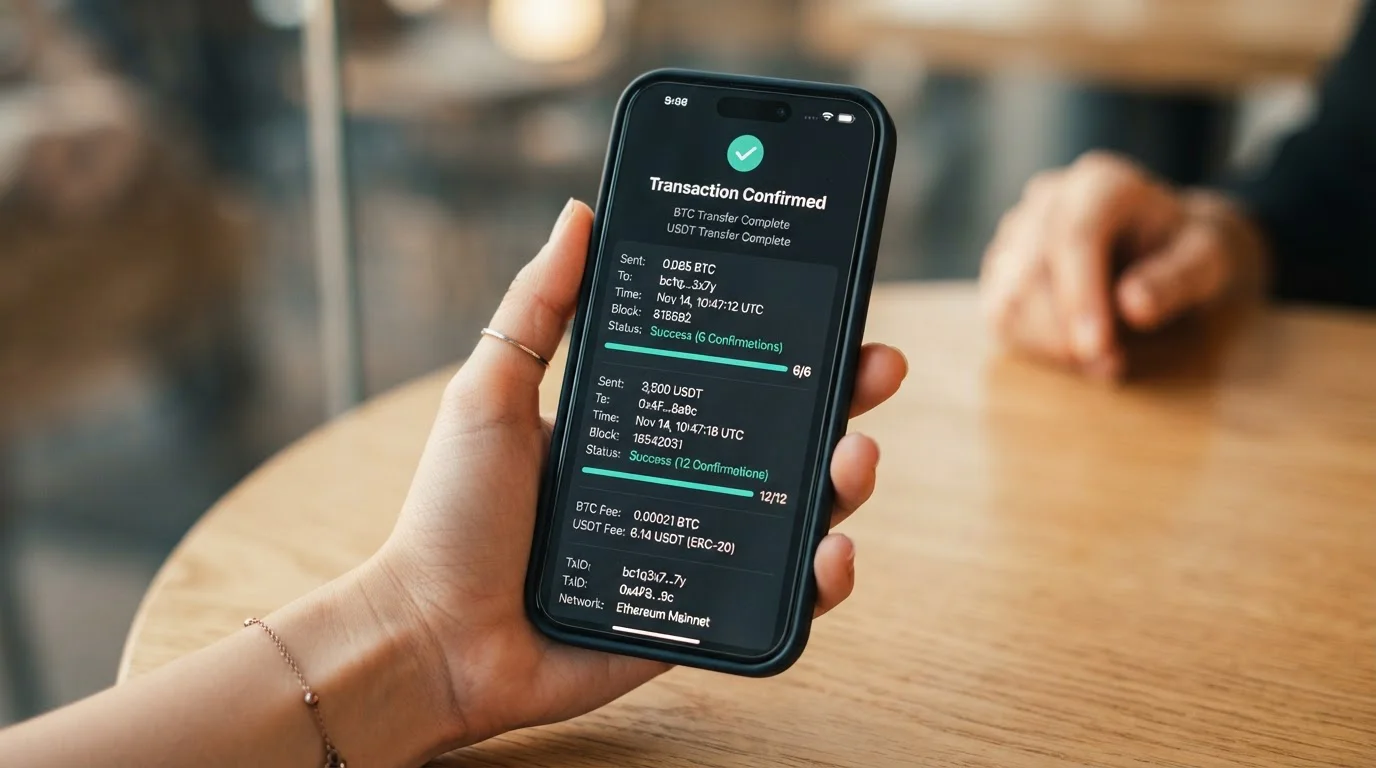
Blockchain confirmation times vary by network. Bitcoin on its main layer can take 10 to 60 minutes for enough confirmations to be considered final, longer during network congestion when transaction fees spike. Ethereum runs faster at 1 to 5 minutes per confirmation but still introduces delay. For gambling deposits and withdrawals, where speed is the primary appeal, slower blockchains negate the advantage over traditional payment rails.
USDT on Tron (TRC20) is the fastest widely-accepted option. Transactions confirm in under 5 minutes, often within 2 to 3 minutes. Tether (USDT) is a stablecoin pegged to the US dollar, which removes price volatility from the equation. You deposit 100 USDT, and if you neither win nor lose, you can withdraw 100 USDT an hour later with no exposure to Bitcoin’s price swings. The TRC20 network (Tron) handles USDT transfers with low fees and fast finality. Most offshore crypto casinos that accept USDT support TRC20 alongside the slower ERC20 (Ethereum) version. Always check which network the casino uses before sending. Sending USDT-TRC20 to an address expecting USDT-ERC20 results in lost funds.
Lightning Network is Bitcoin’s layer-two scaling solution, enabling near-instant transactions with minimal fees. A Lightning deposit or withdrawal settles in seconds rather than minutes. The limitation: fewer offshore casinos support Lightning than support standard Bitcoin. If the platform you are using does support it, Lightning is the fastest option available. If not, you are back to standard Bitcoin with its longer confirmation times.
Litecoin offers a middle ground. Confirmation times run 5 to 10 minutes, faster than Bitcoin but slower than USDT-TRC20. Transaction fees are low. Acceptance is widespread across offshore platforms. Litecoin works as a default fast option when the casino does not support USDT-TRC20 or Lightning.
Dogecoin sits in the same speed and cost range as Litecoin. The network is fast, fees are negligible, and many offshore crypto casinos accept it. Dogecoin lacks Litecoin’s reputation as a serious payment rail, but for gambling deposits and withdrawals where branding does not matter, it functions identically.
Avoid Bitcoin mainnet and Ethereum for time-sensitive withdrawals unless no faster option is available. Both networks are slower and more expensive than alternatives when congestion is high. Bitcoin remains the most widely accepted cryptocurrency, so some platforms only offer BTC. If that is your only option, accept that withdrawal finality will take 15 to 60 minutes on a good day.
Withdrawal Speed Factors: Approval Time vs Blockchain Confirmation
Offshore casinos market "instant withdrawals," which is true in a narrow technical sense and misleading in a broader practical sense. Withdrawal speed breaks into three stages: operator approval, blockchain broadcast, and network confirmation.
Operator approval is the time between clicking "withdraw" and the operator broadcasting the transaction to the blockchain. Automated systems approve small withdrawals in seconds. Manual review adds hours or days. If your account is flagged for KYC verification, approval time becomes indefinite pending document submission. This stage is entirely under the operator’s control and has nothing to do with blockchain speed.
Blockchain broadcast happens once the operator approves the withdrawal and sends the transaction to the network. For custodial casinos (the majority of offshore platforms), this step is also under operator control. Some platforms batch withdrawals to save on transaction fees, which introduces delay even after approval. Non-custodial platforms broadcast immediately because the funds move directly from the casino’s smart contract to your wallet without an intermediate holding step.
Network confirmation is the time the blockchain takes to finalize the transaction. This is outside everyone’s control and depends on network congestion, transaction fees, and the cryptocurrency chosen. USDT-TRC20 confirms in under 5 minutes. Bitcoin can take an hour. The casino cannot speed this up beyond paying higher transaction fees to prioritize the transaction in the network’s queue.
Marketing claims about "instant" or "sub-10-minute" withdrawals refer to the full cycle in best-case scenarios: small withdrawal, automated approval, fast blockchain, no congestion. If any stage introduces delay—manual review, batched broadcast, network congestion, or KYC hold—the advertised speed does not apply. Read the fine print, and treat withdrawal speed claims as best-case figures rather than guarantees.
Privacy-Focused Cryptocurrencies: Monero and Its Limitations
Monero (XMR) is the only widely-used cryptocurrency with native privacy features. Transactions are cryptographically shielded by default, obscuring sender, receiver, and amount. Bitcoin and Ethereum transactions are pseudonymous but publicly visible on their blockchains. Anyone can see that wallet A sent X coins to wallet B at time T. Monero transactions are opaque. You cannot see who sent what to whom unless you hold the private view key.
For gamblers seeking genuine privacy, Monero is the only option that removes blockchain traceability. The problem is acceptance. Very few offshore crypto casinos support Monero deposits and withdrawals. Those that do often limit Monero to higher-tier accounts or enforce stricter KYC on Monero users precisely because the privacy features make AML compliance harder. If you find a platform that accepts Monero and processes withdrawals reliably, you have achieved a level of privacy unattainable with Bitcoin or Ethereum. If the platform does not accept Monero, you are back to pseudonymous coins where every transaction is traceable on-chain.
Mixing services and coin-join protocols like Wasabi Wallet or CoinJoin attempt to obscure Bitcoin transaction histories by pooling transactions from multiple users, making it harder to trace the path of any individual coin. These techniques are not foolproof, and using them can flag your account at some exchanges and casinos as suspicious. Many offshore casinos explicitly prohibit deposits from mixing services in their terms, and some freeze accounts that receive funds traced to mixers.
Privacy on pseudonymous blockchains is a matter of degree, not a binary state. Bitcoin transactions are public, but linking a wallet address to your real-world identity requires additional information: an exchange KYC record, an IP address logged during a transaction broadcast, or a payment to a merchant who knows your delivery address. If you never link your wallet to your identity through those channels, pseudonymity holds. If you KYC-verify at a crypto exchange, buy Bitcoin there, and send it directly to a casino, the exchange knows your identity and can see where you sent the funds. Monero breaks that chain. Everything else requires careful operational security to maintain privacy, and most casual users do not achieve it.
| Cryptocurrency | Typical Confirmation Time | Privacy Level | Acceptance |
|---|---|---|---|
| Bitcoin (BTC) | 10-60 minutes | Pseudonymous (public ledger) | Widely accepted |
| Ethereum (ETH) | 1-5 minutes | Pseudonymous (public ledger) | Widely accepted |
| USDT (TRC20) | Under 5 minutes | Pseudonymous (public ledger) | Widely accepted |
| USDT (ERC20) | 1-5 minutes | Pseudonymous (public ledger) | Widely accepted |
| Litecoin (LTC) | 5-10 minutes | Pseudonymous (public ledger) | Widely accepted |
| Dogecoin (DOGE) | 5-10 minutes | Pseudonymous (public ledger) | Moderate |
| Monero (XMR) | 2-10 minutes | Private (shielded ledger) | Rare |
| Solana (SOL) | Under 1 minute | Pseudonymous (public ledger) | Moderate |
| BNB (Binance Coin) | Under 5 minutes | Pseudonymous (public ledger) | Moderate |
| Cardano (ADA) | 5-10 minutes | Pseudonymous (public ledger) | Rare |
| TRON (TRX) | Under 5 minutes | Pseudonymous (public ledger) | Moderate |
How fast are crypto casino withdrawals compared to traditional online casinos?
Crypto withdrawals at offshore casinos process in minutes to hours when approved, compared to one to five days for card or e-wallet withdrawals at UKGC-licensed sites. The speed advantage is real. The catch is that offshore approval is not guaranteed, and verification holds can delay crypto withdrawals indefinitely just like any other payment method.
Which cryptocurrency is best for anonymous gambling?
Monero offers genuine privacy through cryptographic shielding, but very few casinos accept it. Bitcoin and Ethereum are pseudonymous, meaning transactions are public but not automatically linked to your identity unless you KYC-verify at an exchange or otherwise connect your wallet to your real name. For practical purposes, USDT-TRC20 offers the best balance of speed, stability, and wide acceptance, with pseudonymity equivalent to Bitcoin.
Bonuses, Games, and What to Expect
Offshore crypto casinos compete on bonuses, game libraries, and loyalty programs in ways UKGC-licensed operators cannot match after the April 2025 White Paper restrictions capped bonus wagering at 10x for UK players. The offshore offers look generous on the surface. The details reveal whether the generosity is real or a trap.
Bonus Structures at Offshore Crypto Casinos
Deposit bonuses at offshore crypto casinos typically run 100 to 200 percent of your deposit amount, with wagering requirements between 30x and 60x the bonus value. TG Casino offers 200 percent rakeback up to 10 ETH, with 25 percent weekly cashback in the native TGC token. Shuffle provides instant rakeback with no wagering requirements, a cleaner structure than the standard deposit-match-plus-rollover model. The absence of wagering makes the rakeback immediately withdrawable, which is rare.
The 40x to 60x wagering requirements common at most offshore platforms mean a 100-euro deposit with a 100-euro bonus at 40x wagering requires 8,000 euros in total bets before you can withdraw the bonus or any winnings derived from it. Slot play usually contributes 100 percent toward wagering, table games contribute 10 to 20 percent, and live dealer games often contribute nothing. The math works in the casino’s favor. Most players never clear the wagering requirement, which means the "bonus" functions as a retention mechanism rather than a gift.
Cashback and rakeback programs return a percentage of your losses or total wagers as a rebate, usually paid weekly or monthly. Cashback percentages run 5 to 25 percent depending on your VIP tier. Rakeback pays a percentage of the house edge on every bet, win or lose, which means you earn rebates even on winning sessions. VIP programs typically tier by total wagering volume, unlocking higher rakeback percentages, faster withdrawals, and dedicated account managers at the upper levels.
No-wagering bonuses are the exception. When an offshore casino offers a bonus with zero rollover, you can withdraw it immediately. These offers are rare and usually small in value, because they cost the operator money rather than locking players into extended play sessions.
Free spins offers at offshore casinos come with their own wagering requirements, typically 30x to 50x the value of winnings from the spins. If you win 10 euros from free spins with 40x wagering, you must wager 400 euros before you can withdraw. Maximum win caps apply, often capping free spin winnings at 100 to 200 euros regardless of how much you actually win during the spins.
Bonus abuse clauses are universal. If the operator determines you are "gaming" the bonus system through arbitrage, hedging, low-risk bets, or creating multiple accounts, they will void the bonus and any winnings derived from it. The determination is discretionary. What counts as abuse is defined loosely in the terms, which gives the operator wide latitude to refuse payouts if your play does not generate the expected losses.
Game Variety: Slots, Live Dealer, Provably Fair Originals
Offshore crypto casinos pull their slot libraries from the same providers supplying UKGC-licensed sites: Pragmatic Play, NetEnt, Play’n GO, Microgaming, Evolution (for live dealer), and dozens of smaller studios. The game libraries at large offshore platforms like BC.Game (9,000+ titles) and Wild.io (8,000+) exceed what most UKGC operators offer, because offshore casinos face no restrictions on which providers they can partner with. UKGC casinos must ensure their providers are also licensed by the Commission, which narrows the pool. Offshore casinos have no such limitation.
Live dealer games run through the same Evolution, Pragmatic Play Live, and Ezugi streams seen at UK-licensed casinos. The croupiers, tables, and gameplay are identical. The difference is the operator branding in the interface, the currencies accepted, and the regulatory framework governing disputes. A losing hand at blackjack feels the same whether the platform holds a UKGC or Curaçao license. What differs is what happens if you win big and the operator refuses to pay.
Provably fair originals are the one game category unique to crypto casinos. These in-house titles—dice, crash, Plinko, mines, keno, towers—use cryptographic hashing to let you verify that outcomes were not manipulated after you placed your bet. BC.Game runs 18 to 22 provably fair titles. Shuffle runs around 20. These games are faster than slots, with results generated in seconds and no spinning animations or bonus features to slow down play. They also offer transparency that third-party slots cannot match. You can verify fairness yourself using the seed data rather than trusting an audit certificate.
Slot RTP (return to player) percentages at offshore casinos are usually identical to UKGC sites, because the games are supplied by the same providers. Pragmatic Play’s Wolf Gold runs at 96.01 percent RTP whether you play it at a Curaçao or UKGC-licensed site. Some offshore casinos offer configurable RTP slots where the operator chooses from a range (e.g., 94-96-98 percent), and not all operators choose the highest setting. Check the game’s info screen for the active RTP if transparency matters to you.
Progressive jackpot slots like Mega Moolah are less common at offshore crypto casinos than at UKGC sites, because the jackpot pools are often segregated by licensing jurisdiction. A jackpot won at a UKGC-licensed casino does not affect the pool at a Curaçao-licensed site, and vice versa. Some offshore platforms participate in the same networks, others do not. If you are chasing a specific progressive jackpot, verify that the offshore casino’s version contributes to the main pool rather than a separate smaller pool.
New Crypto Casinos Launched in 2026
New offshore crypto casinos launch monthly, most of them white-label operations running identical backend infrastructure with different branding. The platforms differentiated enough to warrant attention in 2026 are those introducing novel features (tokenomics, DAO governance, decentralized game provenance) or those backed by established operators expanding into crypto. WSM Casino, launched in 2023 and gaining traction in 2026, falls into the community-driven category, built on the Wall Street Memes brand.
New casinos often compete on aggressive bonuses and promotions to build player bases quickly. The trade-off is less operational history, which makes evaluating trustworthiness harder. A platform with six months of operations and no documented complaints is not necessarily safer than an established operator with occasional disputes but five years of reliably processed withdrawals. New platforms warrant smaller test deposits and more frequent withdrawals until a track record develops.
What is provably fair and how do I verify it?
Provably fair games use SHA-256 cryptographic hashing to let you verify outcomes were not manipulated. Before you bet, the casino hashes a secret server seed and shows you the hash. You provide a client seed. The game outcome is computed from both seeds plus a nonce. After the bet, the casino reveals the unhashed server seed. You recompute the outcome with the same inputs. If the result matches what the casino showed, the game was fair. Third-party tools like provablyfair.org automate the verification. Provably fair only applies to in-house games, not third-party slots or live dealer tables.
UK-Specific Considerations: Tax, Legality, and Practical Steps
Using offshore crypto casinos introduces complications for UK players that UKGC-licensed gambling avoids. Tax obligations, currency conversion logistics, and GamStop self-exclusion become your responsibility rather than the operator’s. Understanding where the legal and financial landmines sit prevents surprises when you try to convert crypto winnings back into pounds or when HMRC asks where the money came from.
Are Offshore Crypto Casinos Legal for UK Players?
Playing at an offshore casino is not illegal for the individual player under UK law. The Gambling Act 2005 criminalizes unlicensed operators who target UK customers, not the customers themselves. You will not be prosecuted for depositing cryptocurrency at a Curaçao-licensed casino and playing slots. The operator violates the law if they actively advertise to or solicit UK players without a UKGC license. Most offshore crypto casinos structure their terms to disclaim targeting the UK market while still accepting UK registrations. That legal gray zone lets them operate without directly violating UK law, and lets you play without breaking it.
The practical consequence is that offshore operators can refuse to pay you with no legal recourse on your end. If a UKGC-licensed casino freezes your account unjustly, you have IBAS, the Financial Ombudsman, and ultimately the UK courts. If a Curaçao casino freezes your account, you have a complaint form on a regulator’s website that may never receive a response, and reputational pressure through public forums that may or may not matter to the operator. The law does not protect you because you chose to gamble outside the regulated framework. That choice is legal. The consequences land on you.
HMRC Tax Obligations on Crypto Gambling Winnings
UK tax law treats gambling winnings as non-taxable income. If you win 10,000 pounds at a UKGC-licensed casino, you owe no income tax on the winnings. The same principle applies to offshore gambling. The winnings themselves are not taxable. The complication enters through cryptocurrency’s status as an asset rather than currency in HMRC’s view.
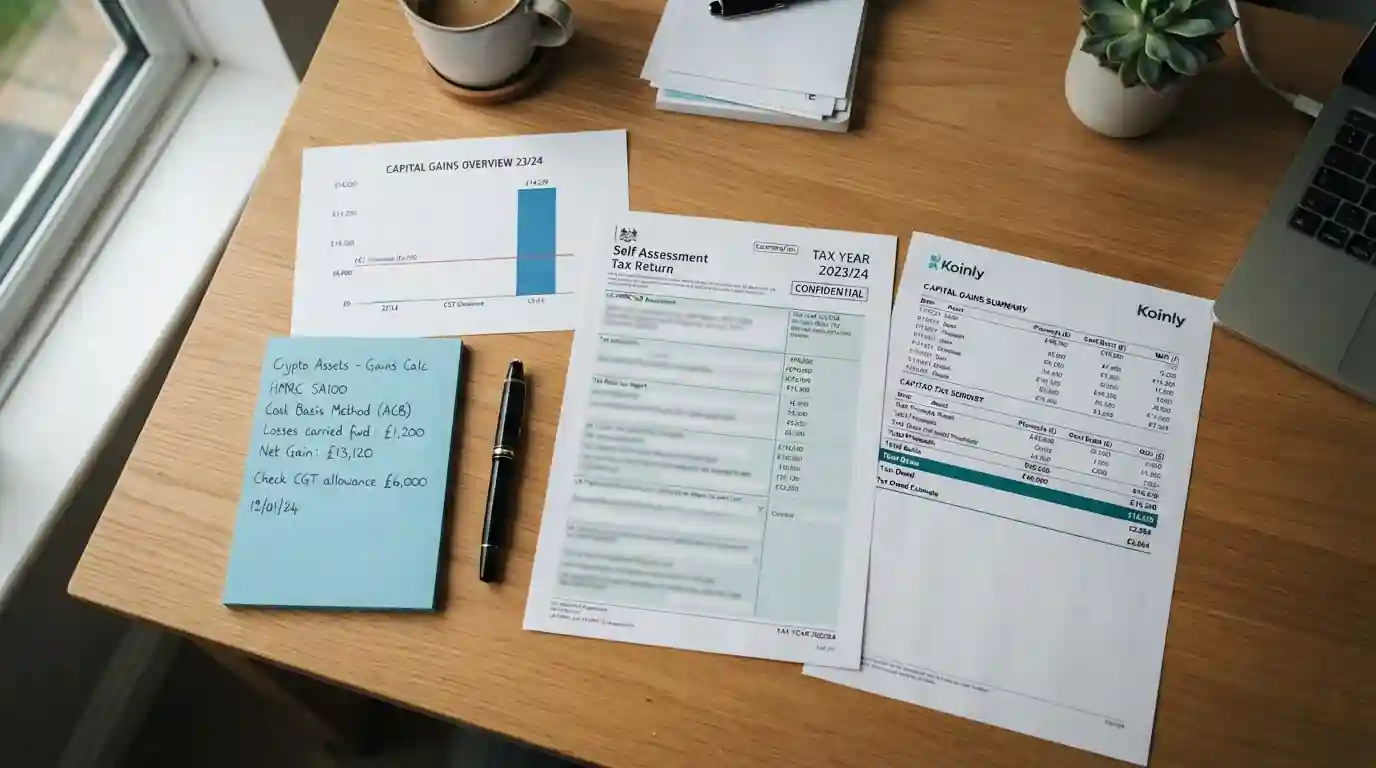
If you deposit Bitcoin purchased at 30,000 pounds per coin, gamble at an offshore casino, and withdraw winnings in Bitcoin when the price has risen to 40,000 pounds per coin, you have realized a capital gain on the Bitcoin separate from the gambling activity. HMRC treats the disposal of the Bitcoin (spending it at the casino, withdrawing it, converting it to GBP) as a taxable event. The capital gains tax calculation compares your cost basis (what you paid for the Bitcoin) against the value when you disposed of it (what it was worth when you withdrew it from the casino or converted it to pounds). If the Bitcoin appreciated while you held it, you owe capital gains tax on that appreciation, even though the gambling winnings themselves are not taxed.
The annual capital gains allowance for UK taxpayers in 2026 is 3,000 pounds. Gains below that threshold are tax-free. Gains above it are taxed at 10 percent (basic rate) or 20 percent (higher rate) depending on your income tax bracket. If you are actively gambling with cryptocurrency and converting back to GBP regularly, you are generating multiple disposal events per year, each of which contributes to your capital gains total. Keeping records of purchase prices, withdrawal values, and conversion rates becomes mandatory if you want to file accurately.
The complexity multiplies if you win in one cryptocurrency and convert through multiple coins before returning to GBP. Each conversion is a separate disposal. If you win in Bitcoin, convert to USDT, then convert to GBP through an exchange, you have two taxable events: BTC to USDT, USDT to GBP. If the value fluctuates between those steps, you realize gains or losses at each stage. HMRC expects you to track all of it.
For players keeping winnings in cryptocurrency without converting to fiat, the tax obligation is deferred until you dispose of the crypto. If you win Bitcoin and hold it in your wallet indefinitely, you owe no tax yet. The moment you sell it, spend it, or convert it to another asset, the disposal triggers capital gains calculations. The gambling winnings are still not taxed. The appreciation in the cryptocurrency’s value is.
Converting Crypto Winnings to GBP Through FCA-Registered Exchanges
Offshore crypto casinos pay out in cryptocurrency. Converting those winnings to pounds that you can spend or deposit in a UK bank account requires a cryptocurrency exchange. Not all exchanges are equivalent in terms of regulatory standing, fees, or willingness to accept funds with gambling origins.
FCA-registered exchanges operating in the UK include Coinbase, Kraken, and Bitstamp. These platforms are authorized by the Financial Conduct Authority to offer crypto asset services to UK customers, which means they comply with UK AML regulations and maintain higher operational standards than unregistered offshore exchanges. Using an FCA-registered exchange provides some assurance that your funds will not be frozen without explanation, and that you have a UK-based entity to contact if disputes arise.
The process: withdraw your crypto winnings from the offshore casino to a private wallet you control (MetaMask, Ledger, Trezor, or a non-custodial mobile wallet). Do not send directly from the casino to the exchange. Many exchanges flag deposits from known gambling sites and freeze accounts pending investigation. Sending to your own wallet first breaks the direct link, though sophisticated blockchain analysis can still trace the funds back to their origin if the exchange runs those checks.
From your private wallet, send the crypto to your exchange account. Convert it to GBP using the exchange’s trading interface. Withdraw the GBP to your UK bank account via bank transfer. Most exchanges charge a small withdrawal fee, typically a flat 1 to 2 pounds or a percentage of the amount. Expect the bank transfer to complete within one to three business days.
Some UK banks flag large crypto-related deposits as suspicious and freeze accounts pending source-of-funds investigations. If you are moving five-figure sums from crypto exchanges to your bank regularly, inform your bank in advance that you are converting cryptocurrency holdings, and keep records of your transactions in case they ask. The gambling origin is not illegal, but the bank may ask where the crypto came from and why you are receiving large inflows from an exchange.
Crypto-to-GBP conversion also exposes you to price volatility. If you win 1 Bitcoin when BTC trades at 40,000 pounds and you wait a week to convert it, the price may have dropped to 38,000 pounds. You lost 2,000 pounds to volatility despite winning the bet. Converting immediately after withdrawal reduces that risk. Stablecoins like USDT eliminate it entirely, because the value is pegged to the dollar. Converting USDT to GBP introduces only minor exchange-rate fluctuation between USD and GBP, far less volatile than holding Bitcoin or Ethereum.
GamStop Self-Exclusion and Offshore Sites
GamStop is the UK’s national self-exclusion scheme, covering all UKGC-licensed gambling operators. If you self-exclude through GamStop, every licensed casino, bookmaker, bingo site, and poker room in the UK blocks your registration and deposits for the duration you selected (six months, one year, five years, or permanent). The system works because UKGC licensees are legally required to participate and face penalties for non-compliance.
Offshore casinos operate outside UKGC jurisdiction, which means they have no legal obligation to honor GamStop exclusions. They do not access the GamStop database, they do not check whether you are self-excluded, and they will accept your registration and deposits regardless of your status in the UK system. That is a feature for some players and a removed safeguard for others.
If you self-excluded through GamStop to address problem gambling, offshore casinos represent a bypass that undermines the protection you tried to put in place. The platforms will not stop you from depositing. They have no cooling-off periods, no mandatory deposit limits, no affordability checks, and no responsibility to intervene if your play looks harmful. You are on your own.
If you self-excluded because you found UK affordability checks intrusive and wanted to gamble without submitting payslips and bank statements, offshore casinos provide the access you were looking for. The ethical and practical assessment of whether that is a good idea is yours to make.
Legally, using offshore casinos while self-excluded via GamStop is not a crime. GamStop is a voluntary scheme, not a statutory prohibition. You chose to exclude yourself, and you can choose to gamble elsewhere. The exclusion applies only to UKGC-licensed operators. What you lose is the safeguard itself. If you later realize you need that barrier reinstated, offshore casinos will not enforce it. You will need to self-exclude directly with each offshore operator individually, if they offer that feature, which most do not.
Do I need to pay tax on crypto casino winnings in the UK?
The gambling winnings themselves are not taxable. If you win 10,000 pounds, you owe no income tax on that amount. You may owe capital gains tax if the cryptocurrency you used appreciated in value between when you acquired it and when you disposed of it (converted to GBP, spent, or exchanged). The annual capital gains allowance is 3,000 pounds. Gains above that threshold are taxed at 10 or 20 percent depending on your income tax bracket. Keep records of your crypto purchase prices and disposal values to calculate your gains accurately.
Can I access crypto casinos if I’m self-excluded via GamStop?
Yes. GamStop covers only UKGC-licensed operators. Offshore crypto casinos do not participate in the scheme and will accept your registration and deposits regardless of your self-exclusion status. If you self-excluded to control problem gambling, offshore casinos remove that safeguard entirely. If you self-excluded because you objected to UK affordability checks, offshore platforms provide the unrestricted access you were seeking.

How to Choose the Right No-KYC Crypto Casino
Evaluating offshore crypto casinos without regulatory oversight to do the work for you means checking multiple signals rather than relying on any single data point. A verified license is better than no license, but it does not guarantee reliable payouts. A large game library is appealing, but it does not tell you whether the operator will freeze your account under a discretionary clause when you try to withdraw. The checklist below combines verification steps with practical tests that reveal how an operator behaves under conditions that matter.
Step-by-Step: Opening an Account and Making Your First Withdrawal
Test an offshore casino with small amounts before committing larger deposits. The pattern that works: register with minimal information (wallet-connect or disposable email), deposit a small amount of cryptocurrency (20 to 50 pounds equivalent), play through it partially, and request a withdrawal of the remainder. Process a second deposit, win enough to exceed your total deposits by a meaningful margin (double or triple your starting balance), and withdraw the winnings. If both withdrawals process smoothly within the advertised timeframe and no verification is requested, the platform behaves as marketed at your stake level. If the first small withdrawal triggers immediate KYC, you know the platform’s threshold is lower than advertised. If the second larger withdrawal triggers holds, demands for documents, or unexplained delays, you know the operator becomes difficult once you are in profit.
Registration at wallet-connect platforms like TG Casino or Betpanda takes seconds. Open MetaMask or WalletConnect, navigate to the casino, click the connect button, approve the connection in your wallet, and the account is live. No email confirmation, no username, no password. Your wallet address is your account. Deposit by sending cryptocurrency to the address displayed in the casino’s deposit interface. Most platforms generate a unique deposit address per user, which means the address is effectively your account identifier. Write it down or bookmark it. Losing access to your wallet means losing access to the casino account.
Email registration platforms require an email address and password. Use a disposable email service like Guerrilla Mail or a dedicated email address you do not use for anything else if anonymity matters. Some platforms send a confirmation link, others let you deposit immediately. Deposit by copying the cryptocurrency address from the casino’s cashier interface and sending funds from your wallet. Always double-check the address before sending. Cryptocurrency transactions are irreversible. Sending to the wrong address means permanent loss.
Withdrawals at offshore casinos are requested through the cashier or withdrawal interface. Enter the amount and your wallet address. If the platform is custodial (you deposited to an address the casino controls), the withdrawal is a request that the operator must approve. If the platform is non-custodial (you connected your own wallet and deposits never leave your control), withdrawal is instant because the funds move directly from the casino’s smart contract to your wallet. Most offshore crypto casinos are custodial. Your cryptocurrency sits in a wallet the operator controls until you withdraw it.
Small test withdrawals reveal whether the operator processes payouts as advertised. If a 20-pound withdrawal sits pending for 24 hours when the site claims sub-10-minute processing, that delay is a red flag. If the withdrawal processes in 5 minutes, the platform works at that scale. Larger withdrawals test whether the operator changes behavior once you are in profit. A 200-pound withdrawal after winning should process as smoothly as a 20-pound withdrawal if the platform is trustworthy. If it triggers manual review, document requests, or indefinite holds, you have learned the operator’s true threshold before committing serious money.
Evaluation Checklist: License, Games, Speed, Limits, Support
License verification: Check the footer for a license number. Cross-reference that number with the Curaçao Gaming Control Board register (for licenses issued after 2023) or the individual sublicensor’s validation page (for older licenses). If the license number returns no results, the platform is unlicensed or lying about its credentials. If the license is from Anjouan, accept that enforcement is weaker than Curaçao. If the platform claims UKGC licensing while accepting crypto, it is lying.
Game library: Count the number of providers, not just the number of games. A platform with 5,000 games from three providers (Pragmatic, NetEnt, Evolution) offers less variety than a platform with 3,000 games from 20 providers. Check whether the platform offers provably fair originals. If you value cryptographic verification, a casino with 20 provably fair games is more transparent than one with 10,000 third-party slots and no verifiable in-house titles.
Withdrawal speed: Test with a small withdrawal before believing marketing claims. Sub-10-minute processing is achievable at well-run platforms, but only for small amounts at accounts not flagged for review. Expect longer processing times for amounts above the KYC threshold, even if the operator does not explicitly request documents immediately. If your test withdrawal takes longer than 24 hours, consider that the baseline rather than an anomaly.
Withdrawal limits: Check the terms for monthly or daily caps. Some operators publish them, others do not. If a platform advertises "unlimited withdrawals" but independent reviews document caps enforced at payout time, trust the reviews over the marketing. Monthly caps in the 5,000 to 10,000-euro range are common. Caps that tighten when you are winning are red flags.
Support responsiveness: Open live chat and ask a specific question. "What is your KYC threshold?" or "How long does manual review take for withdrawals?" The response time and quality of the answer signal whether support is functional or a placeholder. If live chat is unavailable and email is the only contact method, expect slower resolutions when issues arise. If the site lists 24/7 live chat but you cannot access it, the claim is false.
Bonus terms: Read the wagering requirements and game contribution percentages before accepting any bonus. A 200 percent bonus with 60x wagering is more restrictive than a 100 percent bonus with 30x wagering. No-wagering bonuses and instant rakeback are cleaner than deposit matches with high rollover. If the bonus is too complex to understand after reading the terms twice, skip it and play without bonuses.
Red Flags to Avoid
Platforms exhibiting multiple red flags from the list below warrant avoiding entirely, regardless of how attractive the bonuses or game selection appear.
No license, or unverifiable license. If the platform claims a license but the number does not validate, treat it as unlicensed. Unlicensed operators have no regulatory oversight, no dispute escalation, and no consequences for refusing payouts beyond reputational damage they can escape by rebranding.
Fake license badges. Displaying UKGC or MGA logos in the footer when the platform is offshore is a clear fraud signal. No UKGC-licensed casino accepts cryptocurrency. If one claims to, it is lying about its license, not operating under a secret exception.
Sole discretion clauses combined with documented disputes. Every offshore casino includes discretionary language in its terms. The red flag is when that discretion is enforced frequently based on independent review patterns. If multiple reviewers document frozen accounts, confiscated funds, or indefinite payout holds, the discretionary enforcement is systematic rather than reserved for actual fraud cases.
Withdrawal caps that change when winning. Operators that tighten monthly limits once your balance exceeds a certain multiple of your deposits are penalizing winning. That is a red flag, not a standard protection.
No response to support inquiries. If you cannot reach support before depositing, you will not reach them after depositing when something goes wrong.
Terms of service prohibiting your jurisdiction. Some offshore casinos list the UK as a prohibited or restricted territory in their terms while still accepting UK registrations. That creates an easy excuse to void your winnings by claiming you violated the terms by playing from a restricted location. If the terms say UK players are prohibited, do not play there even if the site accepts your deposit.
Too-good-to-be-true offers. A 500 percent deposit bonus, 50 percent daily rakeback, or guaranteed tournament winnings are not credible. Offshore casinos run on slim margins. Offers that appear irrational likely conceal predatory rollover requirements, rigged games, or exit-scam intent.
This guide has covered which offshore crypto casinos accept UK players without requiring upfront KYC, where verification actually triggers, what protections you lose by gambling outside UKGC regulation, how to evaluate operator safety without a regulator doing it for you, and what tax and legal obligations you carry as a UK resident converting crypto winnings to pounds. The platforms listed—TG Casino, Betpanda, BC.Game, Lucky Block, Wild.io, Shuffle, and others—represent the range of risk and functionality in the offshore market as of 2026. None are risk-free. All operate outside the consumer protections UK regulation provides. Whether the trade-off justifies the speed and privacy depends on how much you value those benefits against the loss of segregated funds, enforceable dispute resolution, and regulatory oversight. The decision is yours. The consequences sit with you.
Created by the ”Payments-casino-uk” editorial team.