Online Casino No Registration UK — What Actually Works in 2026
 Available in GB

The promise sounds perfect: register at an online casino, deposit, and play without photographing your passport or utility bills. Marketing calls it "no registration," "no verification," or "no KYC." The reality splits into two models, and neither delivers true anonymity.
UKGC-licensed casinos verify you instantly via automated database cross-checks. Offshore casinos postpone document upload until you request a withdrawal. Both check your identity. The difference is when and how.
This breakdown covers five UKGC-licensed operators that clear most UK players in under three minutes without manual document review, three offshore casinos that defer verification until withdrawal thresholds between £1,500 and £2,500, and the legal trade-offs you accept when picking one model over the other.
Table of Contents
- What "No Registration Casino" Actually Means in the UK
- UKGC-Licensed Casinos: Instant Verification Without the Wait
- Offshore No-KYC Casinos: Deferred Verification, Greater Risk
- UKGC vs Offshore: What You Trade Away
- When Verification Still Happens (And Why)
- Pay N Play: The True "No Registration" Technology
- Slots and Games at No-Registration Casinos
- Bonuses and Free Spins: Verification Requirements
- How to Make Verification Painless
- Checking a Casino’s Licence Yourself
- Responsible Gambling and Self-Exclusion
What "No Registration Casino" Actually Means in the UK
True anonymity is illegal for any operator serving UK customers. The UK Gambling Commission mandated age and identity verification before deposit or play in May 2019. Every casino holding a UKGC licence must confirm who you are before your first £10 lands in the account.
The term "no registration" describes two workflows, not the absence of checks.
The Two Models: Instant eKYC vs Deferred KYC
UKGC-licensed casinos use instant electronic Know Your Customer checks. You enter your name, date of birth, and address during signup. The system cross-references your details against the UK electoral roll, credit reference agency databases from Experian, Equifax, and TransUnion, and fraud prevention registers like CIFAS and National Hunter. If your data matches a record on file, verification completes in one to five minutes. No document upload, no waiting for manual review.
Roughly 85 per cent of UK registrations clear this way. The remaining 15 per cent hit a mismatch: your name on the electoral roll is your legal first name, but you registered with a nickname. You moved house six weeks ago and your credit file still shows the old address. You are under 25 with a thin credit history. You are a non-UK national with no UK credit footprint. The system flags your account and requests documents.
Offshore casinos skip verification at signup. You provide an email and password, deposit via crypto or e-wallet, and play immediately. Identity checks happen later, typically when you request a withdrawal above £1,500 to £2,500 or when the compliance team flags unusual activity. You submit a passport scan, proof of address, and sometimes a selfie holding your ID. Manual review takes 24 to 72 hours. If the operator suspects the funds are not yours, they escalate to source-of-funds checks: payslips, bank statements, tax returns.
Both models verify identity. The UKGC version does it upfront via automation. The offshore version defers it and handles it manually.
Why True Anonymity Is Illegal for UK-Facing Casinos
The Gambling Act 2005 and the UK Gambling Commission’s Licence Conditions and Codes of Practice require every operator serving Great Britain to confirm three things before accepting money: you are 18 or older, you are who you claim to be, and the funds moving through your account are legitimately yours. This applies to every operator targeting UK customers, regardless of where the company is incorporated or where its servers sit.
A casino that collects no identity data at all cannot legally take deposits from UK residents. Operators advertising "full anonymity" or "zero KYC" to UK players are either lying about their verification process or operating without a UKGC licence and breaking UK law.
The Gambling Commission enforces this with payment-blocking orders, ISP blocks, and licensing sanctions. Unlicensed operators cannot prevent these measures because they have no UK legal standing.
What "No Documents at Signup" Really Delivers
The practical outcome depends on which model you encounter.
At a UKGC-licensed casino using instant eKYC, most players never see a document upload form. You fill in the registration page, the system queries its databases, and seconds later your account is active with full deposit and withdrawal access. If the automated check fails, you upload a photo ID and proof of address. The compliance team reviews it within 24 to 48 hours. Once approved, no further verification unless you trigger an affordability check above certain spend thresholds or change your payment method before a withdrawal.
At an offshore casino, signup takes 30 seconds. No database checks, no waiting. You deposit and play. The catch arrives when you request a withdrawal. The casino emails you a document checklist. You upload the files. The compliance team reviews them manually. If something is unclear or missing, they request additional documents. If your withdrawal is above £2,000, they may ask for source-of-funds proof. Processing drags out to 72 hours or longer. Some operators hold your balance until verification clears.
"No documents at signup" is accurate. "No verification ever" is not.
Can you really play at a UK online casino without uploading ID documents, or is "no verification" misleading marketing?
Most UKGC-licensed players never upload documents because instant eKYC clears them automatically. Offshore players avoid documents at signup but face manual review at withdrawal. The term "no verification" is misleading—it means verification is automated or deferred, not absent.

UKGC-Licensed Casinos: Instant Verification Without the Wait
Five operators on the UK Gambling Commission register combine instant electronic verification with established UK market presence. Each holds an active UKGC licence, uses automated database cross-checks to verify most accounts in under five minutes, and supports standard UK payment methods. Verification happens in the background. For the majority of UK players, no manual document upload is required at signup or withdrawal.
The table below summarises key parameters. Individual breakdowns follow with specifics on verification flow, welcome offers, and what sets each operator apart.
| Operator | UKGC Licence | Verification Method | Welcome Offer | Distinguishing Feature |
|---|---|---|---|---|
| 888 Casino | 039028-R-319297-014 | Instant eKYC, documents if flagged | 100 free spins + £100 match | 30 years operating, eCOGRA audited, 2,000+ games |
| William Hill | Active (verified) | Auto Verification Tool via email | Varies by promotion | 90-year heritage, reported 97.24% average RTP |
| Highbet | 39483 | Automated at registration | 50 free spins, no wagering | Wager-free bonuses, dual UKGC/MGA licence |
| Betway | Active (verified) | Automated, manual if inconclusive | Varies by promotion | Trustly withdrawals ~50min, 20-year track record |
| BoyleSports | 39469 | Electronic KYC, docs at first withdrawal if needed | 100 free spins, no wagering | Irish brand since 1982, no-wager spins |
888 Casino — 30 Years, Instant eKYC, 2,000+ Games
888 Casino launched in 1997, making it one of the longest-established online gambling brands still operating. The platform is run by 888 UK Limited under UKGC licence 039028-R-319297-014, verified active as of September 2026 via the public register. The parent entity, 888 Holdings PLC, was acquired by Evoke plc in 2022, consolidating it under the same ownership as William Hill. The casino also holds Gibraltar Gambling Commissioner licences and a Malta Gaming Authority licence, providing regulatory diversification across three tier-one jurisdictions.
The game library spans 2,000-plus titles from providers including NetEnt, Evolution Gaming, Pragmatic Play, and Playtech. Slots dominate the selection, but the live casino is powered by Evolution, covering roulette, blackjack, baccarat, and game-show variants like Crazy Time and Monopoly Live. The welcome package offers 100 free spins plus a £100 match bonus on the first deposit, subject to standard UKGC wagering caps. All games carry eCOGRA certification, an independent fairness audit that verifies random number generator integrity and published return-to-player percentages.
Verification runs via instant eKYC. You enter your details at signup. The system cross-checks them against credit reference databases and the electoral roll. If the data matches, your account activates in minutes with full deposit and withdrawal access. If the automated check returns inconclusive, the platform flags your account and requests a photo ID and proof of address. The compliance team reviews uploaded documents within 24 to 48 hours. Most UK players with stable addresses and a UK credit history clear the automated stage without needing to upload anything.
William Hill — 90-Year Heritage, Auto Verification Tool
William Hill is a household name in UK betting, founded in 1934 as a retail bookmaker. The brand moved online in the early 2000s and now operates a full sportsbook and casino under UKGC licensing. Ownership sits with Evoke plc, the same parent that controls 888 Casino after the corporate restructure between 2022 and 2024. The casino side covers slots, live dealer games, and table games from standard providers. One competitor claim attributes the "highest average RTP among UK operators at 97.24 per cent" to William Hill, though this figure is not independently verified and should be taken as marketing rather than audited fact.
The verification system is called the Auto Verification Tool, accessible via an email link sent immediately after you complete registration. You click the link, the tool queries your details against external databases, and if a match is found, verification completes in minutes. If the automated check fails, you upload documents via the Direct Document Uploader or submit them through live chat. The support documentation states that most accounts are verified within minutes once documents are received, though "minutes" refers to the review time for straightforward cases, not the time it takes you to photograph and upload your ID.
William Hill’s 90-year market presence translates to high consumer trust and brand recognition, but operationally the casino functions like most UKGC-licensed platforms. Instant eKYC handles the bulk of verifications. Manual review covers the edge cases. Withdrawal speeds depend on payment method: e-wallets like PayPal and Skrill typically clear within a few hours, while debit card withdrawals take one to three business days.
Highbet — Wager-Free Bonuses, Dual UKGC/MGA Licence
Highbet holds UKGC licence number 39483 and a Malta Gaming Authority licence, giving it regulatory coverage in the UK and across MGA-recognised European markets. The brand entered the UK online casino space in the 2020s, positioning itself as a player-friendly alternative with transparent bonus terms. The standout feature is the wager-free promotion structure: the welcome offer provides 50 free spins on Big Bass Splash with no wagering requirement, meaning any winnings from those spins transfer directly to your withdrawable balance. A weekly cashback promotion returns 10 per cent of your slot losses from Monday to Thursday, up to £100, also with no wagering requirement.
Most UK casino bonuses carry 10x wagering under UKGC caps, meaning a £50 bonus requires £500 in qualifying bets before you can withdraw. Highbet’s zero-wagering model eliminates that friction. The trade-off is smaller bonus amounts. A £500 bonus at 10x wagering could theoretically unlock more funds if you hit a winning streak, but wager-free terms guarantee you keep what you win without grinding through rollover requirements.
Verification happens at registration via automated checks. The platform does not publish specific details about its eKYC provider, but the process follows the standard UKGC model: you enter your name, date of birth, and address, and the system cross-references your data against external databases. If a match is found, your account activates immediately. If the check is inconclusive, you upload a photo ID and proof of address for manual review. Because Highbet requires verification before you can claim any bonus, there is no gap where you could register, claim free spins, and play without identity confirmation. The UKGC mandate makes that workflow illegal for any licensed operator.
Betway — Fast Payouts, 20-Year Track Record
Betway launched in 2006 and operates under a UKGC licence verified active across multiple competitor sources and official documentation. The parent company, Betway Limited, is part of Super Group, a dual-listed entity trading on the New York Stock Exchange and the Johannesburg Stock Exchange. The platform spans sportsbook and casino, with over 1,000 slots, live dealer games, and table games from providers including Microgaming, NetEnt, Evolution, and Pragmatic Play. Betway has maintained long-term partnerships with Microgaming since its early years, though the provider portfolio has expanded significantly since then.
Withdrawal speed is the operational strength. Independent testing by Casino.org UK recorded a Trustly payout at 50 minutes from request to cleared funds in the player’s bank account. That figure is site-specific and payment-method-specific—it represents a single test at Betway using Trustly, not a guaranteed processing time for every withdrawal. PayPal withdrawals typically clear in under four hours. Skrill and Neteller follow similar timelines. Debit card withdrawals take one to three business days because card networks process refunds more slowly than e-wallet rails.
Verification uses an automated system that cross-checks your registration details against external databases. If the data matches, your account is verified instantly. If the system cannot confirm your identity automatically, it requests documents. The fallback process is standard: upload a photo ID and proof of address, wait 24 to 48 hours for manual review, and receive approval or a request for additional documents if something is unclear. Betway’s compliance team occasionally triggers affordability checks for players who deposit large sums quickly, in line with UKGC financial vulnerability rules introduced in February 2025.
BoyleSports — Irish Brand, 100 No-Wager Free Spins
BoyleSports is an Irish bookmaker founded in 1982, operating retail betting shops across Ireland and Northern Ireland before expanding into the UK online market in the 2010s. The company holds UKGC licence 39469, covering casino and live casino domains listed on the public register. The brand is privately held under the BoyleSports group and maintains a strong reputation in the Irish and Northern Irish markets, where it competes with Paddy Power and Ladbrokes for retail and online share.
The UK welcome offer provides 100 free spins with no wagering requirement. Like Highbet, BoyleSports positions wager-free bonuses as a differentiator in a market where most UKGC operators cap wagering at 10x. The practical advantage is straightforward: you claim the spins, any winnings transfer to your real-money balance immediately, and you can withdraw without grinding through rollover requirements. The trade-off is the same as with any wager-free offer—the bonus amount is smaller than a matched deposit bonus with wagering attached.
Verification follows the electronic KYC model at signup. You enter your details, the system queries external databases, and if a match is found, your account is verified. If the automated check fails or returns inconclusive, the platform may request documents at your first withdrawal instead of blocking access immediately. This deferred-document approach is still UKGC-compliant because the initial verification happened electronically at registration. The manual document check serves as a secondary confirmation when the system could not verify your identity via database cross-checks alone. Official documentation from BoyleSports states: "We operate under strict Know Your Customer regulations, so you may be asked to verify your identity before processing your first withdrawal." That phrasing acknowledges that some players clear the automated stage and never submit documents, while others are flagged for manual review.
How long does verification take if I do need to submit documents?
UKGC-licensed casinos typically review uploaded documents within 24 to 48 hours. The timeline depends on the clarity of your photos and whether the compliance team needs additional information. Fast-track the process by uploading high-resolution images with all four corners visible, no glare, and your full name and address clearly legible.
What documents do I need to prepare for casino verification?
Photo ID (passport or driving licence, in-date, colour), proof of address (bank statement, utility bill, or council tax letter dated within three months), and sometimes a selfie holding your ID. For card deposits, a photo of your card showing the first six and last four digits with the middle digits and CVV covered.

Offshore No-KYC Casinos: Deferred Verification, Greater Risk
Offshore operators hold Curaçao, Anjouan, or other non-UKGC licences and accept UK players without upfront identity checks. Registration requires an email and password. Deposits clear instantly. Verification happens at withdrawal, usually when you request a payout above £1,500 to £2,500 or when the compliance team flags your account for unusual activity.
Three operators below represent the offshore deferred-KYC model. Each holds a Curaçao licence under the post-December 2024 LOK reform, accepts GBP and cryptocurrency, and processes manual document review within 24 to 72 hours once you submit files. The extended table at the end of this section consolidates additional offshore operators with functionally identical terms.
| Operator | Licence | KYC Trigger | Min Deposit | Withdrawal Cap | Crypto Support |
|---|---|---|---|---|---|
| Lucki Casino | Curaçao 8048/JAZ | At withdrawal request | £20 | Not specified | BTC, ETH, altcoins |
| Kaasino | Curaçao (post-LOK) | £1,500–£2,500 cumulative | £20 | Not specified | BTC, ETH, Skrill, Neteller |
| MyStake | Curaçao (post-LOK) | $2,000 aggregate deposits or any withdrawal | Not specified | €7,500/week, €15,000/month | BTC, ETH, altcoins |
Lucki Casino — Curaçao Licence, Crypto-Friendly, 48-Hour Fiat Withdrawals
Lucki Casino operates under Curaçao eGaming licence number 8048/JAZ. That licence format is from the pre-LOK reform era, when Curaçao issued master licences to intermediaries who then sublicensed operators. The LOK reform in December 2024 phased out the old JAZ system and required all operators to re-apply for licences issued directly by the Curaçao Gaming Authority. Research does not confirm whether Lucki has transitioned to a new licence or is still operating on provisional approval pending full compliance by the mid-2027 deadline. The site remains operational and accepting UK players as of late 2026.
Signup takes one minute. You provide an email and password, no documents. Deposits start at £20 and accept GBP directly, so you do not need to convert currency or open a crypto wallet unless you prefer that route. Cryptocurrency is supported across Bitcoin, Ethereum, and several altcoins. Withdrawals via crypto typically process within a few hours once approved. Fiat withdrawals via card or bank transfer are advertised at 48 hours, though that timeline starts after your documents clear verification, not from the moment you request the withdrawal.
KYC is triggered at your first withdrawal request, regardless of amount. You upload a passport or driving licence, proof of address, and sometimes a selfie holding your ID. The compliance team reviews the documents within 24 to 72 hours. If something is unclear, they email you for additional files. If your withdrawal is above £2,000, they may escalate to source-of-funds checks, requesting payslips or bank statements to confirm the money is legitimately yours. Once verification clears, future withdrawals process without further document requests unless you change payment methods or the compliance team flags your account for unusual activity.
The practical trade-off is speed at signup versus friction at withdrawal. You deposit and play immediately, but your first cashout hits a 24-to-72-hour verification queue. If you were planning to test the casino with £50, win £300, and withdraw the same day, that will not happen. Plan for a three-day wait while your documents clear.
Kaasino — Low 35x Wagering, Evolution Live Casino
Kaasino launched in 2023 and holds a Curaçao licence issued under the post-LOK reform framework. The site operates via the Curaçao Gaming Authority’s new direct-licensing model rather than the old master-sublicence system. The game library claims 3,000-plus titles from providers including Pragmatic Play, Evolution Gaming, NetEnt, and Play’n GO. The live casino runs on Evolution, the dominant provider for live dealer games across most online casinos. Evolution’s UK studio feeds roulette, blackjack, baccarat, and game-show tables to hundreds of operators, so Kaasino’s live offering is identical in content to what you would find at UKGC-licensed competitors. The difference is regulatory oversight, not game selection.
The welcome bonus offers 100 per cent up to £500 plus 100 free spins, with 35x wagering. That wagering requirement is lower than the 40x to 50x common at many Curaçao-licensed competitors. For context, UKGC operators cap wagering at 10x. A £100 bonus at 10x requires £1,000 in qualifying bets before you can withdraw. At 35x, the same bonus requires £3,500. Lower than offshore norms, higher than UKGC mandates. Minimum deposit is £20. Payment methods include Visa, Mastercard, Bitcoin, Ethereum, Skrill, and Neteller.
Verification triggers when your cumulative withdrawals approach £1,500 to £2,500. The exact threshold is not published, but competitor research and player reports place most Curaçao operators in that range. You submit documents via an upload portal. The compliance team reviews them manually. One affiliate review describes Kaasino’s verification process as "fast" relative to offshore norms, which means 24 to 48 hours rather than 72 hours or longer. Fast is relative. A UKGC-licensed casino using instant eKYC clears you in three minutes. Kaasino clears you in two days.
Cryptocurrency withdrawals process faster than fiat once verification is complete. Bitcoin and Ethereum payouts often clear within hours. Card and bank transfer withdrawals take one to three business days after approval. If you deposit £100, play through the bonus, and request a £600 withdrawal, expect to wait two days for verification, then a few more hours for crypto or one to three days for fiat processing.
MyStake — High Weekly Caps, 1x Deposit Wagering Rule
MyStake operates under a Curaçao licence and targets international markets, including the UK. The parent entity is likely Santeda International B.V. or a similar Curaçao-registered company, though research does not confirm the exact legal entity. The platform combines a sportsbook with a casino and supports both fiat and cryptocurrency deposits. Withdrawal caps sit at €7,500 per week and €15,000 per month for standard accounts. VIP tiers may negotiate higher limits, but those are not published.
The unusual feature is the 1x deposit wagering requirement. Before you can withdraw, you must wager your deposit at least once on qualifying games. If you deposit £100 and immediately request a withdrawal without placing any bets, the casino may deduct 20 per cent of your balance as a fee. This rule is framed as an anti-money-laundering measure to prevent players from using the casino as a currency exchange, but it also protects casino revenue by ensuring every depositor places at least one round of bets. Most players bet more than 1x their deposit naturally, so the rule only bites if you deposit, change your mind, and try to withdraw without playing.
KYC is triggered at $2,000 USD aggregate deposits or at any withdrawal request, whichever comes first. This threshold aligns with the Curaçao LOK reform’s AML requirements introduced in December 2024. Under the new framework, Curaçao-licensed operators must verify identity and source of funds once a player crosses $2,000 in cumulative deposits or requests any withdrawal. The compliance team reviews your documents within 24 to 72 hours. If your withdrawal is above €5,000, expect source-of-funds checks: payslips, tax returns, or bank statements showing where the money came from.
Cryptocurrency is the faster exit route. Bitcoin, Ethereum, and altcoin withdrawals often process instantly once verification clears. Fiat withdrawals via card or bank transfer take one to three business days after approval. If you are testing the site with a small deposit, plan for a three-day delay on your first cashout while verification processes. Future withdrawals are faster unless the compliance team flags your account again.
Are offshore no-verification casinos legal for UK players?
Playing at an offshore casino is not a criminal offence for a UK adult. The operator, not the player, bears the legal risk of serving UK customers without a UKGC licence. However, you lose consumer protections: no ADR dispute resolution, no FSCS fund protection, no GamStop self-exclusion enforcement, and no recourse if the casino withholds your balance.
Can I withdraw without verification at offshore casinos?
No. Offshore casinos defer verification until you request a withdrawal or cross a deposit threshold, typically £1,500 to £2,500. Once triggered, you must submit documents and wait 24 to 72 hours for manual review before your withdrawal is approved.
Extended offshore operator table:
| Operator | Licence | KYC Trigger | Crypto Support |
|---|---|---|---|
| Rolletto | Curaçao | ~£2,000 | Yes |
| Kingdom Casino | Curaçao | ~£2,000 | Yes |
| Tenobet | Curaçao | ~£2,000 | Yes |
| MadCasino | Curaçao | ~£2,000 | Yes |
| Donbet | Curaçao | ~£2,000 | Yes |
| Goldenbet | Curaçao | ~£2,000 | Yes |
| Freshbet | Curaçao | ~£2,000 | Yes |
| Gxmble | Curaçao | ~£2,000 | Yes |
| Jack.com | Curaçao | ~£2,000 | Yes |
| Winstler | Curaçao | ~£2,000 | Yes |
| Spintime | Curaçao | ~£2,000 | Yes |
| Slottio | Curaçao | ~£2,000 | Yes |
| BC.Game | Curaçao | ~£2,000 | Yes |
| JustCasino | Curaçao | ~£2,000 | Yes |
| CoinCasino | Curaçao | ~£2,000 | Yes |
| Lucky Block | Curaçao | ~£2,000 | Yes |
All operators above follow the same deferred-KYC model: email-only signup, no upfront verification, manual document review triggered at withdrawal or deposit threshold. KYC processing takes 24 to 72 hours. Cryptocurrency is supported across all sites. None hold UKGC licences.

UKGC vs Offshore: What You Trade Away
UKGC licensing and offshore licensing deliver the same core product—online casino games—but differ sharply in regulatory oversight, consumer protections, and legal recourse. The table below compares both models across eight axes that matter when something goes wrong.
| Protection | UKGC-Licensed | Offshore (Curaçao/Anjouan) |
|---|---|---|
| Licence verification | Public register at gamblingcommission.gov.uk, searchable by domain, updated daily | Curaçao Gaming Authority portal (post-LOK reform) or no register (Anjouan). Old JAZ licence numbers are not verifiable post-reform. |
| Verification timing | Before deposit (May 2019 mandate). Instant eKYC for ~85% of players, manual documents for the rest. | Deferred until withdrawal request or deposit threshold. Email-only signup, manual review 24-72hrs. |
| Consumer protection (ADR) | Mandatory access to IBAS or ESSA alternative dispute resolution. Free, binding arbitration if the casino refuses to pay or violates terms. | No ADR access. Disputes resolved via casino’s own support or escalated to the licensing authority, which may not respond. |
| Fund protection (FSCS) | Deposits protected up to £85,000 under the Financial Services Compensation Scheme if the operator becomes insolvent. | No fund protection. If the casino folds, your balance is lost. |
| GamStop enforcement | Mandatory participation. Self-excluded players are blocked across all UKGC-licensed operators. | Not on GamStop. Players can register and deposit during active self-exclusion. |
| Game fairness (RTP) | RTP disclosure mandatory. Operators must publish return-to-player percentages for slots and table games. | RTP disclosure optional. Most offshore operators do not publish RTP figures. |
| Legal recourse | UK courts recognise UKGC licensing. If the casino refuses to pay, you can pursue legal action in the UK. | UK courts do not recognise offshore licences. Legal action must be filed in the casino’s jurisdiction (Curaçao, Anjouan), which is impractical for most players. |
| Withdrawal caps | No universal cap, but individual operators set limits. Caps typically published in terms. | Weekly and monthly caps common. MyStake: €7,500/week, €15,000/month. Higher limits negotiable for VIP tiers. |
| Payment blocking risk | Low. UK banks rarely block transactions to UKGC-licensed operators. | Higher. Some UK banks (Monzo, Starling, Revolut) block or flag transactions to offshore casinos. |
The trade-off is immediate convenience versus long-term security. Offshore casinos let you register in 30 seconds with no database checks, but you lose ADR arbitration, FSCS fund protection, and legal recourse if the operator withholds your balance. UKGC-licensed casinos verify you upfront via automated checks that take three minutes for most players, and you retain every consumer protection the UK regulatory framework provides.
One misconception persists: players assume UKGC verification is slower because it happens before deposit. The opposite is true. Instant eKYC at a UKGC-licensed casino clears you in minutes. Deferred KYC at an offshore casino makes your first withdrawal wait 24 to 72 hours for manual review. The friction moves from signup to cashout, not from existence to non-existence.
GamStop is the clearest dividing line. If you are self-excluded via GamStop, UKGC-licensed operators are legally blocked. Offshore casinos bypass GamStop because they operate outside UKGC jurisdiction. That bypass is not a feature. It is a gap in harm-prevention safeguards. If you registered for GamStop because gambling was causing problems, accessing offshore casinos defeats the purpose of self-exclusion.
Fund protection matters if the casino becomes insolvent. UKGC-licensed operators segregate player funds from operating capital and maintain FSCS coverage up to £85,000. If the operator folds, the FSCS reimburses your balance. Offshore operators have no equivalent protection. If a Curaçao-licensed casino shuts down overnight, your balance disappears with it.
RTP disclosure is mandatory at UKGC-licensed sites. You can check the published return-to-player percentage for any slot before you spin. Offshore operators rarely publish RTP figures, so you play without knowing the house edge. Some offshore casinos run altered versions of popular slots with lower RTP than the provider’s default setting. You cannot verify this without RTP disclosure.
What are the legal risks and consumer protection differences between UKGC-licensed and offshore no-KYC options?
UKGC-licensed casinos provide ADR dispute resolution, FSCS fund protection up to £85,000, GamStop self-exclusion enforcement, mandatory RTP disclosure, and UK legal recourse. Offshore casinos offer none of these protections. Playing at offshore casinos is not a criminal offence for UK adults, but you accept the risk of no arbitration, no fund protection, and no UK court recourse if the casino withholds your balance.
When Verification Still Happens (And Why)
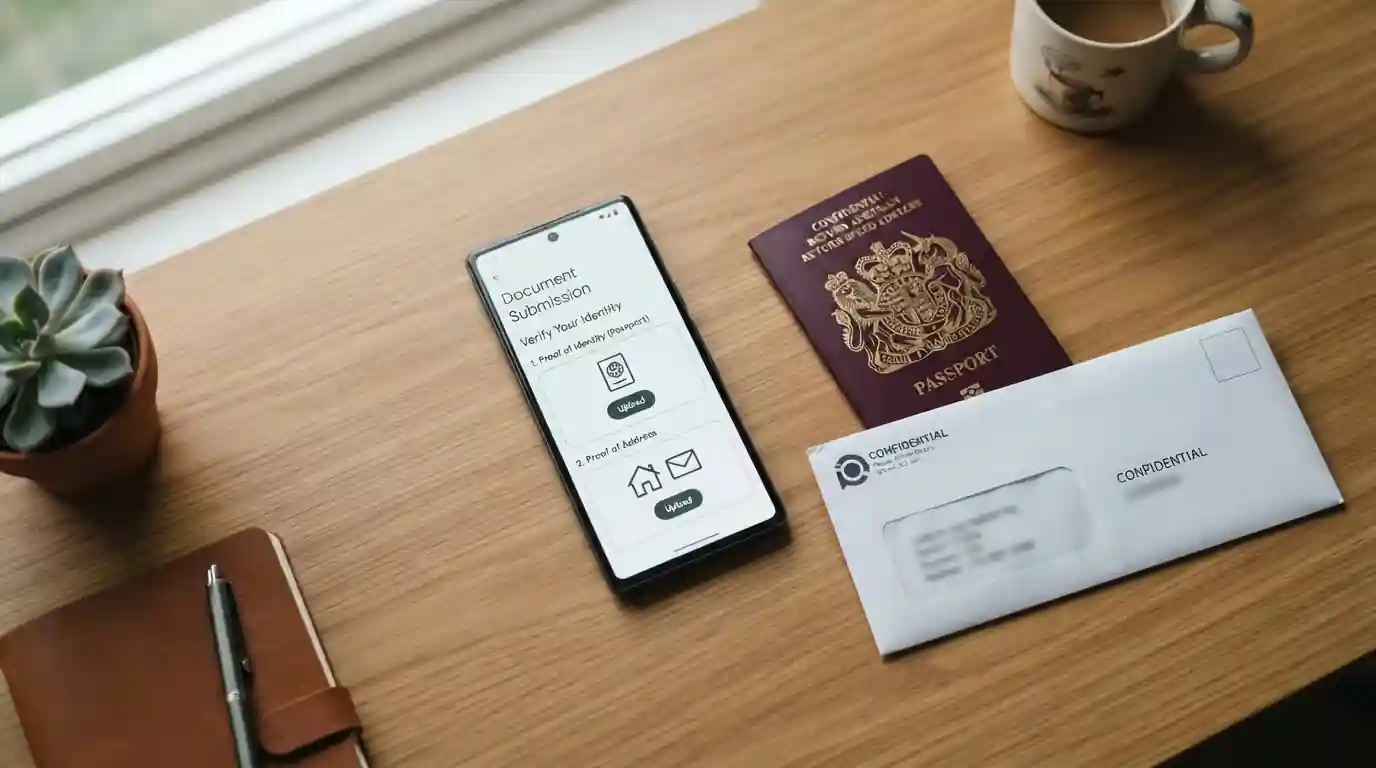
No casino—UKGC-licensed or offshore—eliminates identity verification entirely. The difference is timing and trigger conditions.
UKGC Sites: When Automated Checks Fail
Instant eKYC clears roughly 85 per cent of UK players without manual intervention. The system queries your details against the electoral roll, credit reference databases from Experian, Equifax, and TransUnion, and fraud prevention registers like CIFAS and National Hunter. If your name, date of birth, and address match a record on file, verification completes in one to five minutes.
The remaining 15 per cent hit a mismatch. Common failure scenarios include recent house moves where your credit file still shows your old address, nicknames that do not match your legal name on the electoral roll, thin credit files for under-25s or non-UK nationals, or data discrepancies between databases. When the automated check fails, the casino flags your account and requests documents.
You upload a photo ID (passport or driving licence, in-date, colour), proof of address (bank statement, utility bill, or council tax letter dated within three months), and sometimes a selfie holding your ID. For card deposits, you may need to photograph your card showing the first six and last four digits with the middle six covered and the CVV hidden. The compliance team reviews uploaded documents within 24 to 48 hours. If something is unclear, they email you for additional files.
Once your account is verified, further document requests are rare unless you trigger an affordability check. The UKGC mandated enhanced financial vulnerability screening in February 2025. Operators must run light-touch affordability checks at certain spend thresholds. If you deposit £1,000 in a week or accumulate £2,000 in net losses over a month, the casino may request payslips or bank statements to confirm you can afford the spending. This is a regulatory compliance measure, not a verification of identity—they already know who you are.
Offshore Sites: Withdrawal Thresholds and Red Flags
Offshore casinos defer verification until you request a withdrawal or cross a deposit threshold, typically £1,500 to £2,500 for Curaçao-licensed operators. The exact amount varies by site and is rarely published. Some operators trigger KYC at your first withdrawal regardless of amount. Others wait until cumulative payouts exceed a threshold.
Red flags that trigger early verification include VPN use, payment method changes between deposit and withdrawal, unusual betting patterns (large single bets or arbitrage-style wagers), and rapid deposit-and-withdrawal cycles that resemble money laundering. If the compliance team flags your account, they request documents immediately rather than waiting for you to hit a threshold.
The document checklist is identical to UKGC requirements: photo ID, proof of address, and sometimes a selfie holding your ID. For card deposits, a photo of your card with the middle digits and CVV covered. Processing takes 24 to 72 hours. If your withdrawal is above £2,000, the casino may escalate to source-of-funds checks, requesting payslips, bank statements, or tax returns to confirm the money is legitimately yours.
Source-of-Funds Checks: The £2,000+ Threshold
Source-of-funds checks are separate from identity verification. They confirm where your money came from, not who you are. UKGC-licensed operators trigger these checks under two scenarios: you deposit large sums quickly (£1,000 or more in a week), or you accumulate significant losses that suggest you may be spending beyond your means.
Offshore operators trigger source-of-funds checks when your withdrawal crosses £2,000 or when the compliance team suspects the funds are not yours. You submit payslips, bank statements, or a tax return showing income. The compliance team reviews the documents and either approves your withdrawal or requests additional information. If you cannot prove the funds are legitimately yours, the casino may freeze your account and refuse the withdrawal.
This process is not unique to "no verification" casinos. Every UKGC-licensed operator runs source-of-funds checks under the same regulatory framework. The difference is that UKGC sites often trigger these checks earlier and more transparently, while offshore sites spring them on you at withdrawal without prior warning.
Bonus Claims and Verification Requirements
UKGC-licensed casinos cannot let you claim any bonus—deposit or no-deposit—until your identity is verified. The May 2019 mandate requires verification before deposit or play, which means before bonus access as well. If you register, the instant eKYC check clears you automatically, and you can claim the bonus immediately. If the check fails, you upload documents, wait for approval, and then claim the bonus.
Offshore casinos may credit a no-deposit bonus instantly at signup, but you cannot withdraw winnings from that bonus until you verify your identity. The bonus is locked to your account. You play through the wagering requirement, accumulate winnings, and request a withdrawal. The compliance team then requests documents. Once verification clears, your winnings unlock and the withdrawal processes.
Some offshore operators use this gap to their advantage. They advertise "no deposit, no verification" bonuses, knowing most players will lose the bonus balance before requesting a withdrawal. If you do win and try to cash out, verification kicks in. The delay between winning and receiving your money gives the casino time to audit your play for bonus abuse, which can result in winnings being voided under terms-and-conditions clauses.
When will I actually need to verify my identity, even at a "no verification" casino?
At UKGC-licensed sites, verification happens at signup via instant eKYC. If automated checks fail, you upload documents before depositing. At offshore sites, verification is deferred until your first withdrawal or when you cross a deposit threshold of £1,500 to £2,500. Additional source-of-funds checks are triggered at £2,000+ withdrawals or large deposit volumes.
Do no-verification casinos still require verification for bonuses?
UKGC-licensed casinos require verification before you can claim any bonus. Offshore casinos may credit bonuses instantly but lock withdrawals until you verify your identity. Winnings from no-deposit bonuses cannot be withdrawn until documents are submitted and approved.

Pay N Play: The True "No Registration" Technology
Pay N Play is a patented onboarding technology owned by Trustly Group AB, a Swedish fintech founded in 2008. The system combines open banking authentication with identity verification in a single transaction, eliminating the traditional registration form and document upload process. A player selects their bank, logs in via Trustly’s interface, and the bank confirms their account ownership, name, date of birth, and address. Trustly passes this verified data to the casino, which creates an account pre-filled with the player’s details. Deposit, verification, and account creation happen in one flow, typically under 60 seconds.
How Trustly Pay N Play Combines Banking and Verification
Open banking APIs connect Trustly to major UK banks including Barclays, HSBC, Lloyds, NatWest, Santander, and others. When you select Pay N Play at a participating casino, you choose your bank from a list, click through to your bank’s login page (SSL-encrypted, not visible to the casino), and authenticate via your usual method (password, biometric, or two-factor authentication). Your bank confirms to Trustly that you own the account and provides your name, date of birth, and address on file. Trustly relays this verified data to the casino. The casino creates an account using that data, marks it as verified, and processes your deposit immediately.
The player experience is frictionless. You never fill in a registration form. You never upload a photo ID. You never wait for manual document review. The bank’s confirmation serves as identity verification because banks are required to verify their own customers under Know Your Customer regulations. The casino trusts the bank’s attestation, and the UKGC accepts this as compliant with the verification-before-deposit mandate introduced in May 2019.
Withdrawals work the same way. Because your account was verified at deposit via your bank’s attestation, there is no pending verification queue when you request a cashout. Trustly transfers typically settle within one to four hours. Independent testing recorded Trustly withdrawals at Betway clearing in 50 minutes, though that figure is site-specific and payment-method-specific.
Trustly launched Trustly ID in 2026, adding biometric authentication (facial recognition or fingerprint) for returning users. After your first Pay N Play transaction, subsequent logins use biometrics instead of redirecting you to your bank, speeding up repeat visits.
Why UK Casino Adoption Is Limited
Most UKGC-licensed operators do not implement full Pay N Play despite Trustly being available as a payment method. The reason is infrastructure overlap. UKGC operators already have instant eKYC systems that cross-reference player details against external databases. Those systems clear 85 per cent of UK registrations in under five minutes with no document upload. For operators, instant eKYC is payment-method agnostic—it works whether the player deposits via debit card, PayPal, Skrill, or Trustly. Pay N Play, by contrast, requires the player to have an account with a Trustly-compatible bank. If the player uses a smaller bank or credit union not covered by Trustly’s API integrations, they cannot use Pay N Play.
Implementing Pay N Play adds technical complexity and a payment-method dependency without materially improving the player experience over instant eKYC. A UK player using instant eKYC at 888 Casino or William Hill enters their details, waits three minutes for automated verification, and deposits via any supported payment method. A UK player using Pay N Play at a Pay N Play casino logs into their bank, verifies via Trustly, and deposits—but only if their bank is Trustly-compatible. The time savings are marginal, and the flexibility is reduced.
Trustly Pay N Play sees wider adoption in Scandinavian markets where Trustly originated (Sweden, Finland, Norway). In those markets, Pay N Play is the dominant model because Trustly’s bank coverage is near-universal and instant eKYC infrastructure was less developed when Pay N Play launched. UK operators, by contrast, had already invested in instant eKYC by the time Pay N Play became widely available. The cost of migrating to a Pay N Play-centric onboarding flow outweighs the marginal user-experience improvement.
Which Banks Support Open Banking Integration
Trustly integrates with most major UK banks via open banking APIs. Supported banks include Barclays, HSBC, Lloyds Banking Group (Lloyds, Halifax, Bank of Scotland), NatWest Group (NatWest, Royal Bank of Scotland, Ulster Bank), Santander, Nationwide, TSB, Metro Bank, and several challenger banks like Monzo and Starling. Coverage is not universal. Smaller credit unions and regional building societies may not support Trustly’s API, meaning Pay N Play is unavailable to customers of those institutions.
Trustly’s full bank list is published on its website, but casino operators rarely publish a bank-compatibility list on their own terms pages. If you are considering a Pay N Play casino, assume Trustly will work with your bank if you bank with one of the major high-street names. If you bank with a smaller institution, check Trustly’s official site or contact the casino’s support to confirm compatibility before attempting a deposit.
Is Pay N Play available at UK casinos?
Pay N Play is available at a limited number of UK-facing casinos, but most UKGC-licensed operators use Trustly as a payment method without implementing the full Pay N Play onboarding flow. UKGC sites rely on instant eKYC for verification, which works with any payment method, not just Trustly-compatible banks.
Slots and Games at No-Registration Casinos
Game selection at UKGC-licensed and offshore casinos overlaps heavily because both source slots from the same providers. Pragmatic Play, NetEnt, Play’n GO, Microgaming, and Evolution Gaming distribute their libraries to hundreds of operators regardless of licensing jurisdiction. The difference is not which games are available but which regulatory restrictions apply.
UKGC-licensed operators face spin-speed caps (2.5 seconds minimum per spin), autoplay restrictions, and slot-feature bans including bonus-buy mechanics and turbo modes. Offshore operators do not enforce these restrictions. A slot at an offshore casino may spin faster, allow autoplay with no cap, and offer bonus-buy options that UKGC rules ban. The game itself is identical—same RTP, same volatility, same provider—but the feature set differs based on regulatory jurisdiction.
Live dealer games are identical across UKGC and offshore operators because Evolution Gaming, the dominant live-dealer provider, streams from the same studios to all licensees. A roulette table at 888 Casino is fed from Evolution’s UK-licensed studio. A roulette table at Kaasino is fed from the same studio. The dealer, the wheel, and the broadcast are identical. The only difference is the regulatory framework: UKGC operators enforce stake limits and responsible gambling tools, while offshore operators do not.
RTP disclosure separates the two models more sharply. UKGC rules mandate that operators publish return-to-player percentages for slots and table games. You can check the RTP before you play. Offshore operators are not required to disclose RTP, and some run altered versions of popular slots with lower RTP than the provider’s default setting. Without RTP disclosure, you cannot verify whether you are playing a 96 per cent RTP slot or a 92 per cent version.
Free-play demos are available at most UKGC and offshore casinos. You can test slots without depositing, though UKGC sites require age verification before demo access. Offshore sites often allow unverified demo play, but that access does not extend to real-money mode, which triggers verification at withdrawal.
Bonuses and Free Spins: Verification Requirements
Bonus structures at UKGC and offshore casinos differ sharply in wagering requirements, verification timing, and withdrawal caps.
UKGC Registration Bonuses: Verify Before You Claim
UKGC-licensed operators cap bonus wagering at 10x the bonus amount. A £50 bonus requires £500 in qualifying bets before you can withdraw. That cap was introduced in 2021 to reduce player complaints about unattainable rollover requirements. Before the cap, some operators ran 35x to 50x wagering, which most players never cleared.
Verification must happen before you can claim any bonus. The May 2019 UKGC mandate requires identity confirmation before deposit or play, which includes bonus access. If you register and instant eKYC clears you automatically, you can claim the bonus immediately. If the automated check fails, you upload documents, wait for approval, and then claim the bonus. There is no workflow where you claim a bonus, play through it, and verify your identity at withdrawal. That model is illegal for UKGC-licensed operators.
Welcome offers at UKGC sites typically combine free spins and a deposit match. Highbet offers 50 free spins with no wagering. BoyleSports offers 100 free spins with no wagering. 888 Casino offers 100 free spins plus a £100 match bonus at standard 10x wagering. Wager-free spins transfer winnings directly to your withdrawable balance. Standard bonuses lock funds until you clear the rollover requirement.
Offshore No-Deposit Offers: The Withdrawal Catch
Offshore casinos advertise no-deposit bonuses more aggressively than UKGC operators. You register with an email, the casino credits £10 or 50 free spins to your account, and you play immediately. No verification, no deposit. The catch arrives when you try to withdraw.
Winnings from no-deposit bonuses are locked until you verify your identity. You clear the wagering requirement (typically 35x to 50x at offshore sites), accumulate £200 in bonus winnings, and request a withdrawal. The casino emails you a document checklist. You upload a photo ID and proof of address. The compliance team reviews the files within 24 to 72 hours. If approved, your withdrawal processes. If your documents are unclear or incomplete, they request additional files, delaying your cashout further.
Withdrawal caps on no-deposit bonuses are common. Many offshore operators cap no-deposit winnings at £50 to £100 regardless of how much you actually won. You clear a 40x wagering requirement, turn £10 into £300, and discover the terms cap your withdrawal at £100. The remaining £200 is voided. These caps are buried in bonus terms and rarely highlighted in marketing.
Wagering Requirements: 10x (UKGC) vs 35x-50x (Offshore)
UKGC’s 10x cap makes bonuses easier to clear but smaller in absolute size. A £100 deposit at a UKGC casino might match 100 per cent to £100 with 10x wagering, requiring £1,000 in bets. The same £100 deposit at an offshore casino might match 200 per cent to £200 with 40x wagering, requiring £8,000 in bets. The offshore bonus looks larger, but clearing it is exponentially harder. Most players lose their balance before clearing 40x wagering, which is why offshore operators can afford to offer larger bonuses.
Wager-free bonuses eliminate rollover requirements entirely. Highbet and BoyleSports advertise 50 and 100 free spins with no wagering, meaning winnings transfer directly to your withdrawable balance. The trade-off is smaller bonus amounts. A wager-free £50 is worth exactly £50 in withdrawable funds. A £200 bonus at 40x wagering could theoretically unlock £200 plus accumulated winnings if you clear it, but the probability of clearing is low.
How to Make Verification Painless
Document upload is the friction point in both UKGC and offshore verification workflows. Automated systems fail when your details do not match external databases. Manual reviewers reject documents when photos are blurry, cropped, or missing required information. The checklist below reduces the risk of rejection and speeds up approval.
Documents to Prepare Before Signup
Photo ID: passport or UK driving licence (photocard, not paper), in-date, colour. The document must show your full legal name, date of birth, photo, and expiry date. Expired documents are rejected. Black-and-white photocopies are rejected.
Proof of address: bank statement, utility bill (gas, electricity, water, not mobile phone), or council tax letter dated within the last three months. The document must show your full name and current address exactly as you entered it during registration. If your registration says "123 High Street" but your bank statement says "123 High St," the system may flag a mismatch. Use the exact wording.
Card verification (for card deposits): photo of the front of your debit card showing the first six and last four digits, with the middle six digits covered by tape or paper. The CVV on the back must also be covered. This proves you own the card without exposing the full number. Credit cards are banned at UKGC-licensed casinos, so card verification applies only to debit cards.
Selfie with ID: some operators request a selfie holding your passport or driving licence next to your face. The photo must show your face clearly, the ID document fully visible, and all text on the ID legible. Hold the ID at chest height, not covering your face. Use good lighting with no shadows or glare.
How to Photograph ID So It’s Accepted First Time
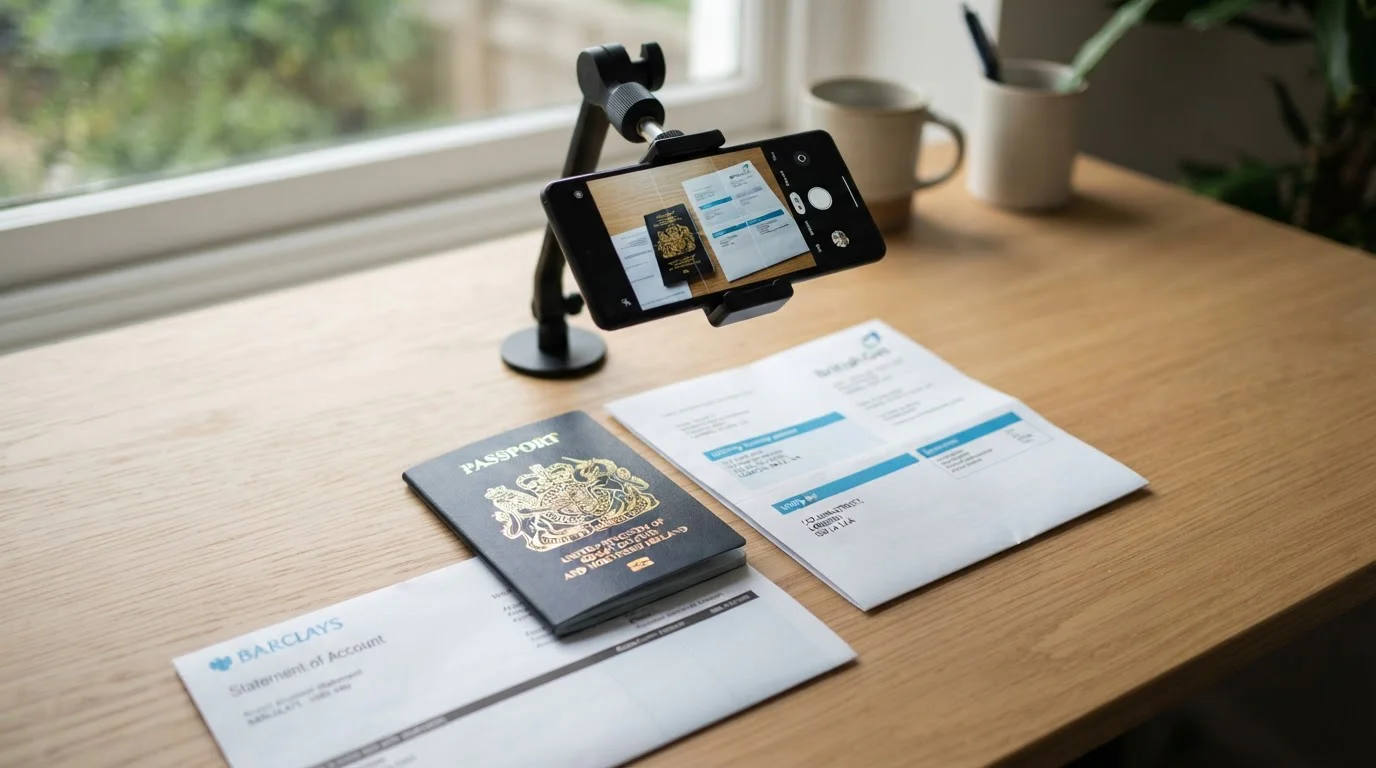
Use a smartphone camera, not a webcam. Smartphone cameras have higher resolution and better autofocus. Place the document on a flat surface with contrasting colour (dark ID on a white desk, or light ID on a dark desk). Ensure all four corners of the document are visible in the frame. No cropping.
Use natural light or bright indoor lighting. Avoid direct overhead lights that create glare on laminated surfaces like passport photo pages. Tilt the document slightly if glare obscures text. Do not use flash, which washes out text and creates hotspots.
Check that all text is legible before uploading. Zoom in on the photo to confirm your name, date of birth, address, and expiry date are sharp and readable. Blurry text is the most common reason for rejection. If text is unclear, retake the photo with better lighting or a steadier hand.
Save the photo as a high-resolution JPEG or PNG. Some casinos accept PDFs, but image files are more universally compatible. Do not compress the image or reduce resolution to save file size. Compliance teams need high-resolution scans to verify security features like holograms and microprinting.
Proof of Address When You Don’t Have Bills in Your Name
Living with parents: request a council tax letter addressed to your parent with your name added as an occupant, or register on the electoral roll at your current address and request a confirmation letter. The electoral roll registration is free and takes two weeks. Some councils issue a letter confirming your registration, which serves as proof of address.
Renting with bills in landlord’s name: provide your tenancy agreement plus a bank statement showing rent payments to the landlord. The tenancy agreement proves you live at the address. The bank statement proves you are financially active at that address. Most compliance teams accept this combination.
Recent house move: if you moved within the last three months and your bank statement still shows your old address, provide the new address via a utility bill or council tax letter at the new address plus a bank statement from the old address. Explain in the upload notes that you moved recently and the bank has not updated your address on file yet. Some operators accept a statutory declaration or change-of-address confirmation from Royal Mail.
No UK address: non-UK residents using UK-facing casinos face the hardest verification process. UKGC-licensed operators may reject your application if you cannot provide a UK address and UK-registered payment method. Offshore operators are more flexible but still require proof of your current address in your home country. Provide a bank statement or utility bill from your home country, translated to English if necessary.
Choosing Faster Payment Methods (Trustly, PayPal, Skrill)
Withdrawal speed depends on payment method more than casino processing time. E-wallets like PayPal, Skrill, and Neteller settle within one to four hours once the casino approves your withdrawal. Trustly transfers settle in the same timeframe. Debit card withdrawals take one to three business days because card networks process refunds more slowly than real-time payment rails.
Cryptocurrency is the fastest option at offshore casinos. Bitcoin and Ethereum withdrawals often process within hours once verification clears. Some offshore operators prioritise crypto withdrawals over fiat because crypto transactions are cheaper for the casino and harder for payment processors to block.
Bank transfers are the slowest. UK bank transfers take one to three business days. International bank transfers to offshore casinos can take five to seven days due to correspondent banking delays and currency conversion.
Choose your payment method at deposit with withdrawal speed in mind. If you plan to cash out within hours, deposit via PayPal, Skrill, or Trustly. If you deposit via debit card, expect a one-to-three-day wait at withdrawal even if the casino approves your request immediately.
Checking a Casino’s Licence Yourself
Licence verification is the only reliable way to confirm an operator is legally permitted to serve UK customers. Marketing claims, affiliate endorsements, and site design tell you nothing about regulatory status. The UKGC public register is the authoritative source.
Visit gamblingcommission.gov.uk and navigate to the public register. Search by the casino’s domain name (e.g., 888.co.uk or williamhill.com). The register returns the licensee’s legal name, licence number, permitted activities (remote casino, remote betting, etc.), and registered domains. Verify that the domain you are using appears in the "Associated websites" list and that the licence status is "Active." Suspended or revoked licences mean the operator is not legally permitted to serve UK customers.
For offshore casinos, verification is harder. The Curaçao Gaming Authority launched a licence register after the LOK reform in December 2024, accessible at portal.cga.cw. You can search by operator name or licence number. Older Curaçao licences issued under the JAZ master-licence system (licence numbers like 8048/JAZ) are not verifiable on the new register because that system was phased out. If a casino displays a JAZ licence number in 2026, it may be operating on a provisional approval pending full LOK compliance, or it may not have a valid licence at all.
Anjouan-licensed operators have no public register. Licence verification relies on the casino publishing its licence number and you contacting the Anjouan licensing authority directly, which is impractical for most players. If a casino claims an Anjouan licence but provides no licence number, assume it is unlicensed.
Red flags include: no licence number displayed anywhere on the site, a licence seal image with no clickable link to a register, a "pending" status on the Curaçao register, or a JAZ licence number displayed in 2026 or later without evidence of LOK-compliant re-licensing. Any of these signals should prompt you to choose a different operator.
Responsible Gambling and Self-Exclusion
GamStop is the UK’s national self-exclusion scheme. When you register for GamStop, every UKGC-licensed operator is legally required to block your account and refuse new registrations for the duration you select (six months, one year, or five years). The system is mandatory for all UKGC licensees and covers casino, sportsbook, bingo, and poker.

Offshore casinos do not participate in GamStop because they operate outside UKGC jurisdiction. If you are self-excluded via GamStop, you can still register and deposit at offshore operators. That gap is not a feature. It is a failure of cross-jurisdictional enforcement. If you registered for GamStop because gambling was causing financial or personal harm, accessing offshore casinos undermines the purpose of self-exclusion.
Some offshore operators advertise the GamStop bypass as a selling point to players who regret their exclusion decision. That marketing preys on impulsive decision-making. Self-exclusion exists to create a cooling-off period during which you cannot access gambling sites even if you change your mind. Offshore operators that target GamStop-excluded players are not offering a service. They are exploiting a regulatory gap.
UKGC-licensed operators enforce deposit limits, loss limits, session time limits, and reality checks. You can set these controls in your account settings. Offshore operators may offer similar tools, but enforcement is voluntary and less rigorously monitored. If you are concerned about losing control over your gambling, UKGC-licensed operators provide stronger safeguards.
BeGambleAware.org offers free confidential support for UK residents experiencing gambling-related harm. The National Gambling Helpline is 0808 8020 133, available 24 hours. GamCare provides online chat and phone support at gamcare.org.uk. If gambling is affecting your finances, relationships, or mental health, reach out before losses escalate.
Prepared by the Payments-casino-uk editorial staff.