Casinos That Accept uPayCard in the UK: What Happened and What to Use Instead (2026)
 Available in GB
uPayCard is gone. Not "temporarily unavailable," not "under maintenance"—shut down. The company behind it folded under allegations of financial misconduct, and UK players searching for uPayCard casinos in 2026 are left holding a dead payment method. If you relied on its prepaid card and e-wallet hybrid for anonymous deposits, you need a new plan.
The UK casino payment landscape shifted hard after the April 2020 credit card ban. UKGC-licensed sites now accept debit cards, e-wallets like PayPal and Skrill, prepaid vouchers such as Paysafecard, mobile payments via Apple Pay and Google Pay, and Open Banking methods like Trustly. Offshore casinos outside UK jurisdiction still take credit cards, but the trade-offs—cash advance fees, no GAMSTOP protection, patchy consumer rights—are steep.
This guide maps the alternatives. Which method delivers the fastest withdrawals? Where can you deposit without sharing bank details? What’s the prepaid option closest to uPayCard’s original model? What fees hit you at offshore sites? The answers below are concrete: speeds, limits, fees, and which casinos accept each method, backed by 2026 testing.
Table of Contents
- Why uPayCard No Longer Works at UK Casinos (2026)
- Best uPayCard Alternatives for UK Casinos (2026)
- UKGC-Licensed vs. Offshore Casinos: Payment Method Differences
- How to Choose the Right uPayCard Alternative
- Step-by-Step: How to Deposit with uPayCard Alternatives
- Games, Mobile, Crypto and Verification — Practical Details
Why uPayCard No Longer Works at UK Casinos (2026)
uPayCard ceased operations in 2025 after its parent company, UPC Consulting Ltd., faced allegations of fraudulent activities and regulatory problems. Reports surfaced of financial misconduct leading to significant user losses. The firm’s management structure and compliance with financial regulations were questioned publicly, and the service collapsed. Brand and operations transferred to PAP OnPoint Services Ltd. under new ownership, but the original upaycard.com infrastructure is defunct.
Even before the shutdown, uPayCard was unusable for UK casino deposits. The service supported Shekel, Dollar, and Euro—but not GBP. UK territories were technically added to the coverage map, yet cards could only be ordered in non-GBP currencies. A £100 casino deposit required currency conversion twice: GBP to EUR on purchase, EUR back to GBP at the casino. Fees stacked, exchange rates bit, and most UK players never bothered.
Historically, uPayCard offered an e-wallet account plus a prepaid MasterCard (physical or virtual). It was regulated by the Financial Conduct Authority in the UK, supported crypto deposits (Bitcoin, Ethereum, Litecoin, Ripple), and charged no monthly fees for basic use. Withdrawal via bank transfer cost €10–25; credit card deposits carried a 0.25 EUR + 3.9% fee. The ATM withdrawal limit was €900 per 24 hours, and the prepaid card itself cost €2 per month. Before closure, 29 casinos listed uPayCard acceptance—mostly offshore operators like Fastpay, Oshi, EmuCasino, DuckyLuck. None of those listings matter now.
Why can’t I use uPayCard at UK online casinos in 2026?
uPayCard shut down in 2025 due to financial misconduct allegations against UPC Consulting Ltd. The service never supported GBP, making UK casino deposits impractical even before closure. Operations transferred to PAP OnPoint Services Ltd., but the original platform is defunct and no UK casinos accept it in 2026.
Best uPayCard Alternatives for UK Casinos (2026)

The UK casino payment menu splits clean down UKGC vs. offshore lines. UKGC-licensed sites—the legal operators enrolled in GAMSTOP, subject to UK Gambling Commission oversight—accept debit cards, e-wallets (PayPal, Skrill, Neteller), prepaid vouchers (Paysafecard), mobile payments (Apple Pay, Google Pay), and Open Banking transfers (Trustly, Pay by Bank). Credit cards have been banned since April 14, 2020. Offshore casinos licensed in Curaçao, Malta, or Gibraltar sit outside UK jurisdiction and still take credit cards, but cash advance fees and withdrawal restrictions apply.
No single replacement mirrors uPayCard’s exact feature set—an e-wallet + prepaid card hybrid. Instead, UK players pick by priority: speed, privacy, limits, or offshore access. PayPal delivers the fastest e-wallet withdrawals (4–24 hours, often under 3 hours at top casinos). Paysafecard offers the closest prepaid model (cash vouchers, anonymous deposits). Trustly and Open Banking provide instant bank-to-casino transfers with same-day withdrawals. Skrill and Neteller handle higher limits (£35,000 per transaction) but often get excluded from welcome bonuses. Debit cards work everywhere with no fees but take 1–3 days to pay out.
The table below compares speeds, fees, limits, and eligibility across all major alternatives. Specifics come from September 2026 testing at UKGC-licensed casinos and offshore operator cashiers.
| Method | Deposit Speed | Withdrawal Speed | Fees | Limits (Min–Max) | Anonymity | UKGC Acceptance | Bonus Eligible |
|---|---|---|---|---|---|---|---|
| Debit Cards (Visa/Mastercard) | Instant | 1–3 days | None | £5–£50,000 | No | Universal | Yes |
| PayPal | Instant | 4–24 hours | None | £10–£10,000 | Partial | ~40 casinos | Yes |
| Skrill | Instant | 1–2 days | 5% some txns | £10–£35,000 | Partial | Wide | Often excluded |
| Neteller | Instant | 1–2 days | 3.5% some txns | £10–£35,000 | Partial | Wide | Often excluded |
| Paysafecard | Instant | Deposit-only | None | £5–£1,000 | Yes | ~60 casinos | Yes |
| Apple Pay / Google Pay | Instant | Deposit-only | None | £5–£5,000 | Partial | Growing | Yes |
| Trustly (Open Banking) | Instant | Under 1 hour | None | £10–£100,000 | No | Growing | Yes |
| Credit Cards (Offshore) | Instant | Not to card | 3–5% cash advance | £10–£5,000 | No | Offshore only | Yes (offshore) |
Partial anonymity means the casino doesn’t see your card number, but verification (ID, address proof) remains mandatory at UKGC sites. True anonymity exists only at the deposit stage with Paysafecard (cash voucher purchase leaves no digital trail), though KYC checks still apply for withdrawals.
What is the best alternative to uPayCard for UK casino deposits?
PayPal offers the fastest withdrawals (4–24 hours), widest trust, and qualifies for bonuses at UKGC casinos. Paysafecard provides the closest prepaid model to uPayCard (cash vouchers, anonymous deposits). Trustly delivers instant bank transfers with same-day payouts. Choose based on priority: speed → PayPal; anonymity → Paysafecard; high limits → Trustly.
Debit Cards (Visa, Mastercard)
Every UKGC-licensed casino accepts Visa and Mastercard debit cards. Not "most"—all of them. The UK Gambling Commission mandates debit card support per licensing conditions, and operators have no wiggle room. Maestro also works but is being phased out globally; Mastercard announced the transition in 2021, and UK banks are migrating customers to standard Mastercard debit through 2026. Deposits clear instantly, withdrawals take 1–3 days, and fees don’t exist at UKGC sites. Minimum deposits start at £5–£10 depending on the casino; maximums stretch to £50,000 per transaction, though most operators cap daily limits lower.
Security runs through 3D Secure (Verified by Visa, Mastercard SecureCode)—a two-factor authentication layer requiring a one-time code sent to your phone or email. Some UK banks support "Fast Funds," a Visa feature enabling same-day withdrawals back to your debit card. Barclays, Lloyds, HSBC, and Nationwide participate, but not all casinos process Fast Funds requests; typical payout timing remains 1–3 business days. Withdrawals land on the same card used for deposits, and casinos rarely let you cash out to a different card.
Debit cards qualify for welcome bonuses at nearly every UKGC casino. Skrill and Neteller deposits often get excluded from bonus terms, but debit transactions almost never face that restriction. The trade-off: slower withdrawals than e-wallets (PayPal processes in 4–24 hours; debit takes 1–3 days), and your bank sees every casino transaction on your statement. No anonymity layer. If you share a joint account or prefer discretion, an e-wallet intermediary (PayPal, Skrill) keeps casino names off your bank history.
Which payment method has the fastest withdrawals at UK casinos?
PayPal processes withdrawals in 4–24 hours at UKGC casinos, with top sites like PokerStars and BetMGM clearing requests under 3 hours. Trustly (Open Banking) delivers same-day payouts, often under 1 hour. Debit cards take 1–3 days, while Skrill and Neteller range 1–2 days. Paysafecard and Apple Pay are deposit-only.
PayPal
Around 40 UKGC-licensed casinos accepted PayPal as of September 2026—not universal coverage like debit cards, but wider than any other e-wallet. PayPal Holdings Inc. is FCA-authorized in the UK, established in 1998, and operates 400+ million active accounts globally. It’s the most recognized e-wallet brand in the UK high street, and that trust translates to casino use. Deposits hit your casino balance instantly; withdrawals clear in 4–24 hours at most UKGC sites, with the fastest operators (PokerStars Casino UK, BetMGM, Virgin Bet, MrQ) processing requests under 3 hours. PokerStars rebuilt its PayPal infrastructure in late 2025, and average payout times dropped from 12 hours to under 3.
Minimum deposits typically sit at £5–£10, maximums at £10,000 per transaction. Withdrawal limits mirror deposits: £7,500–£10,000 per cashout depending on the casino’s payment policy. PayPal charges no fees for casino deposits or withdrawals at UKGC sites—neither PayPal itself nor the casino adds a surcharge. Currency conversion fees apply if you’re transacting in a non-GBP currency, but UK players using GBP accounts face zero cost. PayPal deposits qualify for welcome bonuses at most UKGC casinos, unlike Skrill and Neteller, which appear on bonus-exclusion lists.
The privacy layer is real. Your bank or card details never reach the casino; PayPal acts as intermediary, and the operator sees only "PayPal transaction" on its end. If someone reviews your bank statement, they’ll see "PayPal" rather than a casino name—though PayPal’s own transaction history internally records the merchant. Security includes buyer protection, two-factor authentication, and SSL encryption. Disputes go through PayPal’s resolution center, not the casino’s support queue. The downside: not every UKGC casino supports PayPal. Major brands do (Bet365, William Hill, 888 Casino, Ladbrokes), but smaller operators often skip it due to PayPal’s merchant fees.
Skrill
Skrill is owned by Paysafe Group (the same parent company as Neteller and Paysafecard), established in 2001 as Moneybookers and rebranded to Skrill in 2011. It’s FCA-authorized in the UK and claims 40+ million accounts globally. Wider casino acceptance than PayPal—more UKGC sites list Skrill in their cashiers—but the trade-off lands in bonus eligibility. Most UKGC casinos explicitly exclude Skrill deposits from welcome bonuses, listing it alongside Neteller in the "excluded payment methods" section of bonus terms. If you’re claiming a matched deposit or free spins offer, check the fine print before funding via Skrill.
Deposits clear instantly; withdrawals take 1–2 days at UKGC casinos, slower than PayPal’s 4–24 hours but faster than debit cards’ 1–3 days. Limits run higher: £10 minimum deposit typical, £35,000 maximum per transaction—more than double PayPal’s £10,000 cap. Withdrawal limits match at £10–£35,000 per cashout. Fees vary. Some casinos charge nothing for Skrill transactions; others hit you with a 5% fee on specific transaction types. Skrill itself charges a 2.99% international transaction fee (effective August 17, 2026 per official fee schedule), plus 3.99% on currency conversions. An inactivity fee applies if you don’t use the account for 12 months.
Skrill supports cryptocurrency deposits—Bitcoin, Ethereum, Litecoin—which you can convert to GBP inside the Skrill wallet and then deposit at a UK casino. This lets you fund casino play with crypto even at UKGC-licensed sites that don’t accept direct Bitcoin deposits. The casino sees a GBP Skrill transaction; the crypto origin stays invisible. Privacy is partial: the casino doesn’t see your card details, but Skrill knows your bank link, and UKGC casinos still require full KYC (ID, address proof, source of funds for large deposits).
Why are Skrill and Neteller often excluded from casino welcome bonuses?
Skrill and Neteller let users deposit and withdraw instantly with minimal friction, making bonus abuse easier—deposit, claim bonus, withdraw immediately. Casinos exclude these e-wallets from bonus eligibility to prevent low-risk arbitrage by players who cycle funds without genuine play. PayPal and debit cards lack the same instant-cashout speed, so casinos accept them for bonuses.
Neteller
Neteller competes directly with Skrill—same parent company (Paysafe Group), similar feature set, nearly identical speeds and limits. Established in 1999, FCA-authorized, 20+ million accounts globally. The two main differences: Neteller’s fee structure runs slightly lower (3.5% on some casino transactions vs. Skrill’s 5%, though both vary by casino and transaction type), and Neteller offers the Net+ Prepaid Mastercard, a physical card linked to your Neteller wallet balance. That card is the closest modern equivalent to uPayCard’s original e-wallet + prepaid card hybrid.
The Net+ card lets you withdraw cash from ATMs or spend at merchants worldwide, drawing directly from your Neteller balance. It’s a prepaid Mastercard, not a debit or credit card, so no bank account link. You load funds into Neteller via bank transfer or card deposit, and the physical card accesses that balance. For UK players who valued uPayCard’s prepaid card functionality—spending casino winnings without routing them through a bank account—Neteller’s Net+ card replicates the model. Application and card issuance happen through Neteller’s dashboard; a small monthly or transaction fee applies (check Neteller’s official fee schedule), but the core use case matches.
Deposits at UK casinos clear instantly; withdrawals take 1–2 days (same as Skrill). Limits run £10 minimum, £35,000 maximum per transaction. Like Skrill, Neteller deposits often get excluded from welcome bonuses at UKGC casinos—check the terms before claiming an offer. Neteller supports 26 currencies across 200+ countries and accepts cryptocurrency deposits (convert to GBP, deposit at casino). The 3.99% currency conversion fee applies; an inactivity fee kicks in after 6 months of no use (per 2026 terms). Privacy is partial: casino doesn’t see your card, but KYC remains mandatory at UKGC sites.
Can I deposit anonymously at UK casinos without sharing my bank details?
Paysafecard offers anonymous deposits: buy vouchers with cash at retail (no card, no bank link), enter the PIN at the casino, funds clear instantly. The casino never sees your bank or card details. However, UKGC casinos still require identity verification (passport, address proof) for withdrawals, so anonymity applies only to the deposit stage. Offshore casinos may skip KYC, but consumer protections drop.
Paysafecard
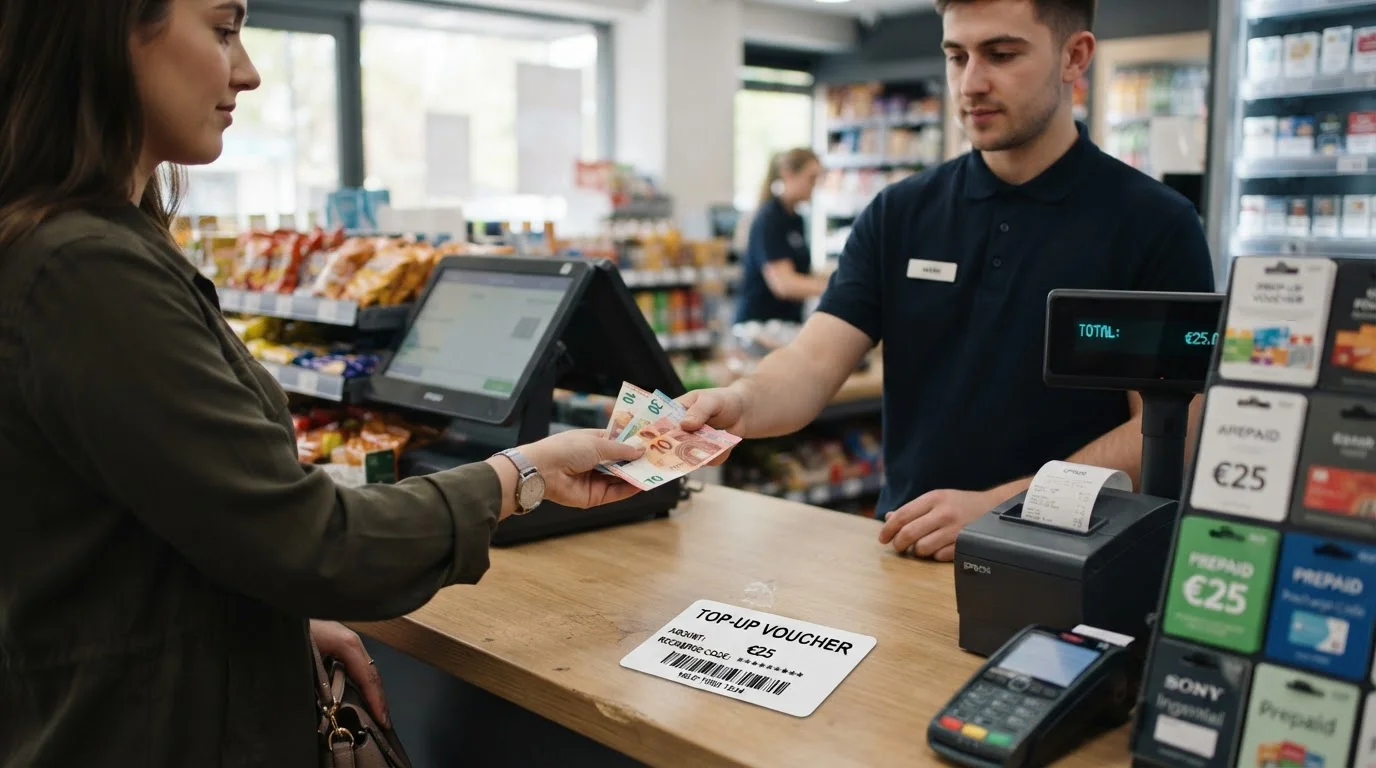
Paysafecard is a prepaid voucher system owned by Paysafe Group, FCA-authorized in the UK. You walk into a newsagent, petrol station, or convenience store, buy a voucher with cash (denominations: £10, £25, £50, £100, £200), and receive a 16-digit PIN. Enter that PIN at a casino cashier, and the deposit clears instantly—no card number, no bank details, no digital trail from the purchase. Around 60 UKGC-licensed casinos accepted Paysafecard as of September 2026, including SpinYoo, DaznBet, and LuckyMate (per testing). Offshore casinos also list it widely.
This is the closest match to uPayCard’s prepaid model. Cash-based, anonymous at purchase, fixed spending limits (you can’t overspend beyond the voucher balance), and no bank link required. The catch: Paysafecard is deposit-only. You cannot withdraw casino winnings back to a Paysafecard voucher. UK anti-money laundering regulations prohibit voucher-to-voucher cashouts, so your withdrawals must go to a bank transfer, debit card, or e-wallet (PayPal, Skrill). This is the "withdrawal workaround" every Paysafecard user faces: deposit with voucher, cash out via different method.
Limits run £5–£1,000 per deposit transaction. You can combine multiple PINs at the casino cashier to reach higher amounts (e.g., two £50 vouchers + one £100 voucher = £200 deposit), but the max per transaction typically caps at £1,000. Registering a "my paysafecard" account (free, via paysafecard.com) allows higher limits and lets you top up PINs digitally, though this reduces anonymity since the account links to an email and personal details. Fees: none at purchase (a £25 voucher costs £25 cash) and none at casino deposit. An inactivity fee applies if the PIN sits unused for 12 months—Paysafecard deducts a service charge from the voucher balance monthly after the first year.
Paysafecard deposits qualify for welcome bonuses at most UKGC casinos—they’re not excluded like Skrill and Neteller. The anonymity pitch is real but incomplete: yes, the cash purchase leaves no digital trail, and the casino sees only a PIN transaction (no name, no card, no bank). But UKGC-licensed casinos still require full KYC for account verification and withdrawals. You’ll upload a passport or driving license, proof of address (utility bill, bank statement), and possibly source-of-funds documentation for large cashouts. The voucher deposit itself is anonymous; the account holding the winnings is not.
Can I withdraw to Paysafecard after depositing with it?
No. Paysafecard is deposit-only at UK casinos due to anti-money laundering regulations. Withdrawals must go to a bank transfer, debit card, or e-wallet (PayPal, Skrill, Neteller). Buy vouchers with cash for anonymous deposits, but cash out via a different method that links to your verified identity.
Apple Pay and Google Pay
Apple Pay (iPhone, iPad, Mac) and Google Pay (Android devices) are mobile payment methods that tokenize your existing debit card for tap-to-pay deposits. No separate account setup beyond linking your card to the wallet; authenticate payments with Face ID, Touch ID, or fingerprint. Deposits at UK casinos clear instantly—tap, authenticate, funds appear in your casino balance. The casino never sees your real card number; a tokenized virtual card number is transmitted instead, adding a privacy layer vs. typing your card details directly into a cashier form.
Growing acceptance at UKGC casinos but not yet universal. Major brands supporting Apple Pay and Google Pay in 2026 include BoyleSports, William Hill, Highbet, Betway, 888 Casino, and BetVictor (per the sources reviewed). Minimum deposits sit at £5–£10; maximums range £3,000–£5,000 per transaction, lower than standalone debit card limits (which stretch to £50,000). Some casinos cap Apple Pay / Google Pay deposits at £3,000 and withdrawals (to the underlying card, not the mobile wallet) at £8,000.
The catch: deposit-only. You can fund your casino account via Apple Pay or Google Pay, but withdrawals don’t route back through the mobile wallet. Instead, payouts go to the underlying debit card you linked (processed as a standard debit card withdrawal, 1–3 days) or to an alternative method (bank transfer, e-wallet). Mobile payments are one-way: in only, not out. No fees at UKGC casinos—deposits are free, and the casino doesn’t charge a premium for mobile pay convenience. Bonus eligibility: yes, deposits via Apple Pay or Google Pay qualify for welcome offers since the casino treats them as debit card transactions.
Security includes biometric authentication (Face ID, Touch ID, fingerprint) per transaction, dynamic security codes that change with each payment, and the tokenization layer (real card number never exposed). If your phone is lost or stolen, remotely disable Apple Pay or Google Pay via device settings—the thief can’t access your wallet without your biometric or passcode. Device requirements: Apple Pay requires iPhone, iPad, or Mac; Google Pay requires Android. Desktop users can’t use mobile payments; they must enter debit card details directly.
Trustly and Open Banking

Trustly is an FCA-authorized payment institution operating the Open Banking infrastructure for UK casinos. Open Banking launched under the UK Payment Services Regulations 2017 (PSD2 implementation), allowing licensed third parties like Trustly to connect directly to your bank account via secure API. No card number, no separate wallet—just a direct bank-to-casino transfer authorized through your existing online banking login. Deposits clear instantly: select your bank from a list (most UK banks supported, including Barclays, Lloyds, HSBC, Nationwide, NatWest, Santander), log in with your standard online banking credentials, authorize the payment, done. Funds hit your casino balance immediately.
Withdrawals go back through Trustly to your bank account, and this is where the speed advantage shows. Same-day payouts are standard at UKGC casinos using Trustly, with many clearing requests under 1 hour. SpinYoo and DaznBet (tested September 2026) processed Trustly withdrawals in under 60 minutes from approval to bank account credit. Compare that to debit card withdrawals (1–3 days) or even PayPal (4–24 hours, though top sites get under 3 hours). Trustly’s infrastructure sends funds to 95%+ of Europeans in 5 minutes or less, per official claims—iGaming operators using the system benefit from that speed.
Limits run higher than e-wallets or cards: £10 minimum deposit, £100,000 maximum per transaction. Withdrawal limits mirror at £10–£100,000, though individual casinos set their own caps (many stop well below £100k). No fees at UKGC casinos—deposits and withdrawals are free, and Trustly doesn’t charge consumers for standard transactions. Bonus eligibility: yes, deposits via Trustly qualify for welcome offers. No separate account registration: Trustly links directly to your bank, so there’s no Trustly "wallet" to fund or manage. Privacy is zero—the casino sees a bank transfer from your name, and your bank statement shows the casino transaction. If anonymity matters, Paysafecard or an e-wallet intermediary is the better route.
Manual bank transfers (Faster Payments, BACS, CHAPS) remain available at every UKGC casino as a universal fallback. These are the old-school "enter the casino’s bank details in your banking app and send money" transfers. Deposits take 1–3 days (slow), withdrawals 2–5 days (very slow). Limits match Trustly at £10–£100,000, and fees are zero at UKGC sites. Manual transfers are outclassed by Open Banking on every metric except universality—every casino accepts them, while Trustly/Pay by Bank adoption is still growing. If you see "Pay by Bank" or "Instant Bank Transfer" branding at a casino, it’s usually Trustly’s Open Banking infrastructure under a different label.
How do Open Banking and Trustly deposits work at UK casinos?
Select Trustly or Pay by Bank at the casino cashier, choose your UK bank from the list, log in with your standard online banking credentials, authorize the payment—done. Trustly’s Open Banking API connects directly to your bank account, no card or separate wallet needed. Deposits clear instantly; withdrawals often process under 1 hour at UKGC casinos using the infrastructure.
Credit Cards at Offshore Casinos (What You Need to Know)
Credit cards—Visa and Mastercard credit, not debit—have been banned at all UKGC-licensed casinos since April 14, 2020. The UK Gambling Commission implemented LCCP 5.1 to prohibit borrowed-money gambling, citing links between credit card use and problem gambling. A 2024 evaluation by NatCen confirmed the ban reduced credit-based gambling harm, and no reversal is anticipated. UKGC casinos accept only debit cards, e-wallets, prepaid vouchers, mobile payments, and bank transfers. Credit is out.
Offshore casinos licensed under Curaçao eGaming (license 8048/JAZ), Malta Gaming Authority (MGA), or Gibraltar Regulatory Authority operate outside UKGC jurisdiction and still accept Visa and Mastercard credit card deposits from UK players. It’s legal for UK players to use offshore casinos—UK law regulates operators, not players, and no UK statute prosecutes individuals for gambling at international sites. Example casinos accepting credit cards from UK players in 2026 include Spinhub Casino, Rolletto Casino, Bet Ninja Casino, Cosmobet Casino, Royalen Casino, Freshbet Casino, Fortunica Casino, and Zizo Bet Casino (all Curaçao or MGA licensed per the sources reviewed). Deposits clear instantly; typical limits run £10–£5,000 per transaction.
The trade-offs hit hard. Most UK card issuers (Barclays, Lloyds, HSBC, Santander, NatWest) classify online casino transactions as cash advances, not purchases. Cash advance fees run 3–5% per deposit, and interest starts accruing immediately—no interest-free grace period. Example: £100 deposit incurs a £3–5 fee on your card statement, plus interest from day one at your card’s cash advance APR (often 20%+ annually). Not all UK banks do this, but the major issuers do. Check your card’s terms before depositing; if "gambling" or "betting" transactions are listed under cash advances, you’ll pay the fee.
Withdrawals rarely go back to credit cards at offshore casinos. Card network policies and anti-money laundering rules restrict credit card payouts, so your winnings must exit via bank transfer, e-wallet (Skrill, Neteller), or cryptocurrency. One-way flow: credit card in, different method out. This complicates cashouts—you’ll need a verified alternative withdrawal method set up before you can access winnings. Offshore casinos are not enrolled in GAMSTOP, the UK’s national self-exclusion scheme. Players who self-excluded via GAMSTOP can still access offshore credit card casinos, which is why these sites market themselves as "non-GAMSTOP casinos." Consumer protections are limited vs. UKGC sites: no UK Gambling Commission dispute resolution, and offshore licensing jurisdiction protections vary (MGA has formal complaint procedures; Curaçao offers minimal recourse).
Licensing quality matters. Malta Gaming Authority (MGA) licenses require regular audits, stricter compliance, and formal player-dispute resolution. Curaçao eGaming (8048/JAZ) is the most common offshore license, with low barriers to entry and minimal ongoing oversight—dispute mechanisms exist but enforcement is weak. Gibraltar Regulatory Authority sits between the two: moderate compliance, some dispute support. If using an offshore casino, check the license, read player reviews, and understand that UK consumer protections (Section 75 credit card chargeback rights, UKGC redress) don’t extend to offshore transactions. Chargebacks via your card issuer are possible but often difficult—gambling transactions are frequently excluded from UK consumer credit protections.
What fees do I pay when using a credit card at offshore casinos?
UK card issuers typically classify casino credit card deposits as cash advances, charging 3–5% per transaction plus immediate interest (no grace period). Check your card’s terms for "gambling" or "betting" transaction treatment. Additionally, withdrawals rarely go back to credit cards at offshore sites—you’ll cash out via bank transfer, e-wallet, or crypto, each with its own fee structure.
UKGC-Licensed vs. Offshore Casinos: Payment Method Differences

The UK Gambling Commission regulates all operators licensed to serve UK players legally. UKGC licensing is mandatory for any casino, betting site, or bingo operator targeting the UK market and physically operating from or advertising in UK territories. Licensed operators hold a remote gambling license issued by the Commission, pay regulatory fees, undergo regular audits, enroll in GAMSTOP (the national self-exclusion scheme), and follow strict player-protection rules—mandatory age verification, source-of-funds checks, responsible gambling tools, caps on bonuses and wagering requirements (10x max since January 2026), and the credit card ban.
Offshore casinos hold licenses from jurisdictions outside the UK—most commonly Curaçao (8048/JAZ), Malta (MGA), or Gibraltar. These operators don’t answer to the UK Gambling Commission and aren’t bound by UK-specific rules. They can legally accept UK players (no UK law bans UK residents from using offshore gambling sites), but they operate in a grey area: legal in their own licensing jurisdiction, accessible to UK players, but without UKGC oversight. This split creates a two-tier payment landscape.
What Payment Methods Work at UKGC-Licensed Casinos
Debit cards (Visa, Mastercard, Maestro)—universally accepted, mandated by UKGC licensing conditions. E-wallets: PayPal (~40 UKGC casinos), Skrill (wide acceptance), Neteller (wide acceptance), Payz, MuchBetter. Mobile payments: Apple Pay, Google Pay, Boku (pay by mobile phone bill), Payforit, Siru. Prepaid vouchers: Paysafecard (~60 UKGC casinos), CashtoCode, Neosurf. Bank transfers: Faster Payments (manual, 1–3 days), Open Banking via Trustly or Pay by Bank (instant deposits, same-day withdrawals). Cryptocurrency: not directly accepted at most UKGC casinos, but some e-wallets (Skrill, Neteller) let you deposit crypto, convert to GBP, then deposit GBP at the casino.
Credit cards (Visa, Mastercard, Amex credit) are banned since April 14, 2020 per LCCP 5.1. The rationale: preventing gambling on borrowed money, reducing financial harm linked to credit use. The 2024 NatCen evaluation confirmed the ban worked—credit-based gambling harm dropped, and operators reported no significant revenue loss (players switched to debit and e-wallets). The ban applies universally: no UKGC licensee can process credit card deposits, and violations risk license suspension or revocation.
Why Credit Cards Are Banned at UK-Licensed Sites
The UK Gambling Commission prohibited credit card gambling on April 14, 2020 (LCCP 5.1) to stop players from betting on borrowed money. Research showed links between credit card use and problem gambling, with users accumulating debt they couldn’t repay. Debit cards, e-wallets, and prepaid options remain permitted since they draw from existing funds, not credit lines.
Do UK casinos still accept credit cards in 2026?
No. UKGC-licensed casinos cannot accept credit cards—the ban has been in force since April 14, 2020. Offshore casinos licensed under Curaçao, MGA, or Gibraltar still accept Visa and Mastercard credit from UK players, but cash advance fees (3–5%), immediate interest, and limited consumer protections apply. It’s legal for UK players to use offshore sites.
Offshore Casinos: Where Credit Cards Still Work
Offshore operators outside UKGC jurisdiction accept Visa and Mastercard credit cards from UK players. Licensing jurisdictions: Curaçao eGaming (8048/JAZ)—most common, low compliance, minimal player protections; Malta Gaming Authority (MGA)—stricter licensing, regular audits, formal dispute resolution; Gibraltar Regulatory Authority—middle ground, moderate oversight. These casinos aren’t illegal for UK players to use (UK law regulates operators, not consumers), but they don’t provide UKGC-level protections.
Deposits via credit card clear instantly at offshore sites; limits vary (typically £10–£5,000 per transaction). Many UK card issuers treat casino deposits as cash advances, charging 3–5% per transaction plus immediate interest. Withdrawals don’t go back to credit cards—payouts route through bank transfers, e-wallets (Skrill, Neteller), or cryptocurrency. Offshore casinos also accept debit cards, e-wallets, mobile payments, and crypto where UKGC sites don’t (direct Bitcoin, Ethereum, Litecoin deposits common at Curaçao-licensed operators).
The Trade-Offs of Using Offshore Casinos
Cash advance fees. UK banks (Barclays, Lloyds, HSBC, Santander, NatWest) classify gambling transactions as cash advances, not purchases. You pay 3–5% per deposit, plus interest starts immediately—no grace period. A £100 deposit costs £103–£105 on your card statement, and interest accrues from day one. Check your card’s terms; some smaller issuers don’t apply cash advance treatment to gambling, but the major banks do.
No GAMSTOP enrollment. Offshore casinos don’t participate in GAMSTOP, the UK’s national self-exclusion scheme. If you’ve self-excluded from UKGC sites, offshore operators remain accessible—marketed as "non-GAMSTOP casinos" or "casinos not on GAMSTOP." This is a feature if you want access beyond UK restrictions, but a risk if you’re managing gambling harm. No UKGC tools: no mandatory deposit limits, no time-outs enforced by regulator, no UK-mandated reality checks.
Limited consumer protections. UKGC-licensed casinos provide dispute resolution through the UK Gambling Commission. Offshore casinos fall under their licensing jurisdiction’s rules—Malta Gaming Authority has a formal complaints procedure and Alternative Dispute Resolution (ADR) service; Curaçao’s 8048/JAZ license offers minimal enforcement (complaints logged but rarely escalated). Gibraltar sits between: some oversight, limited ADR. UK consumer credit protections (Section 75 chargeback rights) often don’t extend to offshore gambling transactions. Chargebacks via your card issuer are possible but frequently denied—gambling debts are excluded from many UK consumer protections.
Licensing jurisdiction quality. MGA-licensed casinos (Royalen, Freshbet, some Betway brands) undergo regular audits, game fairness testing, and financial stability checks. Curaçao operators (Spinhub, Rolletto, Bet Ninja, Cosmobet, Fortunica, Zizo Bet) face low barriers to entry and minimal ongoing compliance—licenses are cheap and oversight is light. Gibraltar licensees (fewer in number) get moderate scrutiny. If using offshore casinos, MGA is the safer bet; Curaçao carries higher risk of disputes going unresolved.
Game features retained. Offshore casinos keep original game features removed from UKGC sites: quick-spin modes (faster reel spins), auto-play (hands-free spinning), turbo options. UKGC banned these to slow play pace and reduce harm; offshore operators ignore UK rules and retain the features. This appeals to some players; it increases risk for others.
Withdrawal restrictions. Credit card deposits at offshore sites can’t be withdrawn back to the card—payouts go to bank transfers (2–5 days, often with fees), e-wallets (Skrill, Neteller, 1–2 days), or cryptocurrency (instant to hours, depending on blockchain). You’ll need a verified alternative withdrawal method set up before accessing winnings. Some offshore sites impose identity verification only at cashout, not deposit—KYC can delay your first withdrawal by days while documents are reviewed.
What is the difference between UKGC-licensed and offshore casinos for payment methods?
UKGC casinos accept debit cards, e-wallets, mobile payments, prepaid vouchers, and bank transfers—credit cards banned since 2020. Offshore casinos (Curaçao, MGA, Gibraltar) accept credit cards, but UK banks often charge 3–5% cash advance fees. Offshore sites aren’t in GAMSTOP, offer limited UK consumer protections, and vary in licensing quality (MGA stricter, Curaçao minimal oversight).
How to Choose the Right uPayCard Alternative
uPayCard’s hybrid model—e-wallet account plus prepaid MasterCard—doesn’t exist intact among UK payment methods in 2026. Instead, alternatives split by function. Pick by what mattered most about uPayCard for your use: withdrawal speed, deposit anonymity, high transaction limits, ability to play offshore, bonus eligibility, or prepaid spending control. The decision tree below maps priorities to methods.
If You Want the Fastest Withdrawals
PayPal clears withdrawals in 4–24 hours at UKGC casinos, with top operators (PokerStars Casino UK, BetMGM, Virgin Bet, MrQ) processing requests under 3 hours. PokerStars rebuilt its PayPal payout infrastructure in late 2025, dropping average times from 12 hours to sub-3. Around 40 UKGC casinos accept PayPal; check the cashier before signing up. No fees, qualifies for bonuses, partial privacy (casino doesn’t see your card details, but KYC remains mandatory).
Trustly (Open Banking) delivers same-day withdrawals, often under 1 hour. SpinYoo and DaznBet cleared Trustly payouts in under 60 minutes during September 2026 testing. Instant deposits, £10–£100,000 limits, no fees, qualifies for bonuses. The catch: no anonymity—direct bank link, and your bank statement shows the casino transaction. Growing acceptance at UKGC casinos but not yet universal.
Debit cards (1–3 days), Skrill (1–2 days), and Neteller (1–2 days) are slower. Paysafecard and Apple Pay are deposit-only.
If You Want the Most Privacy
Paysafecard is the only method offering genuine deposit anonymity. Buy vouchers with cash at retail (newsagents, petrol stations, convenience stores)—no card, no bank link, no digital trail. Enter the 16-digit PIN at the casino, deposit clears instantly. The casino sees only a PIN transaction, not your name or payment details. Around 60 UKGC casinos accept Paysafecard; it qualifies for bonuses and charges no fees at deposit.
The limits: deposit-only (withdrawals must go to bank transfer, debit card, or e-wallet), £5–£1,000 per transaction, and UKGC casinos still require full KYC for account verification and withdrawals. Anonymity applies to the deposit stage only—you’ll upload ID, address proof, and source-of-funds documentation for cashouts. True end-to-end anonymity exists only at offshore casinos that skip KYC, but consumer protections drop and you’re accepting Curaçao licensing risk.
E-wallets (PayPal, Skrill, Neteller) offer partial privacy: the casino doesn’t see your card details, but the e-wallet knows your bank link, and UKGC KYC applies. Debit cards, Apple Pay, Google Pay, and Trustly provide zero anonymity—direct name and bank visibility.
If You Want the Highest Deposit Limits
Trustly (Open Banking) handles £10–£100,000 per transaction, the highest available at UK casinos. Direct bank-to-casino transfers with instant deposits and same-day withdrawals (often under 1 hour). No fees at UKGC sites, qualifies for bonuses. Manual bank transfers (Faster Payments, BACS) also support £10–£100,000 limits but take 1–3 days to deposit and 2–5 days to withdraw—Trustly is faster.
Skrill and Neteller cap at £10–£35,000 per transaction, higher than PayPal (£10,000) or debit cards (typically £5,000–£10,000 per casino, though UKGC sites allow up to £50,000 in theory). The trade-off: Skrill and Neteller often get excluded from welcome bonuses, and fees (3.5–5% on some transactions) apply. Debit cards and PayPal qualify for bonuses but have lower limits.
Paysafecard tops out at £1,000 per deposit (combine multiple PINs to reach the cap). Apple Pay and Google Pay max at £3,000–£5,000. If you’re depositing above £10,000 regularly, Trustly or manual bank transfer is the only realistic route at UKGC casinos.
If You Want to Play at Offshore Casinos
Credit cards (Visa, Mastercard credit) work at offshore casinos but are banned at UKGC sites. Instant deposits, £10–£5,000 typical limits. The costs: 3–5% cash advance fees from most UK banks (Barclays, Lloyds, HSBC treat casino deposits as cash advances), plus immediate interest—no grace period. Withdrawals don’t go back to credit cards; you’ll cash out via bank transfer (2–5 days), e-wallet (Skrill, Neteller, 1–2 days), or cryptocurrency (instant to hours). Offshore casinos accepting credit cards from UK players include Spinhub, Rolletto, Bet Ninja, Cosmobet, Royalen, Freshbet, Fortunica, Zizo Bet (Curaçao or MGA licensed).
Skrill and Neteller also work at offshore casinos, often with wider acceptance than at UKGC sites. Instant deposits, 1–2 day withdrawals, £10–£35,000 limits. Fees apply (3.5–5% on some transactions), and offshore sites may charge their own processing fees on top. Cryptocurrency (Bitcoin, Ethereum, Litecoin) is common at Curaçao-licensed casinos—direct deposits, instant transfers, no bank link, but exchange-rate volatility and wallet setup required.
Trade-offs: no GAMSTOP protection, limited consumer rights (MGA has formal disputes; Curaçao offers minimal recourse), cash advance fees on credit cards, and KYC often delayed until first withdrawal (can hold up payouts by days). If using offshore casinos, MGA-licensed sites (Malta Gaming Authority) provide stronger player protections than Curaçao or Gibraltar.
If You Want to Qualify for Bonuses
Debit cards (Visa, Mastercard) qualify for welcome bonuses at nearly every UKGC casino. No exclusions, no restrictions. Instant deposits, 1–3 day withdrawals, £5–£50,000 limits, zero fees. Universal acceptance. The trade-off: slower payouts than PayPal or Trustly, and no anonymity (bank statement shows casino transactions).
PayPal also qualifies for bonuses at most UKGC casinos. Unlike Skrill and Neteller, PayPal deposits rarely appear on bonus-exclusion lists. Instant deposits, 4–24 hour withdrawals (under 3 hours at top sites), £10–£10,000 limits, no fees, partial privacy. Around 40 UKGC casinos accept PayPal, so check availability before signing up.
Paysafecard qualifies for bonuses at most UKGC casinos. Prepaid vouchers purchased with cash, instant deposits, £5–£1,000 limits, no fees, anonymous at deposit stage. Around 60 UKGC casinos accept it. The catch: deposit-only (withdrawals go to different method).
Skrill and Neteller are often excluded from welcome bonuses at UKGC casinos. Check the fine print—bonus terms typically list "Skrill, Neteller, and similar e-wallets" as excluded payment methods. If you fund via Skrill or Neteller, you won’t qualify for the matched deposit or free spins offer. This exclusion exists because Skrill and Neteller enable instant deposits and withdrawals with minimal friction, making bonus abuse easier. Casinos exclude them to prevent low-risk arbitrage. If claiming a bonus matters, use debit, PayPal, or Paysafecard instead.
Apple Pay, Google Pay, and Trustly typically qualify for bonuses (treated as debit or bank transactions). Credit cards at offshore casinos also qualify for offshore site bonuses, but UKGC bonuses are irrelevant since credit cards don’t work at UKGC sites.
If You Want a Prepaid Option Like uPayCard
The two closest prepaid replacements split uPayCard’s old voucher-plus-card model between them, as the table shows.
| Feature | Paysafecard | Neteller Net+ Card |
|---|---|---|
| Funding | Cash voucher at retail | Neteller wallet balance |
| Anonymity at deposit | Yes | No |
| Withdrawals | Deposit-only | Via Neteller wallet (1–2 days) |
| Everyday spending | No | ATM and merchant use |
| Bonus eligibility | Usually qualifies | Often excluded |
Paysafecard is the closest match to uPayCard’s prepaid card model. Cash vouchers (£10, £25, £50, £100, £200) purchased at retail with no bank link. Enter the 16-digit PIN at the casino, deposit clears instantly. Fixed spending limits—you can’t overspend beyond the voucher balance—useful for responsible gambling. Anonymous at purchase (no card, no bank, no digital trail). Around 60 UKGC casinos accept Paysafecard; it qualifies for bonuses and charges no deposit fees. The withdrawal workaround: deposit-only, so cashouts go to bank transfer, debit card, or e-wallet.
Neteller’s Net+ Prepaid Mastercard replicates uPayCard’s e-wallet + physical card hybrid. Load funds into Neteller via bank transfer or card deposit, and the Net+ card (physical prepaid Mastercard) accesses that balance. Withdraw cash from ATMs, spend at merchants, or leave funds in the Neteller e-wallet for casino deposits. Application happens through Neteller’s dashboard; a small monthly or transaction fee applies. The e-wallet side works at UK casinos (instant deposits, 1–2 day withdrawals), but Neteller deposits often get excluded from welcome bonuses. Net+ card ATM withdrawals and merchant spending follow Neteller’s fee schedule (check official terms for exact costs).
Debit cards, PayPal, Skrill, Trustly, Apple Pay, and Google Pay are not prepaid options—they link to bank accounts or credit lines. If spending control via fixed prepaid amounts matters, Paysafecard is the direct replacement for uPayCard’s voucher functionality, and Neteller’s Net+ card is the replacement for the physical prepaid card.
Step-by-Step: How to Deposit with uPayCard Alternatives
The deposit process varies slightly by method but follows the same core structure at UKGC casinos: log into your casino account, navigate to the cashier, select your payment method, enter the amount, authenticate, done. Verification (ID, address proof) is mandatory at UKGC sites before your first withdrawal, though some casinos require it before your first deposit. Upload documents early to avoid payout delays.
How to Deposit with a Debit Card
Log into your casino account. Navigate to the cashier or banking section (usually labeled "Deposit" or "Banking" in the account menu). Select "Debit Card," "Visa Debit," or "Mastercard Debit" from the payment options. Enter your 16-digit card number, expiry date (MM/YY), and 3-digit CVV code (back of card). Enter the deposit amount (minimum £5–£10 depending on casino; maximum £50,000 in theory, though most casinos cap lower). Enter your billing address (postcode, house number, or full address depending on casino form). Click "Deposit" or "Submit."
Your bank will trigger 3D Secure verification: a pop-up window opens, prompting you to enter a one-time code sent to your phone or email, or to authenticate via your banking app (biometric or password). Confirm the code or authentication. The deposit processes instantly—funds appear in your casino balance within seconds. Your bank statement will show the transaction as the casino’s merchant name (e.g., "888 Casino" or the payment processor’s name).
Withdrawals go back to the same debit card (1–3 days). Some casinos with Visa Fast Funds support clear same-day payouts to participating UK banks (Barclays, Lloyds, HSBC, Nationwide), but this isn’t universal.
How to Deposit with PayPal
You need an existing PayPal account linked to your bank or debit card. If you don’t have one, sign up at paypal.com (free, takes 5 minutes—add bank details or card for funding). Log into your casino account. Navigate to the cashier. Select "PayPal" from the payment options (not all UKGC casinos support PayPal—check before signing up). Enter the deposit amount (minimum £5–£10; maximum £10,000 per transaction typical). Click "Deposit."
A PayPal pop-up or redirect opens. Log into your PayPal account (email/phone + password, or biometric if saved on device). Review the transaction details (casino name, amount, currency GBP). Click "Pay Now" or "Confirm." The PayPal window closes, and you’re returned to the casino. Deposit clears instantly—funds appear in your casino balance within seconds.
Your bank or card statement shows "PayPal," not the casino name (partial privacy). PayPal’s internal transaction history records the merchant (casino name visible there). Withdrawals go back to PayPal (4–24 hours at most UKGC casinos, under 3 hours at top sites like PokerStars, BetMGM, Virgin Bet). Once funds hit your PayPal balance, transfer to your UK bank (1 business day, free).
How to Deposit with Paysafecard
Buy a Paysafecard voucher with cash at a retail location: newsagents (WHSmith, McColl’s), petrol stations (Shell, BP, Esso), convenience stores (Co-op, Sainsbury’s Local, Tesco Express). Look for the Paysafecard logo on the door or ask the cashier. Purchase denominations: £10, £25, £50, £100, £200 (pay face value in cash; a £25 voucher costs £25). The cashier prints a receipt with a 16-digit PIN—guard it like cash.
Log into your casino account. Navigate to the cashier. Select "Paysafecard" from the payment options (around 60 UKGC casinos support it; check before buying a voucher). Enter the deposit amount (minimum £5; maximum £1,000 per transaction). Click "Deposit." A Paysafecard window or form appears. Enter the 16-digit PIN from your voucher receipt (no spaces, just the digits). Click "Submit" or "Pay Now."
The system verifies the PIN, deducts the amount from the voucher balance, and credits your casino account instantly. If your voucher balance exceeds the deposit amount (e.g., £50 voucher, £30 deposit), the remaining £20 stays on the PIN for future use. You can combine multiple PINs in one transaction to reach higher deposits (e.g., two £50 PINs = £100 deposit), up to the casino’s £1,000 Paysafecard transaction limit.
Withdrawals cannot go back to Paysafecard (UK anti-money laundering rules prohibit it). You’ll need to add a bank transfer, debit card, or e-wallet (PayPal, Skrill) as your withdrawal method during the cashout process. This is the "deposit-only" limitation: Paysafecard lets you fund your account anonymously with cash, but winnings must exit via a method linked to your verified identity (ID, address proof required).
How to Deposit with Apple Pay or Google Pay
You need an iPhone, iPad, or Mac (Apple Pay) or an Android device (Google Pay) with your debit card linked to the wallet. If you haven’t set up Apple Pay or Google Pay yet: open Wallet app (iOS) or Google Pay app (Android), add your UK debit card (follow prompts to verify via bank SMS or app), done. Log into your casino account on your mobile device or Mac. Navigate to the cashier. Select "Apple Pay" or "Google Pay" from the payment options (not all UKGC casinos support mobile payments—check before depositing).
Enter the deposit amount (minimum £5–£10; maximum £3,000–£5,000 depending on casino). Click "Deposit" or "Pay." A system payment sheet appears (Apple Pay: white Apple Pay pop-up; Google Pay: Google Pay confirmation screen). Authenticate with Face ID, Touch ID, or fingerprint (Android). The device vibrates or chimes to confirm. The payment processes instantly—funds appear in your casino balance within seconds.
Your bank statement shows the casino’s merchant name or payment processor (not "Apple Pay" or "Google Pay"—those are just authentication layers). The casino sees a tokenized virtual card number, not your real card details (privacy layer). Withdrawals don’t go back through Apple Pay or Google Pay—they route to the underlying debit card you linked (processed as a standard debit card withdrawal, 1–3 days) or to an alternative method (bank transfer, e-wallet). Mobile payments are deposit-only at UK casinos.
How to Deposit with Trustly (Open Banking)
No separate Trustly account needed—it’s a direct bank connection. Log into your casino account. Navigate to the cashier. Select "Trustly," "Pay by Bank," "Open Banking," or "Instant Bank Transfer" (branding varies; all are Trustly’s infrastructure). Enter the deposit amount (minimum £10; maximum £100,000 in theory, though casinos cap lower). Click "Deposit."
A Trustly window or redirect opens. Select your UK bank from the list (most supported: Barclays, Lloyds, HSBC, Nationwide, NatWest, Santander, TSB, First Direct, Starling, Monzo, Revolut, others). Click your bank’s logo. You’re redirected to your bank’s login page (this is your actual bank’s website or app, not a Trustly imitation—check the URL for your bank’s domain). Log in with your standard online banking credentials (customer ID, password, or app biometric). Authorize the payment (one-time code via SMS, or approve in your banking app). Confirm the transaction amount and merchant (casino name).
The bank sends the payment to Trustly, which forwards it to the casino. You’re redirected back to the casino. Deposit clears instantly—funds appear in your casino balance within seconds. Your bank statement shows the casino transaction (no anonymity—direct bank link, casino name visible). Withdrawals go back through Trustly to your bank account (same-day payouts typical, often under 1 hour at UKGC casinos using the infrastructure).
Games, Mobile, Crypto and Verification — Practical Details
A few practical details that don’t fit cleanly into the sections above: game types, crypto, mobile/desktop compatibility, and withdrawal workarounds.
All payment methods covered work for every game type at UK casinos—slots, live dealer, table games, video poker, bingo, scratch cards, jackpots. Payment method doesn’t determine game access; the casino’s game library does. If a UKGC casino offers live blackjack, you can fund it with debit cards, PayPal, Paysafecard, Trustly, or any method the casino accepts. Offshore casinos with credit card deposits also support all game types. There’s no "Paysafecard slots" vs. "PayPal live dealer" split—the method funds your balance, the balance accesses every game.
Mobile compatibility: debit cards, PayPal, Skrill, Neteller, Paysafecard, and Trustly work on desktop and mobile (browser or app). Apple Pay and Google Pay are mobile-only (phone, tablet) and don’t function on desktop—you must use standard debit card entry on desktop. Bank transfers (manual Faster Payments) work on desktop and mobile via your banking app. Credit cards at offshore casinos work on both. If you play primarily on mobile, every method except desktop-restricted bank transfers is fine.
Crypto mentions: Skrill and Neteller let you deposit Bitcoin, Ethereum, or Litecoin into your e-wallet, convert to GBP, and deposit GBP at a UKGC casino. The casino never sees crypto—it receives a standard GBP e-wallet transaction. This is the workaround for using crypto at UKGC-licensed sites, which rarely accept direct Bitcoin deposits. Offshore casinos (Curaçao-licensed) often accept direct crypto deposits—Bitcoin, Ethereum, Litecoin, Tether, others—with instant transfers and no KYC at some sites. Volatility risk applies: crypto values fluctuate, so a £100 Bitcoin deposit today might be worth £95 or £105 tomorrow if held in BTC rather than converted to GBP immediately.
Withdrawal-only methods: no UK casino payment method is withdrawal-only. Every deposit method either supports withdrawals (debit cards, PayPal, Skrill, Neteller, Trustly, bank transfers) or is deposit-only (Paysafecard, Apple Pay, Google Pay, credit cards at offshore sites). If you deposit via a deposit-only method, you’ll add a different method for withdrawals during the cashout process—typically bank transfer (2–5 days, free), debit card (1–3 days, must be in your name), or e-wallet (open PayPal, Skrill, or Neteller account, verify, cash out in 1–2 days).
Real-money vs. free play: all payment methods work for real-money deposits only. UK casinos offer free-play demo modes for most slots and table games—no deposit needed, no payment method required, just click "Play for Fun" or "Demo." Payment methods fund real-money balances for cash wagers and withdrawals. Free spins from welcome bonuses (deposited via any eligible method) play for real money and contribute to the wagering requirement, but the spins themselves don’t require a separate payment—they’re credited automatically after your qualifying deposit.
Verification timing: UKGC casinos require identity verification (passport or driving license), proof of address (utility bill, bank statement dated within 3 months), and sometimes source-of-funds documentation (payslips, bank statements showing income) before your first withdrawal. Some casinos verify before your first deposit. Upload documents early via the "Account" or "Verification" section in your casino profile to avoid payout delays. Offshore casinos often delay KYC until first withdrawal, which can hold up cashouts by 24–72 hours while documents are reviewed. MGA-licensed offshore sites (Malta) verify more rigorously than Curaçao operators.
Age checks: all UKGC casinos verify age (18+ mandatory in UK) at account registration or first deposit. Payment method doesn’t bypass this—Apple Pay, PayPal, or Paysafecard deposits still require age verification via ID upload. Offshore casinos may skip age checks at deposit but enforce them at withdrawal (KYC includes date-of-birth verification). Using a parent’s or friend’s payment method to bypass age restrictions is fraud and will result in account closure and funds forfeiture at UKGC and reputable offshore casinos.
Written by the editors at Payments-casino-uk.