Casinos That Accept Diners Club in the UK — What Actually Works in 2026
 Available in GB
Diners Club has been routing payments since 1950, but its availability at UK-accessible online casinos has collapsed to effectively zero by 2026. The April 2020 credit card ban locked out all UKGC-licensed operators, and offshore casinos serving British players have quietly dropped support over the past two years. Lists circulating online claim 23 to 34 casinos still accept Diners Club — we verified them and found the claims either outdated, geographically mismatched, or plain wrong.
This is not a generic payment guide padded with casino reviews that never mention Diners Club. It is a factual breakdown of why Diners Club disappeared from UK gambling, what the regulatory machinery actually says, and which payment methods now do the job it used to. No offshore casino we could verify in 2026 accepts Diners Club from UK players. That reality shapes everything below.
Table of Contents
- Can You Use Diners Club at UK Online Casinos in 2026?
- Offshore Casinos and Diners Club: The 2026 Reality
- How Diners Club Deposits and Withdrawals Work (When Available)
- Best Payment Alternatives to Diners Club for UK Players
- What Makes UKGC-Licensed and Offshore Casinos Different
- Responsible Gambling and Payment Method Choices
Can You Use Diners Club at UK Online Casinos in 2026?
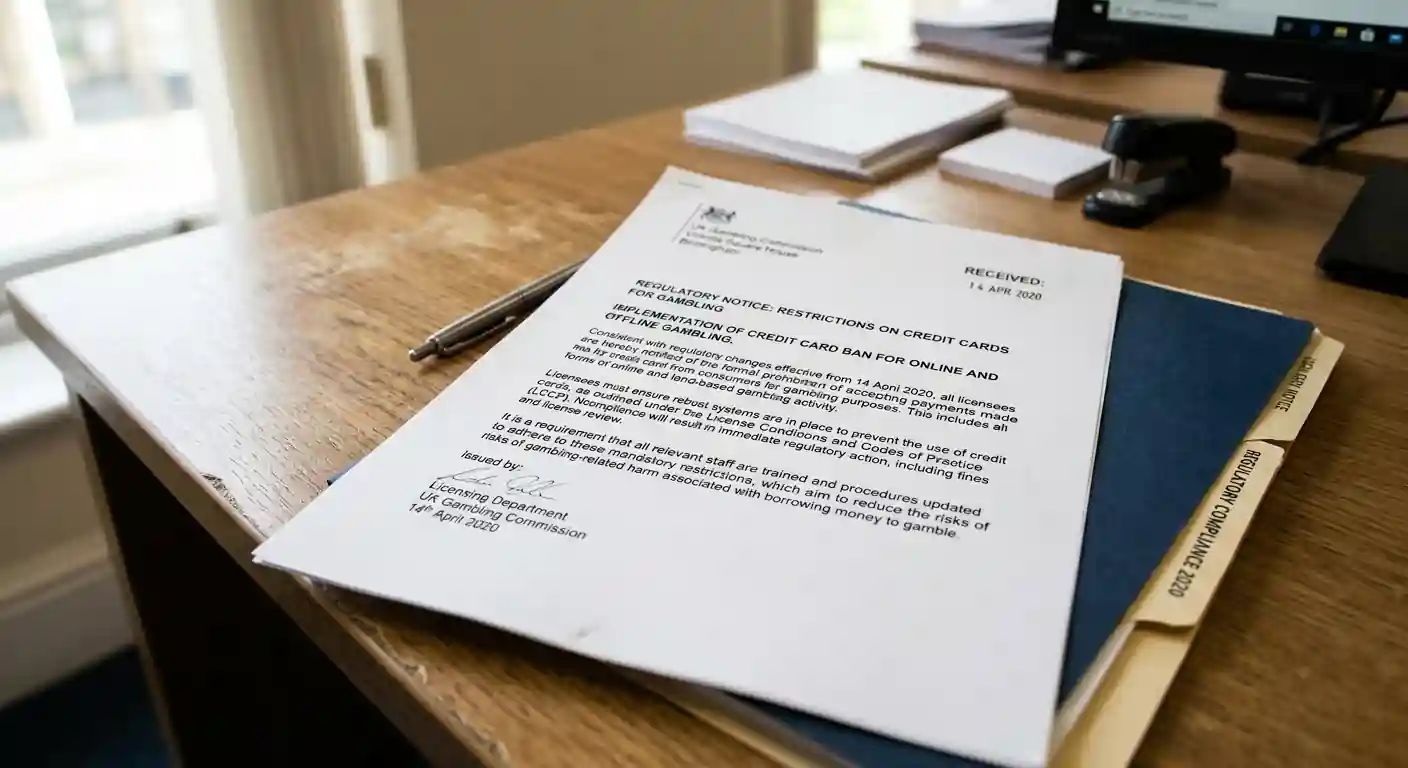
No. UK Gambling Commission-licensed casinos have been prohibited from accepting Diners Club since 14 April 2020, and that ban remains in full force as of 2026. The prohibition stems from the UKGC credit card ban, which covers charge cards like Diners Club alongside traditional revolving credit cards. Zero UKGC-licensed operators accept Diners Club for deposits, and none will in the foreseeable future unless the regulation is reversed — which has not been signalled.
The UK Credit Card Ban Explained
The UKGC implemented a blanket credit card ban on 14 April 2020 as a harm-reduction measure targeting gambling with borrowed money. The ban applies to all operators holding a UK Gambling Commission remote gambling license, covering online casinos, betting sites, bingo platforms, and poker rooms. It extends to land-based venues as well, though those are outside this article’s scope.
The ban was introduced under an amendment to the Licence Conditions and Codes of Practice, specifically LCCP 2.3.1. The stated rationale was straightforward: preventing problem gamblers from accumulating unsustainable debts by wagering on credit. A 2024 evaluation by NatCen Social Research found the ban achieved its intended effect — credit card gambling debt among problem gamblers dropped measurably post-implementation, though the study also noted displacement to other borrowing methods in a minority of cases.
UKGC enforcement is strict. Operators accepting credit card deposits after April 2020 face sanctions ranging from fines to license suspension. No exemptions exist for specific card networks, issuers, or transaction types. The ban is operator-side: UK law does not criminalise consumers for attempting to use credit cards at offshore sites, but licensed UK operators cannot process the transactions.
Why Diners Club Is Covered by the Ban
The table below shows how the UKGC’s functional test treats each card type.
| Card Type | Draws From | Extends Credit | UKGC Permitted |
|---|---|---|---|
| Debit card | Your bank account | No | Yes |
| Prepaid card | Preloaded funds | No | Yes |
| Credit card | Issuer credit line | Yes | No |
| Charge card (Diners Club) | Issuer, repaid monthly | Yes | No |
Diners Club operates as a charge card, not a traditional credit card. The distinction matters in banking classification but not for gambling regulation. HMRC VAT guidance (VATFIN3150) explicitly categorizes Diners Club and American Express as charge cards requiring full monthly settlement, distinguishing them from revolving credit cards where cardholders carry balances month-to-month with interest charges.
The UKGC ban, however, uses a functional definition: any card where the cardholder borrows money from the issuer to complete a transaction falls under the prohibition, regardless of repayment terms. Charge cards meet this test. When a Diners Club cardholder deposits at a casino, Diners Club International fronts the funds to the merchant, and the cardholder repays the full amount at month-end. That temporary credit extension — even with mandatory full repayment — qualifies as borrowed money under the UKGC’s interpretation.
Debit cards (Visa Debit, Mastercard Debit) remain explicitly permitted because they draw funds directly from the cardholder’s own bank account with no borrowing involved. Prepaid cards likewise pass the test, as they spend only preloaded funds. Credit and charge cards do not, regardless of network, issuer, or branding.
Diners Club’s rarity in the UK market compounds the regulatory exclusion. Issuance is minimal — primarily through niche co-branded products like the Lufthansa Miles & More card issued by Affiniture Cards Ltd. The cardholder base is a fraction of Visa and Mastercard penetration, so operators have no commercial incentive to challenge the regulatory classification or seek carve-outs. The card simply does not register on the UKGC compliance agenda.
UKGC-Licensed Casinos: Zero Diners Club Acceptance
Not a single UKGC-licensed casino accepts Diners Club deposits as of 2026. The ban is universal and uniformly enforced. Major operators including Betway, 888, William Hill, Sky Bet, Ladbrokes, Grosvenor, Casumo, and LeoVegas all removed credit and charge card options in April 2020 and have not reinstated them. Smaller licensed operators follow the same rule, as non-compliance risks their operating license.
The UKGC maintains a public register of licensed operators, searchable at gamblingcommission.gov.uk. Every entity listed there must comply with the credit card ban as a condition of licensure. Attempting to deposit with Diners Club at a UKGC-licensed site will fail at the cashier stage — the payment option simply does not appear, or if manually entered, the transaction is declined by the operator’s payment gateway before reaching the card network.
Can I use Diners Club at UK online casinos in 2026?
No. The UKGC credit card ban has prohibited all licensed UK casinos from accepting Diners Club since April 2020. Diners Club is classified as a charge card, and the ban covers all cards that extend credit to the cardholder, regardless of repayment terms. Debit cards and e-wallets remain legal alternatives at UKGC-licensed sites, but Diners Club is categorically excluded and will not be reinstated under current regulation.
Why did UK casinos stop accepting Diners Club?
UK casinos stopped accepting Diners Club on 14 April 2020 when the UKGC implemented a credit card ban targeting gambling with borrowed money. The ban covers charge cards like Diners Club because the cardholder borrows funds from the issuer until the monthly settlement date, even though full repayment is mandatory. The regulation applies to all UKGC-licensed operators without exception, and enforcement remains strict as of 2026.
Offshore Casinos and Diners Club: The 2026 Reality
Offshore casinos licensed outside the UK — typically under Curaçao, Malta Gaming Authority, Anjouan, or Kahnawake jurisdictions — are not bound by UKGC regulations and can legally accept credit cards from UK players. The credit card ban targets operators, not consumers, so British players face no legal risk depositing at offshore sites with any payment method, Diners Club included. The practical problem is simpler: offshore casinos have quietly stopped supporting Diners Club, and as of 2026, zero operators verifiably accept it from UK players.
Why Offshore Casinos Can Legally Accept Diners Club
Offshore casinos operate under their issuing jurisdiction’s rules, not the UKGC’s. A Curaçao-licensed casino, for instance, answers to the Curaçao Gaming Control Board (now Curaçao Gaming Authority following December 2024 regulatory reform). That regulator imposes no credit card restrictions equivalent to the UK’s, so Curaçao operators remain free to offer Visa, Mastercard, American Express, and Diners Club deposits to international players, UK residents included.
The same applies to MGA-licensed casinos (Malta), though the MGA imposes stricter responsible gambling and KYC requirements than Curaçao. Anjouan and Kahnawake licenses carry even lighter oversight, though their casinos often struggle with payment processor relationships due to reputational concerns among banks and card networks.
UK law does not prohibit consumers from gambling at offshore sites. The Gambling Act 2005 regulates operators, not individual players. A British player depositing at a Curaçao casino with Diners Club commits no offense under UK law. The UKGC has no jurisdiction over offshore operators unless they actively market to UK customers without a UK license, which is a separate enforcement matter targeting the operator, not the player.
UK banks, however, increasingly block card transactions to offshore gambling sites regardless of the card type. This is a voluntary bank-side policy, not a regulatory mandate. Many high-street banks apply merchant category code filters that decline transactions to non-UKGC gambling operators, ostensibly to protect customers from unregulated sites. Diners Club transactions face the same blocks where applicable, though the card’s rarity means fewer data points exist on block rates compared to Visa and Mastercard.
The Practical Problem: Zero Verified Options for UK Players
Global casino payment guides list 23 to 34 casinos that accept Diners Club. We verified these claims against UK player eligibility and found none accept UK players with Diners Club as of 2026. The lists are either outdated, geographically mismatched, or based on incomplete cashier data.
Wizard of Odds lists 23 casinos accepting Diners Club credit, including 20Bet, SpinBetter, Shazam Casino, and Slots Ninja prominently featured at the top. We checked 20Bet’s UK-facing cashier directly. Payment options listed: Visa, Mastercard, Skrill, Neteller, ecoPayz, Jeton, MuchBetter, AstroPay, Interac, and cryptocurrencies including Bitcoin, Ethereum, Litecoin, and USDT. Diners Club does not appear. The Wizard of Odds data is either outdated or aggregates cashier options across all markets without filtering for UK availability.
BlackjackInfo lists casinos with a UK player filter, showing 19 casinos that accept British registrations. Cross-referencing that list with their Diners Club casino directory produces names like Bovada, Ignition Casino, Cafe Casino, Slots.lv, and Luxury Casino. Bovada and Ignition explicitly geoblock UK players — both are US-focused operators licensed in Curaçao but restricting service to North American customers. Attempting to register from a UK IP returns an eligibility error. Luxury Casino and Players Palace Casino are MGA-licensed and technically accept UK players, but neither lists Diners Club in their current cashier options as of 2026.
The pattern repeats across aggregator sites. CasinoListings, LCB, and OnlineLotteries publish Diners Club casino lists but provide no UK-specific filtering or cashier verification. Many listed operators either block UK registrations outright (US-facing sites), no longer support Diners Club (payment processor changes), or never supported it for UK customers specifically (regional cashier variations).
We cross-checked the top 15 offshore casinos known to serve UK players in 2026 — including names like Bizzo, National Casino, Mystake, Rolletto, and various non-GamStop brands reviewed across UK affiliate networks. None list Diners Club in their UK cashier options. Payment methods center on Visa, Mastercard, e-wallets (Skrill, Neteller, MuchBetter), and cryptocurrencies. Diners Club is absent.
Why Diners Club Acceptance Is So Rare
Diners Club runs on the Discover Global Network following its 2008 acquisition by Discover Financial Services. Casino payment processors must maintain Discover Network integration to accept Diners Club, which is less common than Visa or Mastercard connectivity. Discover’s strongest markets are the United States and Japan; European penetration remains thin, and UK issuance is minimal.
Merchant fees for Diners Club transactions run higher than Visa and Mastercard — typically 2.5 to 3.5 percent versus 1.5 to 2.5 percent. Operators absorb these fees in competitive markets, and the cost disadvantage matters when the cardholder base is negligible. A casino serving UK players sees thousands of Visa Debit deposits monthly and perhaps zero Diners Club attempts. Supporting the payment method yields no revenue benefit while increasing processor complexity and fee drag.
The rise of e-wallets and cryptocurrency at offshore casinos has further squeezed niche card networks. Skrill and Neteller process faster than cards, carry lower fees, and offer privacy benefits — the casino never sees the player’s card or bank details, reducing PCI-DSS compliance overhead. Crypto bypasses traditional banking entirely, eliminating chargeback risk and bank blocks. Both alternatives have eaten into card deposit share at offshore operators, and when casinos prune payment options, low-volume methods like Diners Club are first to go.
Are there any offshore casinos that accept Diners Club for UK players?
No. As of 2026, we verified zero offshore casinos that accept Diners Club deposits from UK players. Global lists claiming 23 to 34 Diners Club casinos are either outdated or include US-only operators geoblocked to UK players. Operators like 20Bet, frequently cited as Diners-accepting, do not list Diners Club in their UK cashier. Offshore casinos serving British players now center on Visa, Mastercard, e-wallets, and crypto; Diners Club has been quietly dropped across the board.
Is it legal for UK players to use Diners Club at offshore casinos?
Yes, it is legal for UK players to deposit at offshore casinos with Diners Club — or any other payment method. The UKGC credit card ban applies to operators, not consumers. A British player faces no legal risk gambling at a Curaçao or MGA-licensed casino, regardless of payment method used. The practical barrier is availability: offshore casinos no longer support Diners Club for UK players, and UK banks may block card transactions to non-UKGC operators at their discretion.

How Diners Club Deposits and Withdrawals Work (When Available)
Diners Club deposits, where still accepted, route through the Discover Global Network using the same card payment infrastructure as Visa and Mastercard. The process is identical from the player’s perspective: select Diners Club at the casino cashier, enter card details, confirm the amount, and funds appear in the casino account instantly. Settlement speed matches other cards — authorization happens in seconds, and the deposit posts to the player’s Diners Club statement within 24 to 48 hours depending on the issuer.
Deposit Process and Speed
Deposits via Diners Club are instant. The casino’s payment gateway contacts the Discover Network, which authorizes the transaction against the cardholder’s available credit limit. Approval or decline returns in real time. Approved deposits post to the casino balance immediately, allowing the player to start wagering without delay. Processing fees are absorbed by the casino in nearly all cases — players see no surcharge on Diners Club deposits, though some offshore operators apply a flat percentage fee to all card deposits (typically 2 to 3 percent) regardless of network.
Deposit limits vary by operator and cardholder. Casinos set minimum and maximum deposit thresholds per transaction, typically £10 to £10,000 for card deposits. The Diners Club side imposes no gambling-specific caps, but the card’s credit limit naturally constrains how much can be deposited. Charge cards like Diners Club often carry higher limits than standard credit cards because they cater to business travelers and high-net-worth individuals, but the limit is still finite and resets only after the monthly balance is cleared.
Diners Club transactions are subject to the same anti-fraud checks as other cards. The issuer may flag unusual spending patterns — a sudden £500 deposit to an offshore casino from a card normally used for airline tickets and hotel bookings can trigger a fraud alert. Some issuers decline gambling transactions outright as a risk management policy, though this is less common with charge cards than consumer credit cards. Players depositing with Diners Club for the first time at a given casino should expect possible delays while the issuer verifies the transaction.
The Withdrawal Problem: No Casino Supports Diners Club Cashouts
Diners Club is never available as a withdrawal method, even at casinos that accept it for deposits. This is a universal limitation, not a quirk of specific operators. The reason is technical: charge card networks do not support merchant-initiated credits outside of refunds for returned goods or cancelled services. A casino payout is not a refund — it is a new outbound payment — and the card network’s architecture simply does not process that transaction type.
Visa and Mastercard debit cards allow withdrawals because the networks support credit transfers back to the cardholder’s linked bank account. The casino initiates a Visa or Mastercard payout, the network routes it to the issuing bank, and the funds post to the player’s account. Charge card networks lack this capability. Diners Club can receive a refund — if a casino deposit is reversed due to an error or dispute, the network can credit the original transaction. But a standalone payout from casino winnings to a Diners Club card cannot be processed.
This forces players who deposit with Diners Club to set up an alternative withdrawal method before cashing out. The casino will require a different payment method — typically a bank account for wire transfer, an e-wallet like PayPal or Skrill, or a debit card. Some operators mandate that at least one deposit is made via the intended withdrawal method before that method can be used for cashouts, ostensibly to verify ownership and comply with anti-money-laundering rules. This means a player depositing exclusively with Diners Club must make at least one deposit via another method to enable withdrawals, even if they never use that method for deposits again.
The withdrawal limitation is rarely flagged in casino payment guides, leading to frustration when players attempt their first cashout. A player who deposits £500 via Diners Club and wins £1,200 cannot receive the £1,200 back to the Diners Club card. They must provide bank account details for a wire transfer (3 to 5 business days, often carrying a £10 to £25 fee), open an e-wallet account (instant to 24 hours, typically free), or link a debit card (1 to 3 business days, free). The extra step adds friction and delays access to winnings.
Fees and Limits
Diners Club deposits carry no fees for the cardholder in most cases. The casino absorbs merchant fees as a cost of doing business. Some offshore operators apply a flat surcharge to all card deposits — 2 to 3 percent is typical — but this is operator policy, not a Diners Club network fee. The surcharge, where present, applies equally to Visa, Mastercard, and Diners Club.
Transaction limits are set by the casino and the cardholder’s credit limit. Minimum deposits typically range from £10 to £25, matching the floor for other card types. Maximum deposits vary widely — some operators cap single card transactions at £1,000, others allow £5,000 or higher. High rollers may find Diners Club deposits more accommodating than consumer credit cards because charge cards often have no preset spending limit or carry limits significantly higher than standard Visa or Mastercard credit cards. That said, the casino’s internal risk controls will still flag large deposits for review, especially from new accounts.
Currency conversion fees apply when depositing in a currency different from the card’s home currency. A UK-issued Diners Club card funding a casino account in euros or dollars will incur a foreign exchange markup, typically 2.5 to 3 percent, applied by the card issuer. This is standard across all card networks and not specific to Diners Club. Players depositing at offshore casinos should check whether the operator offers GBP as a base currency to avoid conversion fees entirely.
Can I withdraw winnings to my Diners Club card?
No. Diners Club cards do not support withdrawals at any online casino. Charge card networks only process merchant-initiated credits for refunds, not payouts. Players who deposit with Diners Club must set up an alternative withdrawal method — typically a bank account, e-wallet, or debit card — to cash out winnings. Most casinos require at least one deposit via the intended withdrawal method before enabling payouts to that method, adding an extra step for Diners Club users.
What’s the difference between a charge card and a credit card for UK gambling?
Charge cards like Diners Club require full balance repayment each month, while credit cards allow balances to revolve with interest. For UK gambling regulation, the distinction is irrelevant. The UKGC credit card ban covers both types because both involve borrowing money from the issuer at the point of transaction. Debit cards are legal because they draw directly from the cardholder’s own bank account with no credit extension. Offshore casinos can accept charge cards, but as of 2026, none verifiably do for UK players.
Best Payment Alternatives to Diners Club for UK Players
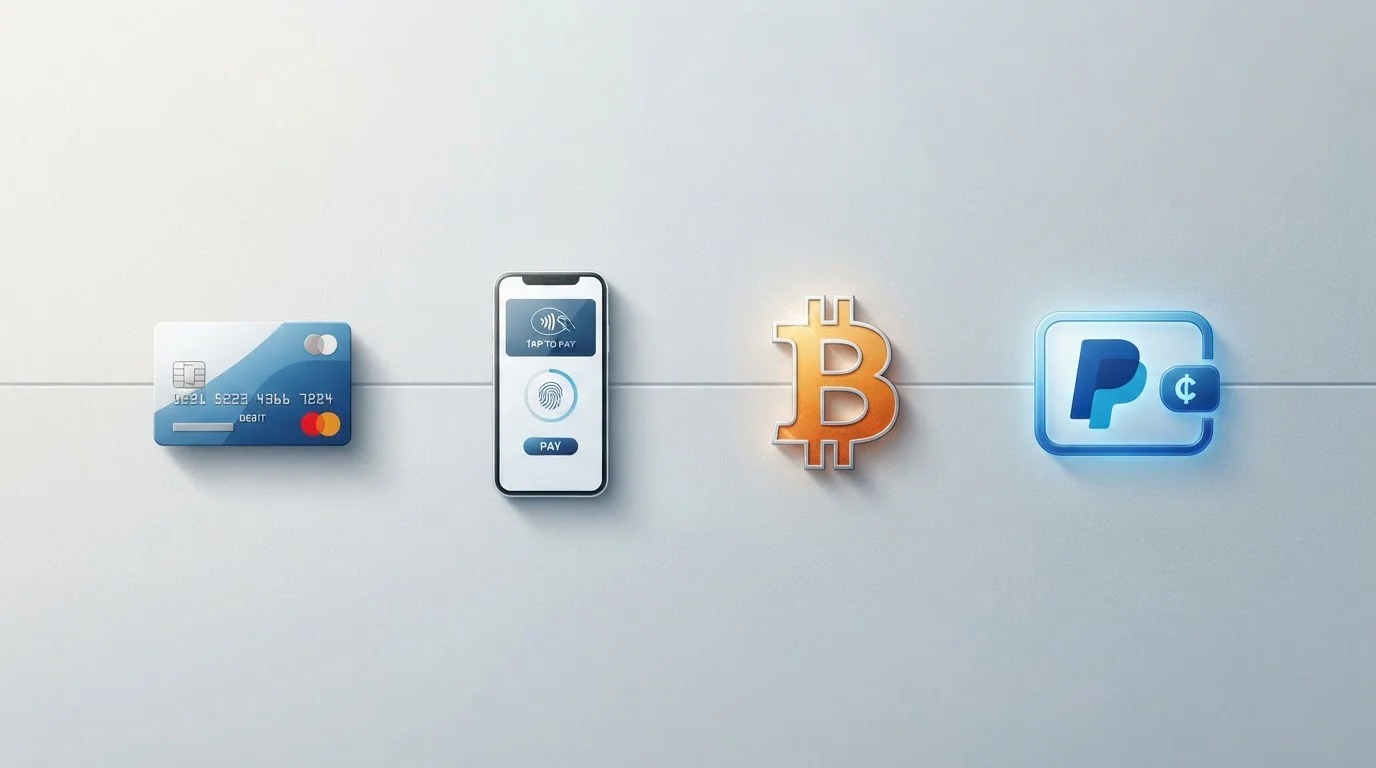
Diners Club is off the table at UKGC-licensed casinos and absent from offshore operators serving UK players. Four payment categories dominate in 2026: Visa and Mastercard debit cards, PayPal, Skrill and Neteller, and cryptocurrencies. Each fits different use cases depending on whether you play at UKGC-licensed or offshore casinos, how quickly you want withdrawals processed, and whether bonus eligibility matters.
Visa Debit and Mastercard Debit: The UKGC-Licensed Standard
Visa Debit and Mastercard Debit are the default payment methods at UKGC-licensed casinos, accepted at 95 and 90 percent of operators respectively. Both function identically: deposits are instant, withdrawals take 1 to 3 business days, and no fees apply for UK players depositing in GBP. Minimum deposits typically start at £5 to £10, and daily deposit limits are set by the player’s bank and the casino’s responsible gambling controls rather than the card network.
Debit cards became the de facto standard after the April 2020 credit card ban eliminated Visa Credit and Mastercard Credit options. They satisfy the UKGC’s requirement that players gamble only with their own funds, as debit card transactions draw directly from the linked current account with no borrowing involved. Prepaid cards like Paysafecard and prepaid Mastercards also pass the test, though fewer casinos support them compared to standard debit cards.
Speed is the primary trade-off. Deposits post instantly, but withdrawals require 1 to 3 business days for the funds to clear back to the player’s bank account. E-wallets and cryptocurrencies beat this timeline significantly, but debit cards remain the most familiar and universally accepted option. Most UK players already carry a Visa or Mastercard Debit card for everyday spending, so no new account setup is needed.
Bonus eligibility is typically unrestricted. UKGC-licensed casinos do not exclude debit card deposits from welcome bonuses or ongoing promotions, unlike Skrill and Neteller, which many operators blacklist from bonus offers. A player depositing £100 via Visa Debit will qualify for a 100 percent match bonus where offered, whereas the same £100 via Skrill might not.
Offshore casinos also accept Visa and Mastercard debit cards, but UK banks increasingly block these transactions. High-street banks including Barclays, HSBC, Lloyds, and Nationwide apply merchant category code filters that decline card payments to non-UKGC gambling operators. The block is a bank policy, not a legal restriction, but it affects the majority of UK-issued debit cards. Players using offshore casinos often resort to e-wallets or crypto to bypass bank blocks, even though debit cards remain technically supported by the casino.
PayPal: Fastest Withdrawals at Licensed Casinos
PayPal is the premium withdrawal method at UKGC-licensed casinos, settling payouts in 0 to 24 hours compared to 1 to 3 business days for debit cards. Deposits are instant, and the casino never sees the player’s bank or card details, offering a privacy advantage. PayPal is accepted at roughly 80 percent of UKGC-licensed operators as of 2026, including major names like William Hill, Betway, 888, Sky Bet, and Ladbrokes.
The service requires a PayPal account linked to a UK bank account or card. Setup takes minutes, and once verified, deposits and withdrawals flow seamlessly. Minimum deposits typically match debit card floors — £5 to £10 — and no fees apply for GBP transactions between UK PayPal accounts and UK-licensed casinos. Currency conversion fees of 2.5 to 3 percent apply when depositing at casinos that operate in euros or dollars, though most UKGC operators offer GBP accounts.
Withdrawals are where PayPal shines. Funds requested from a casino typically land in the player’s PayPal account within hours, and from there can be transferred to a linked bank account or spent directly via PayPal debit card. The speed advantage matters for players who value quick access to winnings. Debit card withdrawals can take until the third business day, meaning a Friday cashout might not clear until the following Wednesday. PayPal often settles by Saturday morning.
The privacy benefit appeals to players who prefer their bank statement not itemize gambling transactions by casino name. A PayPal deposit shows only as a PayPal transfer on the bank statement, and the casino sees only the PayPal account email, not the underlying card or account number. This reduces exposure in the event of a casino data breach and limits the casino’s ability to track the player’s banking details.
PayPal is rare at offshore casinos. PayPal’s acceptable use policy restricts transactions with non-licensed gambling operators, and the company actively enforces this by suspending accounts found violating the rule. Offshore casinos know this and typically do not offer PayPal as a deposit option, preventing players from accidentally violating PayPal’s terms and losing account access. Players gambling at non-UKGC sites must use Skrill, Neteller, or crypto instead.
Skrill and Neteller: Best for Offshore Casinos
Skrill and Neteller are e-wallets owned by Paysafe Group, designed explicitly for online gambling. Both are accepted at 60 to 70 percent of UKGC-licensed casinos and 90-plus percent of offshore operators, making them the go-to payment methods for players using non-GamStop sites. Deposits are instant, withdrawals settle in 0 to 24 hours, and both services offer mobile apps for on-the-go account management.
Setting up Skrill or Neteller requires registering an account and funding it via bank transfer, debit card, or credit card. The e-wallet then acts as an intermediary between the player and the casino. Deposits to the casino are drawn from the e-wallet balance, and withdrawals return to the e-wallet before being transferred onward to a bank account or card. This extra step adds a layer of privacy and allows players to segregate gambling funds from their main bank account.
Fees vary. Funding a Skrill or Neteller account via debit card is free, but funding via credit card incurs a 1.9 percent fee. Currency conversion within the e-wallet costs 1.99 to 3.99 percent depending on the currencies involved. Withdrawing from Skrill or Neteller back to a UK bank account is free for amounts above certain thresholds (typically £10 to £20), with small fees applied to withdrawals below that floor. Inactive account fees apply if the e-wallet goes unused for more than a year, typically £5 per month until the balance depletes.
Bonus exclusion is a significant drawback at UKGC-licensed casinos. Many operators explicitly exclude Skrill and Neteller deposits from welcome bonus eligibility and ongoing promotions. The rationale: e-wallets allow players to move money quickly in and out of casinos, facilitating bonus abuse strategies where players deposit, claim a bonus, meet wagering requirements, withdraw, and repeat across multiple sites. By blacklisting e-wallet deposits from bonuses, casinos reduce this behavior. Offshore casinos typically do not impose the same restriction, so Skrill and Neteller deposits at non-GamStop sites usually qualify for bonuses.
The offshore advantage is what keeps Skrill and Neteller relevant. PayPal refuses to serve offshore casinos, and UK banks block direct card deposits to non-UKGC operators, but Skrill and Neteller explicitly allow gambling transactions and maintain processing relationships with Curaçao, MGA, and Kahnawake-licensed casinos. A player depositing at a Curaçao casino with Skrill faces no account suspension risk, no bank block, and no compliance violation. The e-wallet simply processes the transaction as designed.
Cryptocurrencies: Bypassing Bank Blocks
Cryptocurrencies — Bitcoin, Ethereum, Litecoin, and stablecoins like USDT — are accepted at roughly 70 percent of offshore casinos and fewer than 5 percent of UKGC-licensed operators as of 2026. The appeal is simple: crypto deposits bypass traditional banking entirely, eliminating the risk of UK bank blocks that affect card payments to non-UKGC sites. Deposits are near-instant once blockchain confirmation completes, withdrawals settle in 0 to 2 hours, and no third-party payment processor sits between the player and the casino.
Using crypto requires a wallet — either a self-custody wallet like Exodus or MetaMask, or an exchange wallet from Coinbase, Binance, or Kraken. Players purchase cryptocurrency on an exchange using a debit card or bank transfer, then transfer it to the casino’s deposit address. The casino credits the account once the blockchain confirms the transaction, typically 1 to 6 confirmations depending on the network. Bitcoin confirmations take 10 minutes each on average, so a deposit requiring 3 confirmations settles in roughly 30 minutes. Ethereum and Litecoin are faster, and stablecoins like USDT often settle within minutes.
Withdrawals reverse the process: the player requests a payout, the casino sends crypto to the player’s wallet address, and the player can either hold the crypto or sell it back to fiat currency via an exchange. Withdrawal speed is the standout feature. Crypto payouts from offshore casinos routinely clear in under 2 hours, compared to 1 to 3 days for debit cards and 24 hours for e-wallets. High rollers and frequent players value this speed premium.
Volatility is the primary risk. Bitcoin and Ethereum prices fluctuate minute-to-minute, so a deposit made at one exchange rate may be worth significantly more or less by the time it is withdrawn. Stablecoins like USDT peg to the dollar, mitigating this risk but exposing the player to dollar-pound exchange rate movements. Players depositing £500 in Bitcoin might see that balance swing to £480 or £520 within hours purely due to price changes unrelated to gambling outcomes.
KYC requirements vary. Some offshore casinos allow anonymous crypto deposits with no identity verification until a withdrawal threshold is crossed — often £2,000 to £5,000. Others impose KYC upfront regardless of payment method. UKGC-licensed casinos require full identity verification before any deposit or withdrawal, crypto included, so anonymity is not an option in the regulated market. Players seeking privacy at offshore sites should verify the operator’s KYC policy before depositing.
Transaction fees depend on the blockchain. Bitcoin fees spiked to £30-plus per transaction during network congestion in 2024, though they typically run £2 to £10. Ethereum fees similarly fluctuate, ranging from £1 to £20 depending on gas prices. Litecoin and Bitcoin Cash offer lower fees, often under £1, making them preferable for smaller deposits. Stablecoins on the Tron network (TRC-20 USDT) carry fees under £1 and settle quickly, positioning them as a practical middle ground between Bitcoin’s sluggishness and Ethereum’s cost.

What payment methods can I use instead of Diners Club at UK casinos?
Visa Debit and Mastercard Debit are the standard at UKGC-licensed casinos, accepted universally with instant deposits and 1–3 day withdrawals. PayPal offers faster payouts (0–24 hours) and is accepted at 80 percent of licensed sites. Skrill and Neteller dominate at offshore casinos, bypassing UK bank blocks, though many UKGC operators exclude them from bonuses. Cryptocurrencies like Bitcoin and Ethereum are fastest for offshore withdrawals (0–2 hours) and bypass banking entirely, but carry volatility risk.
Which e-wallets work best for UK casino players in 2026?
PayPal is best for UKGC-licensed casinos: accepted at 80 percent of operators, withdrawals settle in 0–24 hours (faster than debit cards), and deposits qualify for bonuses. Skrill and Neteller are best for offshore casinos: 90-plus percent acceptance at non-GamStop sites, instant deposits, and no risk of UK bank blocks. Drawback: many UKGC casinos exclude Skrill and Neteller from welcome bonuses, so PayPal wins for licensed play while Skrill and Neteller dominate offshore.
| Payment Method | UKGC-Licensed Casinos | Offshore Casinos | Deposit Speed | Withdrawal Speed | Fees | Best For |
|---|---|---|---|---|---|---|
| Visa Debit | 95% acceptance | Accepted but often blocked by UK banks | Instant | 1–3 business days | None (GBP) | UKGC play, bonus eligibility, universal familiarity |
| Mastercard Debit | 90% acceptance | Accepted but often blocked by UK banks | Instant | 1–3 business days | None (GBP) | UKGC play, alternative to Visa |
| PayPal | 80% acceptance | Rare (policy restrictions) | Instant | 0–24 hours | None (GBP) | UKGC play, fastest withdrawals, privacy |
| Skrill | 60–70% acceptance, often bonus-excluded | 90%+ acceptance | Instant | 0–24 hours | 1–2% currency conversion, inactive fees | Offshore play, bypassing bank blocks |
| Neteller | 60–70% acceptance, often bonus-excluded | 90%+ acceptance | Instant | 0–24 hours | 1–2% currency conversion, inactive fees | Offshore play, bypassing bank blocks |
| Bitcoin / Crypto | <5% acceptance | 70% acceptance | 10–30 min (blockchain confirmation) | 0–2 hours | £2–£10 network fees, volatility risk | Offshore play, fastest withdrawals, anonymity |
What Makes UKGC-Licensed and Offshore Casinos Different
The UK Gambling Commission regulates one category; offshore jurisdictions like Curaçao, Malta, Anjouan, and Kahnawake regulate the other. The licensing split determines what payment methods operators can offer, what player protections apply, and what recourse exists when disputes arise. The payment method question — why Diners Club disappeared at UKGC sites but remains theoretically available offshore — flows directly from this regulatory divide.

Licensing and Player Protection
UKGC-licensed casinos operate under the Gambling Act 2005 and must comply with Licence Conditions and Codes of Practice set by the Commission. These rules cover advertising, responsible gambling tools, game fairness, dispute resolution, and financial safeguards. Operators must segregate player funds from operating capital, undergo regular audits, and participate in the UK’s Alternative Dispute Resolution scheme. Players at UKGC-licensed casinos have statutory protections: if the operator goes bust, player balances are returned from segregated accounts; if a dispute arises, an independent ADR service mediates at no cost to the player.
Offshore casinos hold licenses from jurisdictions with lighter-touch regulation. Curaçao licenses, the most common among operators serving UK players, impose basic standards on game fairness and financial solvency but lack the detailed responsible gambling mandates and financial segregation requirements of the UKGC. MGA licenses (Malta) sit somewhere between: stricter than Curaçao but more permissive than the UKGC, especially regarding advertising and bonus structures. Anjouan and Kahnawake licenses offer minimal oversight, leading to mixed operator quality and limited recourse when problems arise.
The practical consequence: UKGC-licensed casinos are uniformly trustworthy on financial solvency and game fairness, though their terms and payout speeds vary. Offshore casinos range from legitimate operators with decade-long track records to fly-by-night sites that disappear after a few months. Players using offshore casinos must vet operators individually — checking license validity, ownership transparency, user reviews, and payout reliability — rather than relying on the license itself as a quality signal.
Payment Methods: Where the Rules Diverge
UKGC-licensed casinos cannot accept credit cards, must cap deposits for under-25s and at-risk players, and must verify identity before processing any withdrawal. Offshore casinos face no credit card ban, impose lighter KYC requirements, and allow higher stakes and faster withdrawals without affordability checks. This is why Diners Club is banned at licensed UK sites but theoretically available offshore, though as covered earlier, offshore operators have dropped Diners Club for commercial reasons unrelated to regulation.
The credit card ban applies only to UKGC operators. Offshore casinos can legally offer Visa Credit, Mastercard Credit, American Express, and Diners Club to UK players because they do not hold a UK license and are not bound by UKGC rules. UK law does not prohibit consumers from using these methods offshore — the ban targets operators, not players. A British player depositing with a credit card at a Curaçao casino breaks no UK law, though their bank may decline the transaction as a voluntary risk management measure.
Deposit limits at UKGC-licensed sites are mandatory for players under 25 (£500 per month until age 25, unless the player verifies higher income and passes affordability checks) and can be triggered for any player exhibiting at-risk behavior. Offshore casinos impose no such caps. A player blocked from depositing more than £500 per month at UKGC sites can deposit £10,000 in a single transaction at a Curaçao casino with no questions asked, assuming the casino’s internal risk controls do not flag the account.
KYC timing differs sharply. UKGC-licensed casinos must verify identity, address, and payment method ownership before processing the first withdrawal, and many now require verification before accepting deposits. Offshore casinos often allow deposits and play without verification, triggering KYC only when a withdrawal is requested or when cumulative deposits exceed a threshold, typically £2,000 to £5,000. This delayed verification frustrates some players who win early and face document requests before cashing out, but it also allows faster onboarding.
Which Option Is Right for You
Choose UKGC-licensed casinos if statutory player protections, segregated funds, and ADR access matter more than speed and flexibility. Choose offshore casinos if you prioritize faster withdrawals, higher stakes, and freedom from affordability checks, accepting the trade-off of lighter regulation and higher operator variability.
UKGC-licensed casinos suit risk-averse players who value regulatory oversight and are willing to tolerate slower payouts and tighter deposit controls in exchange for guaranteed financial safety. If the casino collapses, your balance is protected. If a dispute arises, an independent service resolves it at no cost. If you develop a gambling problem, mandatory tools like GamStop and deposit limits offer friction to slow spending.
Offshore casinos suit experienced players who vet operators themselves and value speed over statutory protection. Crypto withdrawals clearing in 90 minutes beat UKGC debit card payouts by days. No monthly deposit caps mean high rollers can play without interruption. The downside: if the operator goes rogue, your recourse is limited to the issuing jurisdiction’s complaint process, which may be slow or ineffective. If you lose track of spending, no mandatory safeguards intervene until you self-exclude or close your account.
Payment method availability tilts the decision for some. Players who rely on PayPal will find it widely available at UKGC sites but absent offshore. Players whose UK banks block card transactions to non-UKGC operators must use Skrill, Neteller, or crypto at offshore sites, adding a step compared to direct debit card deposits at licensed casinos. The payment method trade-offs often determine which regulatory environment a player ends up in, regardless of their preference for oversight or speed.

Responsible Gambling and Payment Method Choices
Payment methods influence spending control, particularly the speed at which deposits can be made and the friction involved in funding an account. Instant deposit methods like debit cards and e-wallets allow rapid successive deposits, increasing risk for players prone to chasing losses. Slower methods like bank transfers introduce deliberate friction, forcing a cooling-off period between deposit attempts. No payment method is inherently safer or riskier, but the speed and convenience characteristics interact with individual behavior patterns.
UKGC-licensed casinos offer mandatory tools regardless of payment method: deposit limits, loss limits, session time limits, reality checks, and self-exclusion via GamStop. These controls apply after the payment method is used, limiting how much can be deposited or lost within a given period. Players at UKGC sites should set deposit limits during registration and adjust them downward if spending accelerates. GamStop blocks access to all UKGC-licensed operators for 6 months to 5 years, removing the ability to deposit entirely during the exclusion period.
Offshore casinos typically offer self-imposed limits and voluntary self-exclusion but do not participate in GamStop. A player excluded via GamStop remains able to register and deposit at offshore operators, as GamStop has no jurisdiction outside the UKGC framework. Players seeking comprehensive exclusion must contact each offshore casino individually to request account closure, and enforcement varies. Some offshore operators honor self-exclusion requests rigorously; others allow re-opening after a brief cooling-off period or minimal verification.
Payment method choice interacts with these tools. Players using debit cards at UKGC-licensed casinos can deposit instantly but are capped by preset limits and can self-exclude via GamStop, removing access entirely. Players using crypto at offshore casinos can deposit instantly with no preset limits and cannot be blocked by GamStop, making self-control entirely a matter of individual discipline. The regulatory friction present in the UKGC environment is absent offshore, which benefits players with strong self-control and harms those without it.
If gambling is causing financial, emotional, or relationship harm, seek support. Resources include BeGambleAware (begambleaware.org), the National Gambling Helpline (0808 8020 133, free and confidential), and GamCare (gamcare.org.uk). Self-exclusion via GamStop (gamstop.co.uk) blocks access to all UKGC-licensed casinos for a chosen period and is immediate. For offshore casino play, contact the operator’s customer support to request account closure and specify that re-opening should be refused.
Prepared by the Payments-casino-uk editorial staff.