
UK Online Casinos by Minimum Deposit: £1, £5, £10 & £15 Tiers Decoded
 Available in GB

The £1 deposit casino sounds like a gift. Put a pound in, spin the slots, walk away richer—or at least entertained for the price of a coffee. The £5 threshold feels sensible. Ten pounds is mainstream. Fifteen sits somewhere between practical and arbitrary. Each tier exists for reasons most comparison sites never explain, and each carries tradeoffs that only surface when you try to cash out your winnings.
This breakdown maps which UK Gambling Commission-licensed operators accept deposits at each threshold, via which payment methods, and what you realistically get for your money once you factor in withdrawal minimums, bonus eligibility, and the stake caps that took effect across GB in 2026. The operator profiles run deeper than affiliate bullet points because the differences between a £1 Pay by Mobile entry at MFortune and a £10 card deposit at PlayOJO determine whether your twenty-quid experiment ends in frustration or a clean withdrawal.
The structure is tier-by-tier: £1 casinos first, then £5, £10, and an honest accounting of why £15 doesn’t exist as a real market threshold. Payment methods get their own breakdown because the deposit floor at any operator is payment-method-dependent—Pay by Mobile enables £1, cards start at £5, and the withdrawal route you pick at signup often matters more than the deposit route. Regulatory context threads through because the December 2025 wagering cap and the April 2025 stake limits changed what a low deposit buys in practical gameplay, and most competitors wrote their pages before those rules landed.
Table of Contents
- Understanding Minimum Deposit Tiers in UK Online Casinos
- £1 Minimum Deposit Casinos UK — Where They Work and What They Cost
- £5 Minimum Deposit Casinos UK — The Practical Entry Tier
- £10 Minimum Deposit Casinos UK — Mainstream Brands and No-Wagering Models
- £15 Minimum Deposit — Why This Tier Doesn’t Exist
- Payment Methods for Low-Deposit Casinos — What Works Where
- UKGC Licensing, GamStop, and Player Protection
- Bonuses, Wagering Requirements, and the 10× Cap
- How to Choose the Right Minimum Deposit Casino
- Responsible Gambling and Deposit Limits
Understanding Minimum Deposit Tiers in UK Online Casinos
Deposit minimums are not arbitrary. They reflect payment processing economics, bonus-cost thresholds, and regulatory overhead. A £1 transaction via debit card loses money for the operator after Visa’s interchange fee and the payment gateway’s cut take their share—typically £0.20 fixed plus 0.2% of the transaction, meaning the operator nets £0.77 before factoring in the cost of serving the account. Cards therefore cluster at £5 or £10 minimums where the economics pencil out. Mobile billing, by contrast, charges operators a percentage commission (~15% to Boku or Payforit) with no per-transaction fixed fee, so £1 deposits work and the aggregator simply takes fifteen pence.
The four-tier structure in the headline exists because three of those tiers are real and one is a search behavior artifact. £1 is the Pay by Mobile floor. £5 is where debit cards and e-wallets like PayPal become viable. £10 is where mainstream brands with integrated sportsbooks (bet365, Sky Vegas, Betfair) set their entry point because it aligns with welcome bonus thresholds and reduces account acquisition cost per funded user. £15 does not exist—no operator surveyed in 2026 sets a minimum at that exact figure. It sits in the gap between £10 and the £20 premium tier where Casumo and others start, and appears in search data because users exploring progressive budgets type "£1 £5 £10 £15" as a range query, not because casinos accept fifteen-pound deposits as a distinct category.
Why deposit minimums exist (payment economics)
Card networks charge interchange—a fee per transaction split between the issuing bank and the card scheme. In the UK and EU, interchange on consumer debit cards is capped at 0.2% under the Interchange Fee Regulation, but that percentage sits atop a fixed per-transaction fee typically between £0.10 and £0.20 depending on the acquirer. A £1 card deposit therefore costs the casino roughly £0.13 in interchange alone, then 2-3% to the payment gateway (another £0.02-£0.03), leaving the operator with £0.84-£0.85 before operational costs. Serving that account—KYC checks, customer support, platform overhead—costs more than the remaining eighty-five pence justifies, so most operators decline to offer it.
DragonBet is the exception. At £1 via Visa and Mastercard debit, it absorbs the loss as a customer acquisition cost, betting that enough depositors reload at higher amounts to offset the unprofitable first transaction. Every other UKGC operator accepting £1 deposits routes them through Pay by Mobile, where Boku or Payforit take their ~15% commission (fifteen pence on a pound) but the percentage-only fee structure eliminates the fixed-cost trap. The £5 floor is where card economics stabilize: interchange and gateway fees consume roughly £0.23-£0.28, leaving £4.72-£4.77, enough margin to justify the account.
How UK regulations affect low deposits (stake caps, wagering cap)
Two regulatory shifts in 2026 changed what a low deposit buys. The first is the online slot stake cap, effective April and May 2025 under The Gambling Act 2005 (Operating Licence Conditions) (Amendment) Regulations. Players aged 25 and over face a £5-per-spin maximum; those aged 18-24 are capped at £2 per spin. A £1 deposit at the upper age bracket buys 0.2 spins at maximum stake. At the lower bracket, it buys half a spin. Stretch that pound across low-stake slots (£0.10-£0.20 per spin) and you get five to ten rounds, but the notion of walking into a casino with a quid and playing at the table limit is now arithmetically impossible.
The second shift is the 10× wagering cap on bonuses, effective 19 December 2025. Operators that previously ran 35× or 50× requirements had to renegotiate or withdraw their offers. A £10 bonus under the old regime required £350-£500 in total wagers to clear; under the new cap, £100 suffices. This narrowed the competitive advantage of no-wagering operators like PlayOJO and MrQ, which pioneered 0× models when the market standard was 35×. The gap from 0× to 10× is smaller than the gap from 0× to 35×, so the "no wagering" pitch lost some of its punch, though MrQ’s £0 withdrawal minimum remains unique.
Deposit minimums interact with both rules. A £5 deposit gives you one maximum-stake spin if you’re 25 or older, or 2.5 spins if you’re younger, but fifty spins at £0.10 stake. Bonus eligibility at most operators requires £10-£20 even when the deposit minimum sits at £1 or £5, because the operator’s bonus cost—say, £10 in free spins at 10× wagering—implies £100 in expected handle, and a £1 depositor is unlikely to generate that volume. The economics of customer acquisition via bonus incentives set a floor independent of the payment processing floor, which is why £1-deposit casinos rarely attach meaningful bonuses to that first pound.
The four-tier structure (£1/£5/£10/£15)
Three tiers are real. £1 exists because mobile billing’s percentage-only fee structure allows it and because some operators use it as a customer acquisition funnel, accepting the negative margin on the first transaction. £5 is where card and e-wallet economics stabilize and where mainstream operators comfortable with thin margins set their floor. £10 is the threshold for established brands with diversified revenue (sportsbook, casino, bingo) that can afford to screen out the lowest-margin depositors and focus on customers likely to reload at higher amounts.
£15 is not a tier. No surveyed operator in 2026 sets a minimum at that figure. It appears in search behavior because users testing budget tolerance type ranges like "£1 £5 £10 £15" or because fifteen pounds feels like a round psychological threshold halfway between ten and twenty. The actual market jumps from £10 to £20, where premium brands like Casumo pitch their entry point. A user searching for "£15 deposit casinos" is better served by knowing which £10 operators are accessible with that budget and where the £20 tier begins, rather than being handed a fabricated category.
What’s the difference between deposit minimum and bonus minimum?
Deposit minimum is the smallest amount the cashier accepts. Bonus minimum is the smallest deposit that triggers a welcome offer. A casino with a £1 deposit minimum often requires £10 or £20 to activate free spins or a match bonus because the operator’s cost of the bonus (plus the 10× wagering liability) only pencils out if the depositor’s expected lifetime value exceeds that cost. Depositing £1 to claim a £10 bonus at 10× wagering would require £100 in total wagers—the operator knows a £1 depositor is unlikely to reach that, so the bonus remains locked behind a higher threshold.
What are the new UK stake limits and how do they affect low deposits?
Since April-May 2025, online slots are capped at £5 per spin for players aged 25 and over, and £2 per spin for ages 18-24. A £1 deposit buys 0.2 spins at the higher cap or 0.5 spins at the lower cap if you play at maximum stake. Playing at £0.10 or £0.20 per spin stretches that pound to 5-10 rounds. The caps don’t stop low deposits from working—they just mean low deposits work better on low-stake games where you’re not bumping the regulatory ceiling every spin.
£1 Minimum Deposit Casinos UK — Where They Work and What They Cost
Six UKGC-licensed operators accept £1 deposits in 2026, and only one of them takes debit cards. The rest route through Pay by Mobile, which charges the deposit to your phone bill (contract customers) or deducts it from prepaid credit (pay-as-you-go). Transaction limits cap individual deposits at £10-£30 and monthly totals at £250-£400, set by Boku to limit gambling spend via mobile billing. Withdrawal from a Pay by Mobile deposit cannot return to your phone bill—it must go via bank transfer, typically with a £10 minimum, which creates a practical trap: deposit £1, win £3, and you cannot cash out until you deposit enough to reach the withdrawal floor or keep playing until your balance hits ten pounds.
DragonBet is the outlier. At £1 via Visa, Mastercard, and Apple Pay, it’s the only operator absorbing card processing losses to offer that entry point, and withdrawals can return to the same card without the phone-bill friction. The other five—MFortune, Mr Spin, PocketWin, HighBet, BetWright—are mobile-billing specialists, some with proprietary games, some with third-party slots, all sharing the same withdrawal constraint.
| Operator | UKGC Licence | Deposit Methods | Withdrawal Minimum | Distinguishing Feature |
|---|---|---|---|---|
| DragonBet | 64908 | £1 via Visa/Mastercard debit, Apple Pay | £10 (standard across methods) | Only UK operator accepting £1 via cards, not just mobile billing |
| MFortune | Licensed (number not public) | £1 via Pay by Mobile | £10 (bank transfer only) | Proprietary in-house games (no NetEnt, Pragmatic Play); 20+ year legacy brand |
| Mr Spin | Jumpman Gaming licence | £1 via Pay by Mobile | £10 | Slots-focused; 500+ third-party games; Jumpman network shared tech |
| PocketWin | Licensed | £1 via Pay by Mobile | £10 | Proprietary games; mobile-first bingo community with chat features |
| HighBet / BetWright | Licensed | £1 via Pay by Mobile | £10 | Lower brand recognition; newer operators; limited public detail |
DragonBet — £1 via Debit Card and Apple Pay
DragonBet Limited, registered in Cardiff and operating under UKGC licence 64908 since its 2024 launch, is the only mainstream GB-licensed operator accepting £1 deposits via debit card. Visa, Mastercard, and Apple Pay all work at that floor—no mobile billing required, no phone bill appearing a month later, no withdrawal-method mismatch. The operator absorbs the payment processing loss (interchange and gateway fees consume roughly £0.15-£0.20 of that pound) as customer acquisition cost, a strategy uncommon in the UK market where most competitors set card minimums at £5 or £10 to preserve margin.
The game library runs to 1,000+ slots and live dealer tables from providers including NetEnt, Pragmatic Play, and Evolution, with an integrated sportsbook covering twenty-plus markets. The Wales-centric branding (Cardiff HQ, Welsh-language support, focus on Welsh rugby and football) differentiates it from the Entain and Flutter conglomerates that dominate the UK market. The welcome offer as of 2026 requires a £20 total wager to unlock 200 free spins on Big Bass Splash, so the £1 deposit minimum and the bonus threshold sit far apart—depositing a pound gets you in the door, but the "free" spins need a bigger commitment. Withdrawals process to the same card or Apple Pay account used for deposit, with the standard £10 minimum that applies across most UKGC operators.
MFortune — Proprietary Games Since the Java Era
MFortune predates the smartphone. Launched in the early 2000s when mobile gambling meant Java games on Nokia handsets, it’s one of the longest-running mobile casino brands in the UK, though "longest-running" here means "dated interface" more often than it means "trusted legacy." The £1 Pay by Mobile entry point routes through Boku or Payforit, charging the deposit to your next phone bill or deducting from prepaid credit, and the one-way payment rail means withdrawals go via bank transfer with a £10 floor. Win £3 on a £1 deposit and you’re stuck until you deposit more or grind your balance to ten quid.
The defining feature is the proprietary game library. MFortune develops its slots and bingo in-house, so you won’t find Book of Dead, Starburst, or anything from NetEnt, Microgaming, or Pragmatic Play. The exclusivity appeals to players chasing novelty, but the selection tops out around 50-100 titles compared to the 1,000+ multi-provider catalogues at bet365 or Sky Vegas. The games work, they’re built for mobile, and they’re different from what’s everywhere else, but "different" cuts both ways when you want a familiar title and the library doesn’t stock it.
UKGC enforcement flagged MFortune in 2025 for social responsibility failings—publicly disclosed in industry reviews, the penalty didn’t revoke the licence but it’s worth knowing before you deposit. The interface reads like a mid-2000s relic, which is charming if you’re nostalgic for pre-touchscreen mobile gambling and clunky if you’re comparing it to the polish of a Flutter or Entain platform. It works for what it is: a £1 entry point to a unique game library with all the withdrawal friction that Pay by Mobile entails.
Mr Spin — Jumpman Gaming’s Slots-First Entry
Mr Spin operates under the Jumpman Gaming licence, part of a network running fifty-plus UK bingo and casino brands on shared technology. The £1 Pay by Mobile deposit works the same as MFortune’s—phone bill or prepaid credit, one-way rail, £10 withdrawal minimum via bank transfer—but the game library is third-party, not proprietary. Slots from Eyecon, NetEnt, Microgaming, and others push the count past 500 titles, so you get the £1 entry point without sacrificing access to mainstream games.
Jumpman’s network model means Mr Spin shares tech, payment rails, and often promotional structures with sibling brands like Heart Bingo and Spin Princess. Operational costs stay low by spreading infrastructure across dozens of properties, which is how the network sustains £1 minimums where standalone operators cannot. The welcome offer typically centers on free spins rather than deposit-match cash bonuses—register, deposit a pound, get a bundle of spins on a featured slot, though the spins usually carry 10× wagering under the December 2025 cap and contribute to the operator’s liability calculation, not your bankroll.
Mr Spin is slots-only. Live dealer and table games are minimal to absent, so if you’re looking for roulette or blackjack at the £1 tier, you’ll hit a wall here. The Jumpman network appeals to casual slots players comfortable with mobile-first interfaces and Pay by Mobile billing. The brand recognition sits below MFortune’s legacy status but above the newer £1 operators with even less market presence. It does what it says: a pound gets you in, 500+ slots await, and cashing out requires hitting the £10 floor like everyone else in this tier.
PocketWin — Mobile-First Bingo and Slots
PocketWin launched in the mid-2000s alongside MFortune in the mobile gambling pioneer cohort, back when "mobile casino" meant a stripped-down Java app and not a responsive website. It still leans mobile-first—the desktop experience exists but feels like an afterthought—and the £1 Pay by Mobile deposit follows the same one-way billing structure (phone bill or prepaid, no withdrawal to phone, £10 bank transfer minimum). The proprietary game model mirrors MFortune’s approach: in-house titles you won’t find elsewhere, a narrower selection than multi-provider casinos, and exclusivity as the main selling point.
Bingo is PocketWin’s core. Chat rooms, community features, and shared jackpots create a social layer that pure slots-only operators lack. The demographic skews older and more female than the sports-betting-adjacent casino brands, and the vibe is closer to a bingo hall than a high-roller floor. Slots sit alongside bingo but take second billing, and the proprietary library means you’re playing PocketWin originals, not licensed Megaways or branded games from major studios.
The £1 entry works as a trial mechanism. Deposit a pound, test a few bingo rounds or spins, see if the community vibe suits you. The withdrawal friction remains: £10 minimum, bank transfer only, no returning funds to your phone bill. PocketWin has stayed in business for twenty years by serving a niche—mobile bingo players who value community over casino variety—and the £1 threshold keeps the entry barrier low for that audience. If you’re after a slots-heavy catalogue or live dealer tables, this isn’t the operator. If you want bingo chat at a pound, it delivers.
HighBet, BetWright, PricedUp — Lesser-Known £1 Brands
Three smaller operators—HighBet, BetWright, and PricedUp—accept £1 deposits and hold UKGC licences, confirmed by their appearance in licensed-only directories like Bojoko. Public detail on ownership, game libraries, and operational specifics is sparse. They surface in 2026 comparison lists as £1 options but lack the brand recognition of DragonBet or the legacy of MFortune. Payment methods are likely Pay by Mobile given the tier, though some sources do not specify, and withdrawal minimums presumably match the £10 standard across this category.
Lower brand recognition means less regulatory scrutiny in the press, fewer user reviews, and thinner editorial coverage. That doesn’t mean they’re unsafe—UKGC licensing requires the same consumer protections (segregated funds, RNG certification, complaint procedures) whether the operator is a household name or a 2024 startup—but it does mean less public information to form an impression from. If you’re testing a £1 casino and DragonBet’s card option or MFortune’s proprietary games don’t appeal, these three remain on the licensed roster. Approach with the usual diligence: check the UKGC register, read the terms, and keep your deposit at the trial level until you’ve seen how cashier and support perform.
Can I really deposit £1 at a UK casino?
Yes, but only via Pay by Mobile (phone billing) at most operators, or via debit card at DragonBet specifically. Card minimums are typically £5-£10 because payment processing fees make £1 transactions unprofitable. Pay by Mobile charges a percentage commission to the operator, not a fixed fee per transaction, so £1 works economically. DragonBet is the rare exception accepting £1 via Visa, Mastercard, and Apple Pay.
Which payment method is best for £1 deposits?
Pay by Mobile is the only option at five of the six £1 operators, but it carries a major drawback: you cannot withdraw funds to your phone bill. Winnings must go via bank transfer with a £10 minimum, so if you deposit £1 and win £5, you’re stuck until you deposit more or keep playing. DragonBet’s £1 card option avoids that friction—deposits and withdrawals both use the same card, no method mismatch.
Can I withdraw my winnings if I only deposited £1?
Technically yes, but practically no unless you’re at MrQ (£0 withdrawal minimum, covered in the £10 tier section). Most £1-deposit casinos set withdrawal minimums at £10. Deposit £1, win £3, and you cannot cash out until your balance reaches ten pounds, either by depositing more or by winning more. Pay by Mobile deposits worsen this because you cannot withdraw to your phone bill—funds must go via bank transfer, which enforces the £10 floor.
£5 Minimum Deposit Casinos UK — The Practical Entry Tier
Six mainstream brands anchor the £5 tier: bet365, Paddy Power, William Hill Vegas, Ladbrokes, Betfred, and All British Casino. This is where card processing economics stabilize—interchange and gateway fees consume roughly £0.25 of a £5 deposit, leaving £4.75 in margin, enough to justify account overhead—and where PayPal enters as a viable method. Withdrawal minimums typically match deposit minimums (£5-£10), eliminating the trap that plagues £1 depositors, and bonus thresholds begin to overlap with entry points, though many operators still gate their welcome offers at £10 or £20.
Brand recognition surges in this tier. bet365 is the UK market leader by revenue and household-name awareness. Paddy Power and William Hill carry decades of high-street bookmaker heritage. Ladbrokes dates to 1886. Betfred remains independently owned by the Done family, avoiding the Entain-Flutter duopoly. All British Casino represents the smaller independent operators that cluster at £5 to compete with conglomerates on low-entry appeal and player-friendly bonus terms. The £5 threshold is where casual punters and low-budget players encounter operators they’ve seen advertised on Sky Sports or heard mates mention, not just mobile-billing specialists with niche appeal.

| Operator | UKGC Licence | Deposit Methods | Withdrawal Speed | Distinguishing Feature |
|---|---|---|---|---|
| bet365 | Hillside licensed | £5 via debit card, PayPal, Apple Pay, Google Pay | 1-5 business days (card), 24-48 hours (PayPal) | Market leader; highest UK brand recognition; integrated sportsbook; 24/7 support |
| Paddy Power | Flutter (PPB Entertainment) | £5 via card, e-wallets | 24-48 hours (e-wallet), 3-5 days (card) | Bold marketing; Irish heritage; money-back specials on sports |
| William Hill Vegas | 888 Holdings (William Hill Org Ltd) | £5 general, £10 for welcome bonus | 3-5 days (card), 24-48 hours (e-wallet) | High-street bookmaker legacy since 1934; Vegas sub-brand for casino |
| Ladbrokes | Entain plc | £5 across 8 payment methods | 3-5 days (card), 24-48 hours (PayPal) | Founded 1886; merged with Coral; Entain shared platform |
| Betfred | Done family (Betfred Ltd) | £5 via card, PayPal | 3-5 days | Independent ownership; North of England stronghold; 1,600+ shops |
| All British Casino | Independent | £5 via card | 3-5 days | UK-themed branding; early adopter of low wagering (10× pre-regulation) |
bet365 — Market Leader with £5 Entry
Hillside (New Media) Limited operates bet365 under UKGC licensing, and the Coates family ownership (Denise Coates as founder and CEO, headquartered in Stoke-on-Trent) keeps the £3bn-revenue operation private rather than publicly listed. The £5 minimum applies across debit cards, PayPal, Apple Pay, and Google Pay, with instant deposit processing and the 1,000+ game catalogue from fifty-plus providers including Playtech, NetEnt, Pragmatic Play, and Evolution. The integrated sportsbook is bet365’s heritage product—world’s largest online bookmaker by revenue—and the casino side benefits from that liquidity, cross-product promotions, and the brand trust that comes from serving 200 countries and surviving two decades of regulatory scrutiny.
The casino welcome offer varies by promotion cycle but typically requires a £10 deposit to trigger bet credits or free spins under the 10× wagering cap effective December 2025. Depositing £5 gets you access to the full game library and sportsbook, but the headline bonus stays locked until you cross the threshold. Live chat support runs 24/7, the mobile apps consistently rate top-tier in usability and stability, and live streaming of sports events (for betting customers with funded accounts) adds value if you’re splitting your balance between casino and sports. Withdrawal processing runs 1-5 business days for cards, faster for PayPal, with no withdrawal minimum beyond the practical £5 floor most operators enforce.
bet365’s scale shows in edge cases. Customer support is staffed deeply enough that hold times stay short even during major sporting events. The platform handles traffic spikes without the outages that hit smaller operators during Saturday football. The downside of that scale is corporate impersonality—you’re account number 47 million, not a VIP with a personal host—but for a £5 depositor looking for reliability, brand recognition, and a massive game library, bet365 is the default recommendation in the UK market unless you need something specific it doesn’t offer.
Paddy Power — Bold Brand, Irish Heritage
PPB Entertainment Limited, part of Flutter Entertainment following the 2016 merger with Betfair, runs Paddy Power with the brand identity it’s maintained since the 1988 Dublin launch: bold marketing, irreverent humor, and promotional stunts that blur the line between publicity and provocation. The £5 minimum deposit lands you in a 500+ game casino with slots, live dealer, and table games from major providers, but Paddy Power’s heritage is sports betting—horse racing, football, novelty markets—and the casino often reads like a side product grafted onto a bookmaker’s platform.
Money-back specials and Acca Insurance (refunds on accumulators that fail by one leg) are signature sports promotions that occasionally cross into casino offers, and the brand personality is distinct enough that you either find it charming or grating within five minutes. Flutter ownership means Paddy Power shares backend infrastructure with Sky Betting & Gaming and PokerStars (the 2020 merger formed the world’s largest gambling conglomerate), so platform stability and payment processing ride on the same rails that handle millions of Flutter customers globally. Withdrawals to e-wallets process in 24-48 hours, cards take 3-5 days, and the £5 deposit floor aligns with the bonus threshold for most promotions, though reading the small print remains mandatory because Paddy Power’s offers lean complex.
The Irish roots and cheeky tone appeal to punters who find bet365’s corporate polish too sterile. The sports-first product focus means casual casino players may feel like an afterthought. If you’re splitting a £5 deposit between a weekend accumulator and some evening slots, Paddy Power’s cross-product integration makes sense. If you’re pure casino and never touch sports, bet365 or Ladbrokes probably serve you better. The £5 tier is wide enough that brand fit matters more than deposit minimums once you’re inside.
William Hill Vegas — High-Street Legacy, 888 Holdings Ownership
William Hill Organization Limited traces its lineage to 1934, when the first high-street betting shops opened, and by 2026 the brand carries the weight of ninety years in British gambling culture. The 2022 acquisition by 888 Holdings for £2.2bn (after previous US owner Caesars Entertainment divested non-US assets) shifts William Hill’s operational backbone to 888’s platform, but the high-street heritage—1,500+ shops across the UK, brand recognition among older punters who grew up placing Saturday football bets at a William Hill counter—persists in ways that matter for trust and market positioning.
The Vegas sub-brand (williamhill.com/vegas) separates casino from the main sports site, with 1,000+ games from Playtech, NetEnt, Evolution, and IGT among others. The £5 general minimum deposit applies across debit cards, but the welcome bonus requires £10, creating a split threshold where low-entry players can explore the library at five quid while bonus hunters need to double that. Integrated sportsbook access remains available for the same account, and William Hill’s retail presence means some customers funding online accounts also hold betting shop cards, creating a multi-channel ecosystem most digital-only competitors lack.
Withdrawals process slower than bet365 or Paddy Power—3-5 business days is standard for card refunds, and e-wallet options are less prominent than at Flutter or Entain brands. 888’s acquisition brought operational changes still bedding in through 2026, so some legacy customers report interface inconsistencies or promotional confusion as the platform migrates. The £5 tier is crowded enough that William Hill’s edge is heritage and multi-channel reach, not innovation or speed. If you value a brand your dad recognized, it delivers. If you’re optimizing for withdrawal speed or cutting-edge UX, bet365 or Sky Vegas edge ahead.
Ladbrokes — Heritage Dating to 1886
Ladbrokes Coral Group, under Entain plc’s ownership following the 2016 merger, holds one of the oldest bookmaker names in the UK—the Ladbrokes brand launched in 1886, predating even William Hill by half a century. The £5 minimum deposit spans eight payment methods (debit cards, PayPal, Apple Pay among them), and the game library tops 1,000 slots and table games from the providers Entain licenses across its portfolio: NetEnt, Microgaming, Blueprint, IGT, and others. Retail shops dot UK high streets like William Hill’s, and the shared Entain platform with Coral and others means backend stability benefits from conglomerate-scale infrastructure investment.
Horse racing and football are Ladbrokes’ historical core, and the integrated sportsbook remains prominent in the account dashboard even for casino-only users. The Vegas-style casino games sit in a separate lobby but share the same wallet, so cross-product play (betting on a match, then spinning slots while you wait for kickoff) flows smoothly. Withdrawals to PayPal or other e-wallets process in 24-48 hours; cards take 3-5 days, standard across the Entain estate. The £5 deposit minimum aligns with most promotional thresholds, though larger welcome packages often gate at £10 or £20.
Entain’s scale means Ladbrokes benefits from group-wide RNG audits, responsible gambling tooling (deposit limits, time-outs, reality checks), and regulatory compliance infrastructure that smaller independents struggle to match. The trade-off is less operational flexibility—promotional calendars and product roadmaps run on Entain’s schedule, not Ladbrokes-specific innovation cycles. For a £5 depositor, the brand recognition, heritage trust, and multi-channel presence (online, app, retail) matter more than whether Ladbrokes pioneers new features. It’s a known quantity, and in gambling that’s often enough.
Betfred — Independent, Fred Done’s North of England Stronghold
Betfred Limited remains privately held by brothers Fred and Peter Done, who founded the company in 1967 and have resisted the consolidation wave that folded Ladbrokes into Entain and William Hill into 888. The £5 minimum deposit works across debit cards, PayPal, and other standard methods, and the 1,000+ game casino includes slots and live dealer tables from major providers, though the product mix tilts more sports than pure casino. Fred Done’s public face as brand ambassador—interviews, local sponsorships, community visibility in the Northwest—gives Betfred a personality that conglomerate-owned competitors lack.
The retail presence is dense in the North of England, with 1,600+ shops concentrated in the Northwest and Midlands. Online customers sometimes start as shop regulars who open app accounts for convenience, creating brand loyalty that pure digital operators cannot replicate. Withdrawals process slower than the Flutter or Entain platforms (3-5 days to cards is common, e-wallet speeds vary), and the UX polish lags behind bet365 or Sky Vegas, but the Done family’s continued ownership signals operational continuity that publicly traded companies cannot guarantee through executive churn and acquisition cycles.
Betfred’s £5 tier positioning reflects a middle-market strategy: low enough to welcome casual players, high enough to screen out the unprofitable account volume that £1 tiers attract. The welcome bonuses typically require £10 deposits, and promotional variety is narrower than at Flutter or Entain brands, but for punters who value independent ownership and recognize Fred Done’s name from decades of Northwest sports sponsorships, Betfred offers brand continuity in a consolidating market. If you’re south of Birmingham or London-based, the regional identity may not resonate. If you’re from Warrington or Manchester, it probably does.
All British Casino — UK-Themed, Low-Wagering Pioneer
All British Casino operates as an independent, smaller-scale brand—not part of Flutter, Entain, or 888—with UK-themed branding (Union Jack motifs, British cultural references) and a £5 card minimum that positions it against the conglomerate-owned giants in this tier. The 500+ game library draws from major providers, though the selection is narrower than the 1,000+ catalogues at bet365 or Ladbrokes, and there’s no integrated sportsbook, making this a casino-only experience. The distinguishing feature is the early adoption of player-friendly bonus terms: All British Casino offered 10× wagering when competitors were still running 35-50× requirements, predating the December 2025 regulatory cap that forced everyone down to 10×.
That first-mover advantage on fair wagering terms has eroded now that the UKGC mandates 10× across the board—All British Casino no longer stands out on that axis—but the brand positioning as "independent, UK-focused, player-friendly" still differentiates it from the faceless corporate platforms. Withdrawals take 3-5 days to cards, standard for this tier, and customer support operates on smaller-scale staffing (no 24/7 live chat like bet365, but email and limited-hours chat cover most queries). The £5 minimum aligns with bonus thresholds, so depositing five pounds often activates the welcome package without the £10-£20 gate that bet365 or Paddy Power impose.
For a £5 depositor, All British Casino is the independent alternative—no conglomerate backend, no cross-product sportsbook complexity, no legacy baggage from decades of mergers. The trade-off is less scale: smaller game library, slower support, fewer promotional resources. If you value supporting an independent operator and don’t need the last 500 slots or the 24/7 chat, it works. If you want maximum selection and brand insurance, bet365 or Ladbrokes deliver more at the same £5 entry point.
£10 Minimum Deposit Casinos UK — Mainstream Brands and No-Wagering Models
Six operators cluster at £10: Sky Vegas, MrQ, PlayOJO, Betfair, Gala Bingo, and Virgin Games. This tier is where mainstream recognition peaks (Sky’s TV advertising, Virgin’s brand licensing, Betfair’s exchange heritage) and where no-wagering operators carved their niche before the December 2025 regulation compressed the competitive landscape. The £10 minimum reflects a deliberate screening of low-margin customers—operators here want depositors likely to reload at higher amounts, so they set an entry point that filters out the £1-£5 triers and focuses acquisition spend on higher lifetime value accounts.
MrQ and PlayOJO pioneered 0× wagering on free spins and bonuses, a radical departure from the 35-50× industry norm pre-regulation. That differentiation narrowed when the UKGC capped everyone at 10× in December 2025, but MrQ’s £0 withdrawal minimum—unique in the UK market—remains a standout feature that solves the deposit-win-cannot-withdraw trap endemic at lower tiers. Sky Vegas trades on brand recognition from television advertising during sports broadcasts. Betfair’s betting exchange heritage appeals to sharper punters. Gala Bingo leans into community features and bingo chat. Virgin Games leverages Richard Branson’s consumer brand trust. The £10 floor is where brand fit matters most because the economic thresholds are identical—the differences are positioning, not payment processing margins.
| Operator | UKGC Licence | Deposit Methods | Withdrawal Minimum | Distinguishing Feature |
|---|---|---|---|---|
| Sky Vegas | Flutter (Sky Betting & Gaming) | £10 via card, e-wallets | £10 | TV-backed brand; 200-spin welcome; slots-first positioning |
| MrQ | Lindar Media Ltd | £10 via card, e-wallets | £0 (unique in UK) | No-wagering model; instant withdrawals down to zero pounds |
| PlayOJO | SkillOnNet Ltd | £10 via card, PayPal | £10 | First major UK no-wagering operator (2017); OJOplus cashback; 3,000+ games |
| Betfair | Flutter (PPB Entertainment) | £10 via card, e-wallets | £10 | Betting exchange heritage; peer-to-peer betting; sophisticated punter base |
| Gala Bingo | Entain plc | £10 via card, PayPal | £10 | Bingo-led community; chat rooms; retail bingo hall legacy |
| Virgin Games | Gamesys (Bally’s Corp) | £10 via card, e-wallets | £10 | Virgin brand licensing; Gamesys platform; casino-only (no sports) |
Sky Vegas — TV-Backed Brand, 200-Spin Welcome
Sky Betting & Gaming, part of Flutter Entertainment following the 2020 merger with The Stars Group (which had acquired Sky Betting & Gaming from Sky plc in 2018 for £3.4bn), operates Sky Vegas under UKGC licensing with the brand weight of Sky Sports behind it. Television advertising during live football and rugby broadcasts delivers awareness levels that digital-only competitors cannot match, and the £10 minimum deposit triggers the signature 200-spin welcome offer, split across multiple deposits with 10× wagering post-December 2025. Each spin values at £0.10, so 200 spins equal £20 in nominal value, wagered ten times yields £200 total handle, and the math pencils out for the operator at a £10 entry point where lower tiers would not.
The 600+ game catalogue leans slots-heavy, with less emphasis on live dealer or table games than bet365 or Betfair. Sky Vegas positions as a slots destination for casual players who recognize the brand from pub TVs and Saturday afternoon sports coverage. The welcome offer’s headline spin count (200 spins) reads generous until you parse the terms: spins release in tranches over several deposits, they expire within days if unused, and the £0.10 per-spin value means you’re playing at low stakes regardless of your age-bracket stake cap. For a £10 depositor, the appeal is brand familiarity and a welcome structure that stretches the initial deposit across a longer trial period via staged spins. Withdrawals process at Flutter’s standard speeds (24-48 hours for e-wallets, 3-5 days for cards), and the £10 minimum withdrawal aligns with the deposit floor, eliminating the £1-tier trap.
MrQ — £0 Withdrawal Minimum, No-Wagering Model
Lindar Media Limited launched MrQ in 2018 as the second major UK operator to pioneer no-wagering bonuses, following PlayOJO’s 2017 debut. The £10 deposit minimum sits at the industry standard for this tier, but the £0 withdrawal minimum is unique—no other UKGC-licensed operator lets you withdraw £1, £5, or any amount below ten pounds. Deposit £10, win £12, and you can cash out the twelve instantly, no minimum threshold blocking you. The instant withdrawal processing (same-day, often within hours) compounds that advantage, turning MrQ into the cleanest exit path for small-balance winners in the UK market.
The no-wagering model means free spins and bonuses pay out as cash with 0× playthrough requirements. Before December 2025, that was radical differentiation when competitors ran 35-50× requirements; post-regulation, when everyone caps at 10×, the gap from 0× to 10× is narrower than the gap from 0× to 35× used to be. MrQ’s edge remains real but less dramatic. The £0 withdrawal minimum, however, stays unmatched—it solves a friction point no other operator addresses, and for a £10 depositor who wants clean arithmetic (deposit, play, withdraw without hitting arbitrary floors), MrQ delivers.
The 500+ game library is smaller than PlayOJO’s 3,000+ or bet365’s 1,000+, but major providers (NetEnt, Pragmatic Play, Evolution for live dealer) cover the mainstream titles. The UX is deliberately simple—no VIP tiers, no gamification, no loyalty schemes that pressure you into chasing status. The clean design reads minimalist if you appreciate restraint or spartan if you expect visual polish. For a £10 depositor, MrQ is the operator that removes excuses: no wagering traps, no withdrawal minimums, no complex promotional calendars. Deposit, play, withdraw. If that simplicity appeals, nothing else in the UK market matches it.
PlayOJO — No-Wagering Pioneer Since 2017
SkillOnNet Limited operates PlayOJO under UKGC and Malta Gaming Authority licensing, and the 2017 launch as the UK’s first major no-wagering operator established the brand positioning that MrQ later replicated. The £10 minimum deposit unlocks a 3,000+ game catalogue from fifty-plus providers—one of the largest selections in the UK market—and the OJOplus cashback system delivers ongoing value beyond the one-time welcome bonus. Every spin generates cashback (typically 0.1-0.5% of wagers), paid as real cash with no wagering, accumulating in your OJOplus balance and withdrawable anytime.
The welcome offer in 2026 typically runs 50-80 free spins on Big Bass Bonanza or similar, credited after a £10 deposit, with 0× wagering so winnings are cash immediately. The "no BS" branding and transparent terms pages position PlayOJO against the fine-print obfuscation that plagued UK casino bonuses pre-regulation, and the brand maintained that positioning even as the December 2025 wagering cap forced competitors to simplify their offers. The operational scale (SkillOnNet runs multiple brands across jurisdictions) means platform stability and payment processing infrastructure rival the conglomerate operators, though PlayOJO itself is smaller than Flutter or Entain in UK market share.
Withdrawals process at standard e-wallet speeds (24-48 hours to PayPal, 3-5 days to cards), and the £10 minimum withdrawal matches the deposit floor. The 3,000+ game library dwarfs MrQ’s 500+ and rivals bet365’s scale, so PlayOJO combines no-wagering simplicity with multi-provider breadth. The OJOplus cashback runs perpetually—it’s not a time-limited promotion but a structural feature of the platform—which means a £10 depositor who becomes a regular accumulates cash rewards that smaller-library or lower-cashback operators don’t match. If you want no-wagering transparency plus maximum game selection, PlayOJO is the tier leader. If you want the £0 withdrawal minimum that MrQ offers, PlayOJO’s £10 floor still traps small balances.
Betfair — Betting Exchange Heritage
PPB Entertainment Limited (Flutter Entertainment) operates Betfair under the brand that revolutionized UK sports betting in 2000 with peer-to-peer exchange wagering. The £10 deposit minimum lands you in a 1,000+ game casino from major providers, but Betfair’s identity is the exchange—players betting against each other rather than against the house, with Betfair taking commission on winning bets. The exchange user base skews more sophisticated (traders, arbitrageurs, professional punters) than the recreational demographic at bet365 or Sky Vegas, and the casino side is secondary to the exchange product.
The integrated platform means your £10 deposit funds both casino and exchange from a single wallet, and cross-product play (lay a football bet on the exchange, spin slots while waiting for the match) flows seamlessly. The casino welcome offer is less prominent than at Sky Vegas or MrQ—Betfair’s promotional focus centers on exchange liquidity and sports markets—so a £10 casino depositor gets access to the games but not the headline spin counts or bonus matches that other £10 operators trumpet. Withdrawals process at Flutter’s standard speeds (24-48 hours e-wallet, 3-5 days card), and the £10 withdrawal minimum aligns with the tier norm.
For a pure casino player, Betfair offers less than PlayOJO (no no-wagering edge), less than MrQ (no £0 withdrawal minimum), and less promotional firepower than Sky Vegas. For a punter who uses the exchange and wants casino access under the same account, Betfair’s integration is the point. The £10 minimum screens casual triers and focuses on customers engaging with the exchange, where Betfair’s liquidity and commission model generate the bulk of revenue. If you’re not using the exchange, bet365 or Ladbrokes probably serve your casino needs better at a lower deposit tier. If you’re an exchange regular, Betfair’s £10 casino minimum is incidental to the value of having one account for both products.
Gala Bingo — Community-First, Bingo Heritage
Entain plc’s Gala Bingo traces its retail roots to the 1960s when Gala Bingo halls were UK fixtures for community bingo nights, and the 2006 online launch carried that social DNA into the digital product. The £10 deposit minimum buys access to bingo rooms (75-ball, 90-ball, speed bingo variants) with chat functionality, moderators, and community jackpots that replicate the bingo hall experience. The 500+ casino games (slots, some table games) from major providers sit alongside bingo but take second billing. The demographic skews older and more female than sports-betting-adjacent casino brands, and the vibe is closer to community gathering than transactional gambling.
The chat rooms are the distinguishing feature. Moderators host games, players greet regulars by username, and the social layer creates retention that pure slots-only operators cannot match. Bingo callers have personas, seasonal events run themed games, and the sense of "place" that physical bingo halls offered translates partially into the online chat experience. For a casino-only player, Gala Bingo is the wrong operator—the game library is narrower than PlayOJO or bet365, and the product focus is bingo-first. For someone who values bingo community and wants casino slots as a side option, the £10 minimum is the entry point to that niche.
Entain’s ownership means backend infrastructure (payment processing, RNG audits, responsible gambling tools) matches Ladbrokes’ scale, and the retail heritage (some physical Gala Bingo halls still operate) gives the brand recognition that pure digital startups lack. Withdrawals process at Entain speeds (24-48 hours e-wallet, 3-5 days card), and the £10 minimum withdrawal aligns with the deposit floor. For a £10 depositor, Gala Bingo is the community-first choice in a tier otherwise dominated by slots-first or exchange-first operators.
Virgin Games — Richard Branson’s Brand, Gamesys Platform
Virgin Games Limited operates under Gamesys Group’s technology, acquired by Bally’s Corporation in 2021 for $2.7bn, with Virgin Group licensing the brand name rather than owning the gambling operation. The Richard Branson brand equity—Virgin Atlantic, Virgin Media, Virgin Trains—lends consumer trust that a no-name startup could not replicate, and the £10 deposit minimum positions Virgin Games in the mainstream tier where that brand recognition matters. The 500+ game casino draws from major providers, with no integrated sportsbook (casino-only, unlike bet365 or Betfair), and the Gamesys platform delivers stable payment processing and regulatory compliance infrastructure that smaller independents struggle to match.
The Virgin branding is the edge. A £10 depositor recognizing the Virgin logo from airlines or broadband carries an assumption of quality and consumer protection that translates into gambling site selection, even though Virgin Group itself does not operate the casino—it’s a brand licensing deal with Gamesys, now owned by Bally’s. The welcome offer varies by promotion cycle but typically requires the £10 minimum to activate, and the 10× wagering cap post-December 2025 aligns Virgin Games with regulatory norms across the tier. Withdrawals take 3-5 days to cards, standard for this operator, and the £10 withdrawal minimum matches the deposit floor.
Virgin Games is the brand-trust play in the £10 tier. If you trust Virgin as a consumer brand and want that association in your casino choice, the licensing deal delivers it. If you’re optimizing for game selection (PlayOJO’s 3,000+), unique features (MrQ’s £0 withdrawal), or no-wagering heritage (PlayOJO’s 2017 pioneer status), Virgin Games offers less. The Bally’s ownership post-2021 shifts the operational backbone toward a US-based casino conglomerate, which may affect product roadmap and promotional focus over time, but the Virgin name remains the front-facing asset for UK customer acquisition at this tier.
What does "10x wagering" mean and how does it affect my bonus?
Since December 2025, UK casinos cannot set bonus wagering above 10× the bonus amount. Receive a £10 bonus, and you must wager £100 total (£10 × 10) before you can withdraw bonus-derived winnings. This replaced 35-50× requirements and makes bonuses far more achievable—a £20 bonus previously required £700-£1,000 in wagers (35-50×), now only £200 (10×). The cap applies to all UKGC operators, so the competitive playing field leveled in December 2025.
£15 Minimum Deposit — Why This Tier Doesn’t Exist
No UK-licensed operator surveyed in 2026 sets a minimum deposit at £15. The threshold does not exist because it serves no economic or operational purpose. Payment processing costs create natural floors at £1 (mobile billing’s percentage-only commission structure), £5 (where card interchange and gateway fees stabilize), and £10 (where mainstream operators screen for higher lifetime value customers). The next tier jumps to £20, where premium brands like Casumo position their entry points. Fifteen pounds sits in the dead zone between the £10 mainstream floor and the £20 premium threshold, and no operator bothers to carve out a category there.

This search term appears in search data because users type ranges ("£1 £5 £10 £15") when exploring budget tolerance, or because fifteen pounds feels like a psychologically round midpoint between ten and twenty. The demand is real—the market category is not. A user with a £15 budget can access every £10-minimum operator (Sky Vegas, MrQ, PlayOJO, Betfair, Gala Bingo, Virgin Games) listed in the previous section, plus every £5 operator (bet365, Paddy Power, William Hill, Ladbrokes, Betfred, All British Casino) from the tier before that. The £15 query is better answered by showing what’s accessible at that budget than by fabricating a nonexistent category.
The £20 premium tier sits just beyond £15 and includes operators like Casumo, Jackpot City, and others targeting higher-value depositors with larger welcome packages and VIP-focused retention programs. Those operators set minimums at £20 to signal brand positioning (premium rather than entry-level) and to filter out the account volume that £5-£10 tiers attract. For a user with £15, the strategic question is whether to deposit at a £10 operator and keep £5 in reserve, or to add £5 and access the £20 tier’s larger bonuses. The answer depends on whether the £20 tier’s promotional value (often £50-£100 welcome packages at 10× wagering) justifies the higher initial commitment, and that arithmetic is individual to the user’s risk tolerance and play style.
Why is £15 not a common minimum deposit in UK casinos?
Operators set minimums at payment-processing or bonus-economic breakpoints: £1 (mobile billing), £5 (card interchange stabilizes), £10 (mainstream brands screen for lifetime value), £20 (premium positioning). £15 sits between the £10 mainstream floor and the £20 premium threshold with no economic or operational logic as a distinct tier. With a £15 budget, all £10-minimum casinos are accessible, and adding £5 reaches the £20 premium tier where larger welcome bonuses often justify the extra commitment.
Payment Methods for Low-Deposit Casinos — What Works Where
Deposit minimums are payment-method-dependent. The £1 tier works almost exclusively through Pay by Mobile (Boku, Payforit), which charges operators a percentage commission with no per-transaction fixed fee. Cards start at £5 because Visa and Mastercard’s interchange fees (0.2% plus £0.10-£0.20 fixed) make £1 transactions unprofitable. PayPal follows card economics and sets the same £5 floor at most operators. Apple Pay and Google Pay, which tokenize card payments, mirror card minimums. The method you pick at signup often determines your withdrawal route, because some methods (Pay by Mobile) cannot receive funds back, forcing withdrawals via bank transfer with higher minimums than the deposit floor.
The one-way rail is the critical friction point. Pay by Mobile works for deposits only—you cannot withdraw to your phone bill. Winnings must exit via bank transfer (typical £10 minimum), debit card (if you have one on file), or e-wallet (if you linked one). A £1 Pay by Mobile depositor who wins £5 cannot withdraw that fiver until they either deposit enough to reach the £10 withdrawal floor or keep playing until their balance climbs to ten pounds. Card deposits avoid that trap: withdraw to the same card you deposited with, and the minimum typically matches the deposit floor (£5-£10 depending on operator). E-wallets like PayPal similarly allow symmetrical deposit-withdrawal flows, often with faster processing (24-48 hours vs. 3-5 days for cards).
| Method | Minimum Deposit | Transaction Limits | Withdrawal Support | Best For |
|---|---|---|---|---|
| Pay by Mobile (Boku/Payforit) | £1 at most operators | £10-£30 per transaction; £250-£400 monthly cap | No—must withdraw via bank transfer (£10 min) | £1 trial deposits; users without cards; avoiding card details to casino |
| Debit Cards (Visa/Mastercard) | £5-£10 at most operators; £1 at DragonBet | No inherent limit (operators set their own caps) | Yes—withdraw to same card; 3-5 days processing | General-purpose; symmetrical deposit/withdrawal; universally accepted |
| PayPal | £5 at bet365, Ladbrokes, others | No inherent limit | Yes—24-48 hours processing; faster than cards | Trusted brand; privacy (no card to casino); faster withdrawals than cards |
| Apple Pay / Google Pay | £5 (tokenized card) | Follows underlying card limits | Yes—processes as card refund; 3-5 days | Mobile convenience; biometric auth; same economics as direct card |
Pay by Mobile (Boku, Payforit) — Enabling £1 Deposits
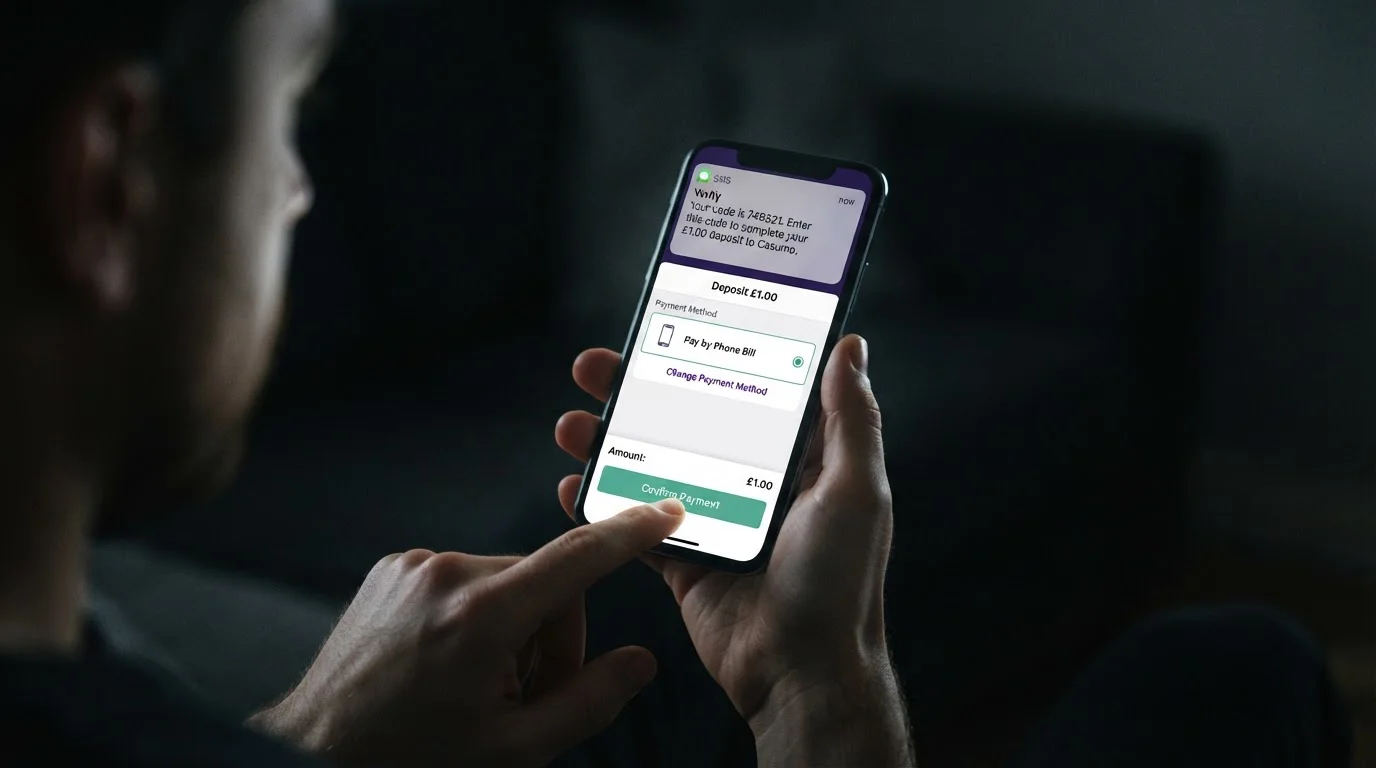
Boku and Payforit are payment aggregators that charge deposits to your mobile phone bill (contract customers) or deduct from prepaid credit (PAYG users). You select Pay by Mobile at the casino cashier, enter your UK mobile number, receive an SMS with a one-time confirmation code, reply to authorize, and the deposit credits instantly to your casino balance. The charge appears on your next monthly phone bill (contract) or reduces your prepaid balance immediately (PAYG). The operator pays Boku roughly 15% commission on the transaction—fifteen pence on a £1 deposit—with no fixed per-transaction fee, which is why £1 minimums work economically where card processing does not.
Transaction limits cap individual deposits at £10-£30 and monthly totals at £250-£400, set by Boku to limit gambling spend via phone billing and to reduce the risk of bill shock when contract customers receive their monthly statements. These caps are hardcoded at the aggregator level, not operator-specific, so you cannot deposit £50 via Pay by Mobile even if the casino allows it—Boku declines the transaction. The one-way rail is the defining constraint: you can deposit via phone billing, but you cannot withdraw to it. Winnings must exit via bank transfer (typical £10 minimum, 3-5 business days processing), debit card (if you link one post-deposit), or e-wallet (if you set one up). A £1 Pay by Mobile depositor who wins £3 is stuck until they reach the £10 withdrawal threshold, either by depositing more or by playing through to ten quid.
Pay by Mobile appeals to three demographics: users testing a casino with minimal commitment (£1 trial), users without debit cards or who prefer not to link them to gambling sites (privacy or unbanked), and users who value the convenience of phone-bill consolidation (one monthly statement covers phone service and casino deposits, though that convenience evaporates at withdrawal time). The method works for what it is—a low-friction £1 entry point—but the withdrawal trap and monthly caps make it unsuitable for anything beyond trial deposits or casual low-spend sessions.
Debit Cards (Visa, Mastercard) — The £5 Standard
Visa and Mastercard debit cards are the universal payment method at UKGC operators, accepted everywhere regardless of tier. The £5-£10 minimum deposit reflects interchange fee economics: card networks charge 0.2% plus a fixed fee (£0.10-£0.20) per transaction under UK/EU regulations, and payment gateways add another 2-3%, so a £5 deposit costs the operator roughly £0.25 in combined fees, leaving £4.75 in margin. That’s workable. A £1 deposit costs £0.15-£0.20, leaving £0.80-£0.85, which does not cover account servicing costs, hence the £5 floor at most operators. DragonBet absorbs the loss at £1 as customer acquisition cost, making it the lone exception.
Credit cards were banned for UK gambling in April 2020 under UKGC regulations aimed at preventing debt-fueled gambling, so only debit cards work. Visa Electron and Maestro, once common in the UK, phased out (Maestro discontinued July 2023), leaving Visa Debit and Mastercard Debit as the standard options. Prepaid cards like Paysafecard are accepted at some operators but cannot be used for withdrawals due to anti-money-laundering (AML) rules requiring withdrawals to return to the deposit source or a verified account. Deposits process instantly; withdrawals to the same card take 3-5 business days due to banking system settlement times and operator processing queues.
The symmetrical deposit-withdrawal flow is the card method’s advantage over Pay by Mobile. Deposit with a Visa Debit, win £50, and withdraw to that same Visa Debit—no method mismatch, no forced bank transfer. The 3-5 day withdrawal speed is slower than PayPal’s 24-48 hours but faster than the week-plus timelines that some smaller operators impose. For a £5-£10 depositor, cards are the default: universally accepted, no transaction caps beyond what the operator sets, and clean withdrawal paths. The downside is that your card details live in the casino’s payment processor database, which privacy-conscious users avoid by routing through PayPal or Apple Pay instead.
PayPal — Trusted E-Wallet at £5
PayPal operates as an e-wallet intermediary: you link your bank account or card to your PayPal account, fund the PayPal balance or authorize direct charges, and use PayPal to pay online without sharing card details with the merchant. In gambling contexts, PayPal restricts transactions to licensed operators in jurisdictions where online gambling is legal—it blocks payments to unlicensed or offshore casinos, so PayPal acceptance is a soft signal of UKGC licensing (though not definitive, as some licensed operators choose not to integrate PayPal). The £5 minimum at bet365, Ladbrokes, and others follows card economics because PayPal’s fees to merchants mirror card interchange structures, and operators set the same floors.
Deposits process instantly. Withdrawals to PayPal take 24-48 hours, faster than the 3-5 days cards require, because the funds move between verified e-wallet accounts rather than through the banking system’s card refund rails. The speed advantage makes PayPal the preferred method for users who reload frequently and want quicker access to winnings. The privacy angle appeals to users uncomfortable giving card details directly to a casino—PayPal intermediates, and the casino sees only your PayPal email, not your card number. The trade-off is that PayPal balance transfers back to your bank account can add another 1-3 days, so the total time from casino withdrawal to bank account is comparable to direct card refunds once you factor in PayPal-to-bank settlement.
Not all UKGC operators accept PayPal. Some exclude e-wallets from bonus eligibility to reduce bonus abuse (e-wallet accounts are easier to open than bank accounts, so bonus hunters use them to farm welcome offers across multiple sites). Others exclude PayPal due to fee negotiations—PayPal charges merchants roughly 2.9% plus a fixed fee, and smaller operators balk at those rates. For a £5 depositor, PayPal’s availability is hit-or-miss: bet365, Ladbrokes, and other major brands support it; smaller independents often do not. If speed and privacy matter, PayPal at £5 beats cards. If universal acceptance matters, cards win.
Apple Pay / Google Pay — Tokenized Card Convenience
Apple Pay and Google Pay tokenize your debit card, replacing the actual card number with a device-specific token that merchants cannot reuse. You load your Visa or Mastercard into Apple Wallet or Google Pay, authorize gambling transactions via Face ID, Touch ID, or fingerprint, and the payment processes as a card transaction on the backend with the tokenization layer adding security. The £5 minimum mirrors direct card minimums because the economics are identical—Apple and Google charge no additional fees to users or merchants beyond the standard card interchange, so operators treat Apple Pay and Google Pay as card variants and set the same deposit floors.
The convenience factor is biometric authentication. Instead of typing sixteen digits, expiry, and CVV, you double-click your phone’s side button (iPhone) or tap the fingerprint sensor (Android), and the payment authorizes. The speed suits mobile users, and the tokenization prevents the casino from seeing your actual card number, adding a privacy layer similar to PayPal’s intermediation. Withdrawals process as card refunds—funds return to the card linked to your Apple Pay or Google Pay account—so withdrawal speed and minimums match standard card processing (3-5 days, £5-£10 minimum depending on operator).
Adoption varies by operator. Major brands (bet365, Ladbrokes, Sky Vegas) integrate Apple Pay and Google Pay; smaller operators lag. The method works identically to direct card deposits in all respects except the authorization UX, so for a £5 depositor choosing between typing card details and using biometric auth, Apple Pay and Google Pay offer convenience without changing deposit minimums, withdrawal speeds, or economic trade-offs. If you already use Apple Pay or Google Pay for other purchases, adding casino deposits to that flow is frictionless. If you don’t use them elsewhere, setting them up solely for casino deposits offers no advantage over direct card entry.
Which payment method is best for £1 deposits?
Pay by Mobile (Boku, Payforit) is the only option for £1 deposits at most casinos, but it carries a major drawback: you cannot withdraw funds to your phone bill. Winnings must go via bank transfer with a £10 minimum, so if you deposit £1 and win £5, you’re stuck until you deposit more or keep playing. DragonBet’s £1 card option avoids that friction—deposits and withdrawals both use the same card, no method mismatch, no withdrawal floor trap.
UKGC Licensing, GamStop, and Player Protection
The UK Gambling Commission regulates all online casinos serving Great Britain under the Gambling Act 2005. Every operator accepting GB residents must hold a remote gambling licence, display the licence number in the website footer with a link to the UKGC register, and comply with licence conditions covering segregated player funds, RNG certification, advertising standards, AML procedures, and social responsibility measures. GamStop is the mandatory national self-exclusion scheme—players can ban themselves from all UKGC-licensed operators for six months, one year, or five years, and operators must block excluded accounts from gambling and marketing.
Licence numbers are public. DragonBet’s is 64908. bet365, Paddy Power, Ladbrokes, and others display theirs in tiny footer text that most users never read, but the UKGC register at gamblingcommission.gov.uk lets you search by operator name and confirm active licensing status. Licensed operators segregate player funds from operational accounts, so if the operator goes bust, your deposits are protected. Unlicensed operators—offshore sites, "not on GamStop" casinos with Curaçao or Malta non-UKGC licensing—offer no such protection. Your funds sit in the operator’s general accounts, and if they disappear overnight or refuse withdrawal, you have no UKGC complaint mechanism and no realistic legal recourse.
How to verify a casino’s UKGC licence
Check the footer of the casino’s homepage for a licence number and UKGC logo. The number should link to the UKGC register at gamblingcommission.gov.uk where you can verify the licence is active and see the operator’s legal entity name. If the footer shows a Malta Gaming Authority or Curaçao eGaming licence without a UKGC number, the operator is not licensed for UK customers and is illegal to market to GB residents, though enforcement gaps allow some offshore sites to operate. Absence of any licence number is an immediate red flag.
What GamStop means for self-exclusion
GamStop is a free service allowing UK players to self-exclude from all UKGC-licensed gambling sites simultaneously for six months, one year, or five years. Once enrolled, operators must block your account, prevent new registrations with your details, and stop all marketing. The exclusion covers sports betting, casino, bingo, poker, and lottery sites holding UKGC licences. It does not cover offshore unlicensed sites (the "not on GamStop" operators), which is why those sites market themselves as exclusion-free alternatives despite lacking UK consumer protections.
Why "not on GamStop" casinos are risky
Operators marketing as "not on GamStop" are unlicensed offshore casinos holding Curaçao, Malta non-UKGC, or other international licences that do not participate in UK self-exclusion. They pitch themselves as alternatives for players frustrated by UKGC deposit limits, stake caps, or GamStop restrictions. The risks are substantial: no segregated player funds (your deposits are not protected if the operator folds), no UKGC complaint mechanism (disputes go to the offshore regulator, which may not respond), no UK advertising standards enforcement (bonuses can mislead without consequence), and no guarantee the site pays withdrawals (offshore licensing bodies rarely enforce payout obligations).
"Not on GamStop" sites target problem gamblers trying to bypass self-exclusion—that’s the business model. If you’ve enrolled in GamStop voluntarily, gambling at an unlicensed site defeats the protection you set up for yourself and exposes your deposits to operators with no UK accountability. "Not on gamstop" queries are common (hundreds of search variants), reflecting real user interest, but the responsible guidance is clear: stick to UKGC-licensed operators where your funds are protected, disputes have recourse, and stake/wagering caps exist because regulators determined they reduce harm. The offshore "freedom" from those caps comes at the cost of consumer protection you cannot replace once it’s gone.
Are low-deposit casinos safe and legal in the UK?
Yes, if they hold a UK Gambling Commission licence. Check the casino footer for a UKGC licence number and verify it on gamblingcommission.gov.uk. All UKGC operators must meet player protection standards: segregated funds, RNG certification, complaint procedures, and GamStop participation. Avoid "not on GamStop" offshore casinos—they lack UK consumer protections, do not segregate player funds, and offer no recourse if they refuse withdrawal or disappear.
Bonuses, Wagering Requirements, and the 10× Cap
The December 2025 wagering cap collapsed the UK bonus market. Operators previously running 35× or 50× requirements had three months to renegotiate offers or withdraw them, and by 19 December every UKGC-licensed casino capped bonus wagering at 10× the bonus amount. A £20 bonus now requires £200 in total wagers to clear (£20 × 10); under the old regime, it required £700-£1,000 (35-50×). The regulation leveled the playing field—no-wagering operators like PlayOJO and MrQ, which pioneered 0× models when 35-50× was standard, lost some competitive edge because the gap from 0× to 10× is narrower than the gap from 0× to 35× used to be.
Bonus minimums still exceed deposit minimums at most operators. A casino accepting £1 deposits typically requires £10-£20 to trigger the welcome bonus because the operator’s cost (say, £10 in free spins at 10× wagering) implies £100 in expected wagering volume, and a £1 depositor is statistically unlikely to generate that. The £5 tier sees better alignment—some operators activate bonuses at the £5 deposit floor—but £10 remains the most common bonus threshold across all tiers, reflecting operators’ calculations of customer acquisition cost versus lifetime value. Depositing the bare minimum gets you through the door; depositing the bonus minimum gets you the "free" spins that aren’t free because they require ten times their value in wagers before you can withdraw the winnings.
The 10× cap also banned cross-product promotions mixing sports, casino, bingo, and lottery into single hybrid offers. Pre-regulation, an operator could offer "deposit £10, get £10 sports free bet plus 50 casino spins," bundling products to cross-sell. Post-regulation, sports bonuses and casino bonuses must be separate offers with separate opt-ins, reducing the promotional complexity that let operators obscure which product carried which wagering burden. For a £10 depositor, the simplified bonus structures mean clearer arithmetic: this much wagering on this product unlocks this amount. The opacity that plagued pre-regulation offers is largely gone, replaced by mandated transparency.

How the December 2025 wagering cap changed UK bonuses
Before 19 December 2025, UK operators commonly set bonus wagering at 35-50× the bonus amount. A £10 bonus required £350-£500 in total wagers. The UKGC capped wagering at 10×, so that same £10 bonus now requires £100 in wagers—five times easier to clear. Operators responded by reducing bonus sizes (£50 bonuses became £20 bonuses) or tightening eligibility (higher deposit minimums), but the net effect for players is that bonuses are more achievable, less opaque, and less of a trap than they were under 35-50× regimes.
Why bonus minimums exceed deposit minimums
A casino’s cost of offering a £10 bonus at 10× wagering is the £10 liability plus the expected value of wagers clearing that liability. If 30% of bonus recipients clear the wagering, the operator pays out £3 per £10 bonus issued, plus the £10 initial bonus cost, totaling £13. A £1 depositor is statistically less likely to generate £100 in wagering (the 10× playthrough requirement) than a £20 depositor, so operators gate bonuses at £10-£20 minimums where the lifetime value calculation justifies the £13 expected cost. Depositing £1 gets you in; claiming the bonus requires committing more.
How to Choose the Right Minimum Deposit Casino
Three variables determine fit: budget, payment method, and withdrawal arithmetic. A £1 budget limits you to Pay by Mobile operators (MFortune, Mr Spin, PocketWin) or DragonBet’s card option, and the £10 withdrawal minimum creates a practical trap where small wins cannot be cashed until you cross that floor. A £5 budget opens mainstream brands (bet365, Paddy Power, Ladbrokes) with card and PayPal options, and withdrawal minimums typically align with deposit floors, eliminating the trap. A £10 budget accesses no-wagering models (PlayOJO, MrQ) and flagship brands (Sky Vegas, Betfair), and MrQ’s £0 withdrawal minimum is the cleanest exit for small-balance winners.
Payment method availability matters more than deposit minimums once you’re inside a tier. Pay by Mobile at £1 sounds cheap until you win £5 and realize you cannot withdraw it. Cards at £5 provide symmetrical deposit-withdrawal flows. PayPal at £5 adds speed (24-48 hours vs. 3-5 days for cards). Apple Pay and Google Pay at £5 add biometric convenience but no economic advantage. Withdrawal friction—the gap between deposit minimum and withdrawal minimum, and the method-matching requirement—is where users get stuck, so checking withdrawal terms before depositing saves frustration.
Brand fit is subjective. Some users trust bet365’s market-leader scale; others prefer Betfred’s independent ownership. Some want PlayOJO’s no-wagering transparency; others value MrQ’s £0 withdrawal floor. Some prioritize game library size (PlayOJO’s 3,000+ titles); others want niche community features (Gala Bingo’s chat rooms). The £5-£10 tier is wide enough that brand personality, product focus, and operational quirks matter more than the deposit minimum once you’ve cleared the entry threshold. Reading operator profiles (covered in previous sections) helps match preferences to platforms.
Match your budget to the right tier
£1-£5: Pay by Mobile (friction at withdrawal) or DragonBet (cards accepted, no friction). £5-£10: Mainstream brands (bet365, Paddy Power, Ladbrokes) with card/PayPal, withdrawal minimums align with deposits. £10+: No-wagering operators (PlayOJO, MrQ), flagship brands (Sky Vegas, Betfair), and MrQ’s £0 withdrawal minimum solves small-balance exits.
Check withdrawal minimums before depositing
Deposit minimum and withdrawal minimum often differ. £1 deposit casinos typically enforce £10 withdrawal minimums (£0 at MrQ only). Pay by Mobile deposits cannot be withdrawn to your phone bill—winnings must exit via bank transfer with higher minimums. Card deposits allow withdrawal to the same card, and minimums usually match deposit floors. Check the cashier’s withdrawal section before funding your account to avoid discovering the £10 floor after you’ve won £5.
Prioritise UKGC licensing and GamStop participation
Every operator in this guide holds a UKGC licence, confirmed by checking website footers and the gamblingcommission.gov.uk register. Licensed operators segregate player funds, submit to RNG audits, participate in GamStop self-exclusion, and provide complaint mechanisms. Offshore "not on GamStop" casinos lack these protections. If a site does not display a UKGC licence number, do not deposit—your funds are not protected, and withdrawal disputes have no UK recourse.
Responsible Gambling and Deposit Limits
Low deposit minimums reduce per-session risk but can encourage frequent redeposits. Depositing £5 ten times over a week totals £50, which feels smaller than one £50 deposit but produces the same spend. UKGC research into small-stake, high-frequency gambling identified this pattern as a harm vector—micro-deposits bypass the psychological weight of a large single commitment and accumulate into significant losses before the player registers the total. The December 2025 regulations requiring deposit-limit prompts before first deposit aim to surface this arithmetic: the operator must ask you to set a daily, weekly, or monthly cap before you fund your account, forcing awareness of aggregate spend.
All UKGC operators offer deposit limits (daily, weekly, monthly), loss limits, session time limits, and self-exclusion tools (temporary cool-off periods or permanent via GamStop). The tools work if used. Setting a £20 weekly deposit limit before your first session prevents the £5-ten-times pattern from exceeding that cap—the operator blocks further deposits once you hit £20 in a rolling week. The friction point is that operators do not enforce limits by default; you must opt in, and the prompts are designed to be dismissible (click "set later," continue to cashier). The regulatory mandate is disclosure, not enforcement.
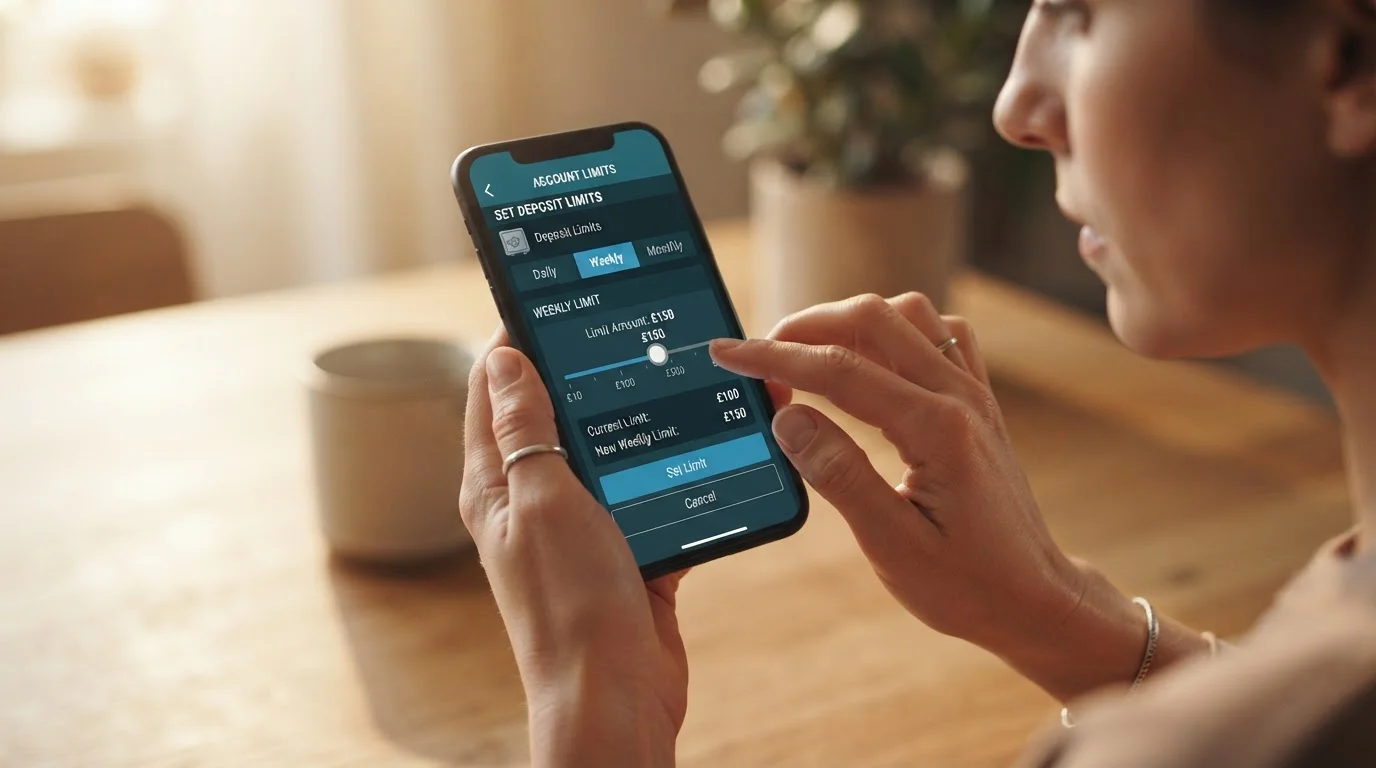
Setting deposit limits
Log into your account, navigate to responsible gambling tools (usually under account settings or a dedicated "safer gambling" menu), and set a deposit limit—daily, weekly, or monthly. The limit applies across all deposits to that operator and cannot be increased instantly (cooling-off periods of 24-72 hours apply to limit increases, though decreases take effect immediately). Setting a £10 weekly limit at a £1-deposit casino prevents you from redepositing beyond that cap even though each individual transaction feels negligible.
Self-exclusion via GamStop
GamStop.co.uk is a free national self-exclusion service covering all UKGC-licensed operators. Register with your details, choose a period (six months, one year, five years), and every licensed casino, sportsbook, bingo, and lottery site in GB will block your account and stop marketing to you. The exclusion is immediate and cannot be reversed until the chosen period expires. Use it if you recognize gambling is causing harm—it removes access across the entire licensed market in one step. Be aware that offshore "not on GamStop" sites remain accessible, which is why they market themselves to excluded players, but those sites lack UK consumer protections and should be avoided.
When low deposits become a risk
Low deposits become a risk when they enable high-frequency reloading without psychological friction. £1 or £5 feels trivial per session, but ten sessions a day totals £10-£50, and a week of that pattern exceeds £100. If you find yourself redepositing immediately after losses to "chase" previous losses, or if you cannot recall how many times you’ve deposited in a day, the low minimum has become a problem. Set deposit limits before the pattern starts, and use GamStop if voluntary limits are not holding.
Written by the editors at Payments-casino-uk.