Casino Sites That Accept Jeton in the UK — Where Your E-Wallet Actually Works in 2026
 Available in GB
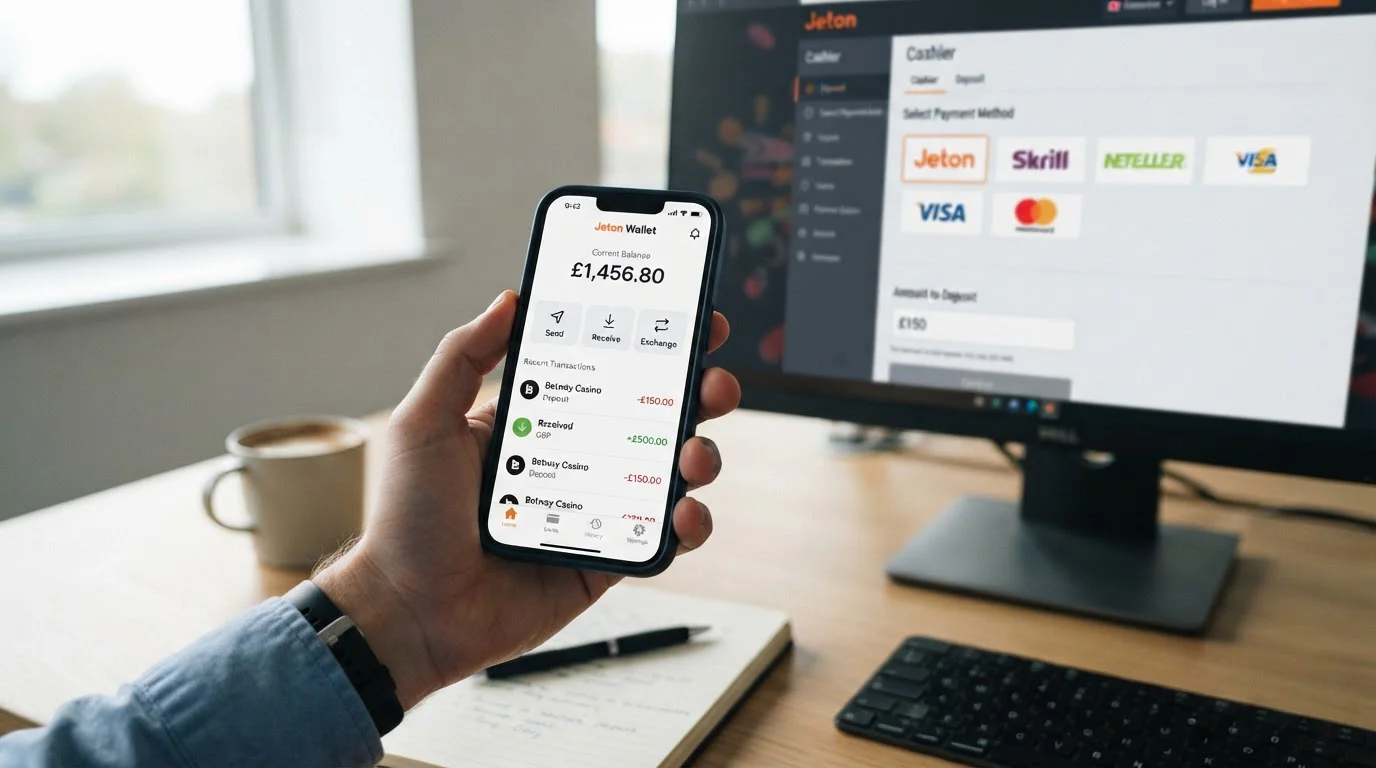
Jeton sits in a curious position. The Financial Conduct Authority authorized it, over a million users trust it, yet walk into most UKGC-licensed casino cashiers and you’ll find PayPal, Trustly, sometimes even Paysafecard — but Jeton support remains patchy. Offshore casinos tell a different story: Curaçao operators and Anjouan licensees embraced the e-wallet early, and British players locked out by GamStop discovered that Jeton works where their old Skrill accounts don’t.
This guide maps where Jeton actually functions for UK players in 2026. You’ll find specific casino names split by regulatory status — UKGC-licensed sites operating under Gambling Commission oversight versus offshore operators licensed elsewhere but accepting UK registrations. Each named casino gets a substantive breakdown: deposit and withdrawal conditions, processing times, minimum limits, what distinguishes one operator from another. The regulatory distinction matters because your consumer protections, stake limits, bonus terms, and GamStop status differ sharply between the two categories.
Jeton ships three products, and confusion starts there. The Wallet handles deposits and withdrawals. JetonCash vouchers work only for deposits — cashouts require a different method. The Jeton Card is a Mastercard prepaid, useful at ATMs but blocked at most UKGC casinos since the April 2020 credit card ban. Knowing which product to use where saves frustration at the cashier.
Table of Contents
- What Is Jeton and How Does It Work at UK Casinos?
- UKGC-Licensed Casinos Accepting Jeton in 2026
- Offshore Casinos Accepting Jeton for UK Players
- UKGC-Licensed vs Offshore Casinos — What UK Players Need to Know
- How to Deposit and Withdraw with Jeton at UK Casinos
- Jeton vs Skrill, Neteller, PayPal and Other E-Wallets
- Is Jeton Safe and Secure for UK Casino Players?
What Is Jeton and How Does It Work at UK Casinos?
LA Orange CY Limited operates Jeton out of Cyprus, with LA Orange Limited handling UK operations. The Central Bank of Cyprus licensed it as an Electronic Money Institution under No. 115.1.3.66; the UK FCA authorized it under FRN 902088. Established in 2017, Jeton ranked #75 on the Financial Times’ fastest-growing European companies list for 2024. The regulatory approvals mean player funds sit segregated, anti-money-laundering checks run automatically, and the May 2026 PS25/12 FCA safeguarding regime applies — client asset protection is contractual, not goodwill.
Deposits post instantly. You log into the casino cashier, pick Jeton, enter an amount, scan a QR code or confirm via the Jeton app, done. Funds appear in the casino balance within 30 seconds. Withdrawals reverse the flow: request a payout to Jeton Wallet, the casino processes it (anywhere from one hour to 24 depending on the operator), money lands in your wallet, then you transfer from wallet to your bank account at a 1.5% fee over one to three business days. The two-hop structure keeps your bank details out of casino databases but adds a withdrawal step compared to direct bank transfers.
Fees run transparent. Casino deposits: zero. Jeton charges nothing, casinos charge nothing. Withdrawals from casino to wallet: zero from Jeton’s side, though some offshore casinos levy their own e-wallet payout fees (check terms per operator). The 1.5% fee hits when you move money from Jeton Wallet to your bank account — that’s Jeton’s take for the fiat conversion and bank-transfer service. If your wallet holds GBP and the casino transacts in EUR, an exchange rate spread applies during deposit or withdrawal; Jeton’s mid-market rate is reasonable but not free.
KYC lands before your first withdrawal. Photo ID and a proof-of-address document, typically approved in under ten minutes. Some offshore casinos advertise "no verification" play, but that refers to deposits only — cashouts above £500 to £2,000 (varies by operator) trigger identity checks eventually. UKGC casinos demand KYC upfront per safer-gambling rules; offshore sites let you deposit and play first, verify later.
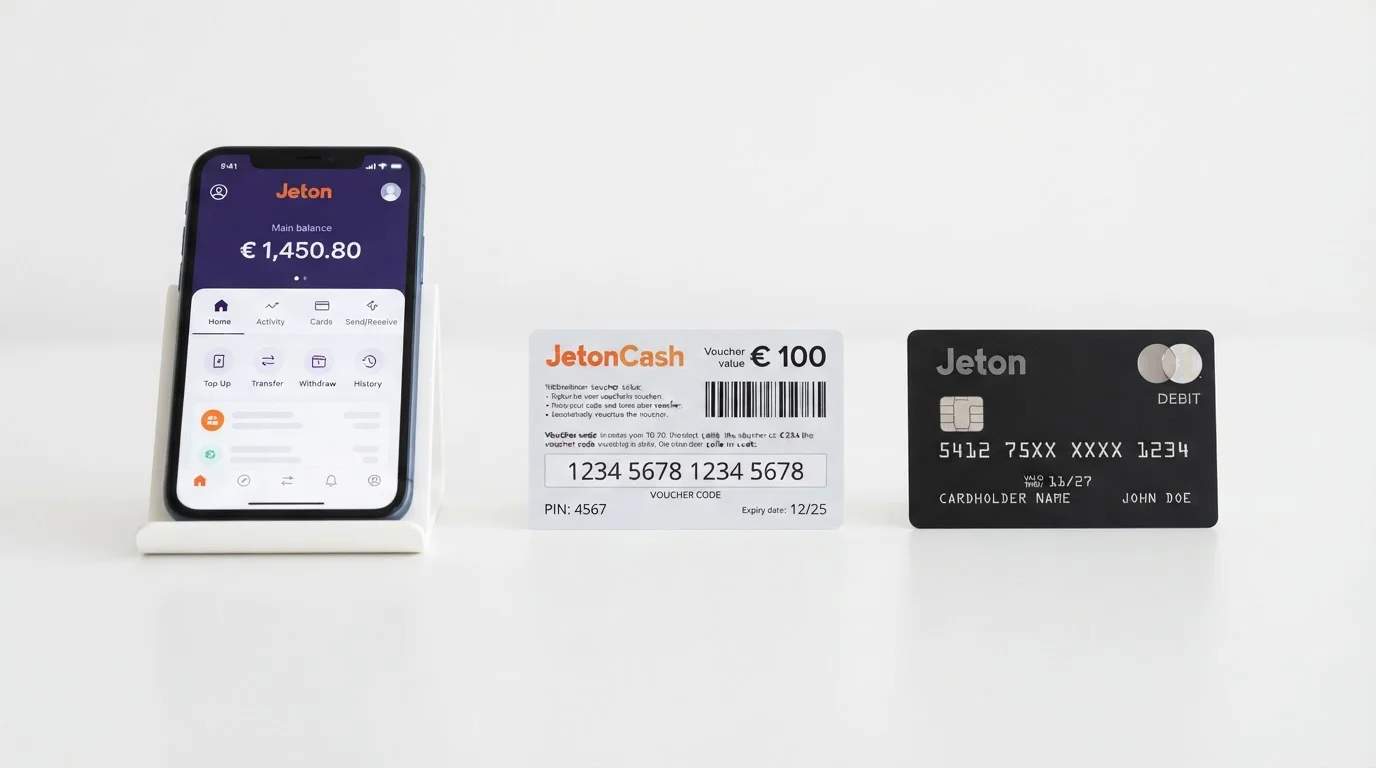
Jeton Wallet vs JetonCash vs Jeton Card — Which to Use?
Jeton Wallet is the core product: a digital account you fund via bank transfer or debit card, then use for casino deposits and withdrawals. Multi-currency support covers GBP, EUR, USD, and 24 other currencies. This is bidirectional — money moves in both directions, so if you plan to cash out winnings, the Wallet is mandatory.
JetonCash is a prepaid voucher system. You buy a voucher online or at retail outlets in denominations from €5 to €250, receive a 16-digit code, enter that code into your Jeton Wallet to top it up, then use the wallet balance to deposit at casinos. The voucher itself is deposit-only: no withdrawals. The privacy angle appeals to players who don’t want their bank statement showing gambling transactions or their card details stored anywhere. Think Paysafecard with a wallet backend. If you deposit via JetonCash and later win, you’ll need to withdraw via Jeton Wallet (if the casino supports it) or switch to a bank transfer or different e-wallet.
Jeton Card is a prepaid Mastercard linked to your Jeton Wallet. Use it at ATMs to pull cash or swipe it at physical retailers. For UK online casinos, it’s largely irrelevant: the April 2020 credit card ban at UKGC-licensed sites blocks all Mastercard and Visa gambling deposits, whether credit or prepaid. Offshore casinos sometimes accept it, but most players just use the Wallet directly rather than routing through a card product.
Practical decision tree: if you want to deposit and withdraw at the same casino, use Jeton Wallet. If privacy is paramount and you’re fine withdrawing via a different method, JetonCash keeps your bank details off the table. The Jeton Card works abroad and at ATMs but adds no casino advantage in the UK market.
Is Jeton safe and legal to use at UK online casinos?
Yes on both counts. Jeton holds FCA authorization (FRN 902088, verifiable via the FCA Firm Checker) and operates as a licensed EMI under the Central Bank of Cyprus. The FCA regulates payment firms in the UK; authorization means Jeton passed capital adequacy, anti-money-laundering, and operational resilience checks. Your funds sit in segregated accounts, not pooled with Jeton’s operating capital, so if the company somehow collapsed, client balances are protected under the e-money regulations.
Legality for UK players depends on the casino, not the payment method. Using Jeton at a UKGC-licensed casino is fully legal and regulated. Using it at an offshore casino (Curaçao, Anjouan, MGA-licensed operators) is also legal for individual UK players — the Gambling Act 2005 criminalizes unlicensed provision of gambling to UK customers (sections 33 and 36), but there is no equivalent offense for a British player using an offshore site. The trade-off is consumer protection: UKGC casinos operate under Gambling Commission oversight (dispute resolution, fund segregation, GamStop), while offshore sites fall outside that framework. Both are legal, but the safety net differs.
What is the difference between Jeton Wallet and JetonCash, and which one should I use?
The Wallet moves money in both directions; the voucher only moves it in. That single difference decides which you should fund. If you expect to withdraw winnings, open a Jeton Wallet account, link your bank account or debit card, and use it for both deposits and cashouts. The bidirectional flow is the whole point of an e-wallet: you top it up once, then transact with multiple casinos without re-entering card details each time, and payouts return to the same wallet.
JetonCash vouchers work when you want deposit privacy or lack a bank card you’re willing to link. Buy a voucher (online or retail), top up your Jeton Wallet with the voucher code, deposit from the wallet to the casino. Winnings come back to the wallet (if the casino supports Jeton withdrawals) or via bank transfer or another method. The voucher itself expires after a year unused, so don’t hoard codes — redeem them promptly.
UKGC-Licensed Casinos Accepting Jeton in 2026

UKGC-licensed casinos operate under UK Gambling Commission oversight. That means segregated player funds, mandatory connection to the GamStop self-exclusion scheme, independent dispute resolution via IBAS or EKARA, and since January 2026, a 10x cap on bonus wagering (down from 50–60x) plus slot stake limits of £5 per spin for players 25 and over, £2 for players aged 18 to 24. Credit cards have been banned since April 2020. Financial vulnerability checks kick in automatically at £150 net deposits within 24 hours. The Gambling Commission can (and does) fine or revoke licenses for AML failures, social responsibility breaches, or misleading advertising.
Jeton acceptance among UKGC operators remains selective. PayPal, Trustly, and debit cards dominate the cashier, and many operators haven’t integrated Jeton despite its FCA authorization. The casinos that do support it tend to be larger multi-license operations (UKGC + MGA + Sweden) with diversified payment rails. Minimum deposits hover around £10, minimum withdrawals £20, processing times under 24 hours post-approval.
| Operator | UKGC License | Min Deposit | Withdrawal Time | Key Feature | |—|—|—|—| | Fun Casino | 39483 | £10 | 0–24h | Fastest Jeton cashouts, 2,000+ games |
Fun Casino
Fun Casino operates under UKGC license 39483, held by Aspire Global International Ltd. The license extends to MGA and Swedish gambling authority approvals, making it a tri-licensed platform. Live since 2014, the site runs 2,000+ games from NetEnt, Microgaming, Play’n GO, Evolution Gaming, and Pragmatic Play. The cashier accepts Visa and Mastercard debit, PayPal, Trustly, Paysafecard, and Jeton for deposits and withdrawals. Multi-currency support covers GBP and EUR with automatic conversion at mid-market rates.
Competitor research flagged Fun Casino as having the fastest Jeton withdrawals among UKGC operators — most e-wallet cashouts process within 24 hours of approval, often faster. The £10 minimum deposit and £20 minimum withdrawal sit at the UK market standard. Bonus terms comply with the January 2026 UKGC reforms: 10x wagering maximum, no mixed-product bonuses (casino funds can’t cross into sports betting), and the welcome offer states wagering contribution transparently (slots 100%, table games typically 10–20%). The stake caps apply: £2 per spin if you’re 18 to 24, £5 if you’re 25 or over.
Customer support runs 24/7 via live chat and email. RTP data publishes per game rather than as a site-wide average, which helps if you’re comparing slot volatility. Weekly tournaments and prize drops add recurring promotions beyond the welcome package. The site is GamStop-connected, so self-excluded UK players cannot register. For someone prioritizing speed, regulatory clarity, and a large game library, Fun Casino offers a solid UKGC-licensed Jeton option. The trade-off versus offshore alternatives: lower bonuses (typical UKGC welcome offers max out around £100 to £200 versus £500+ offshore) and the stake caps limit high-roller play.
Which UK casinos accept Jeton deposits and withdrawals in 2026?
Among UKGC-licensed operators, Fun Casino (license 39483) accepts both Jeton deposits and withdrawals with processing under 24 hours. Minimum deposit £10, minimum withdrawal £20, zero fees from the casino side. The 1.5% fee applies when you transfer from Jeton Wallet to your bank account, but moving funds from the casino to your wallet costs nothing.
Research indicates other top-rated UKGC casinos like SlotsMagic, Casumo, and Betway exist in the UK market, though individual Jeton acceptance at those operators requires cashier verification on a per-site basis — payment method support changes over time as operators add or drop providers. If a UKGC casino’s cashier lists Jeton under deposit options, it typically supports withdrawals to the same method (AML rules encourage payout-to-source routing). Always check the cashier page after logging in before depositing; payment method availability can vary by player location even within the UK.
Do I need to verify my identity to use Jeton at casinos?
Yes, but the timing differs. At UKGC-licensed casinos, identity verification happens before or shortly after your first deposit under enhanced due diligence rules effective since 2021. You’ll upload a photo ID (passport or driving license) and proof of address (utility bill, bank statement) within 72 hours of registration. The casino won’t process withdrawals until KYC clears, and some now block play entirely past a small deposit threshold (£50 to £100) if documents aren’t submitted.
For Jeton itself, the wallet requires KYC before your first withdrawal to any destination, not just casinos. Open the account, deposit and play without verification, but the moment you request a cashout — casino to wallet or wallet to bank — Jeton asks for ID and address documents. Approval typically takes under ten minutes during business hours. Once verified, the wallet stays verified; you won’t repeat the process for future casinos.
Offshore Casinos Accepting Jeton for UK Players

Offshore casinos hold licenses from jurisdictions outside the UK — Curaçao eGaming, Anjouan (Comoros), Kahnawake (Canada), Malta Gaming Authority, Costa Rica — and are not regulated by the UK Gambling Commission. They accept UK players and GBP deposits, but they operate outside the UKGC framework. That means no GamStop connection (UK self-exclusion doesn’t apply), no £5/£2 slot stake caps, no 10x wagering cap on bonuses, and credit cards often accepted despite the UK domestic ban. The trade-off: UKGC consumer protections don’t apply. Dispute resolution runs through the offshore licensor (Curaçao, Anjouan) or independent ADR, segregated funds are contractual rather than UKGC-mandated, and complaints to the Gambling Commission go nowhere because the operator isn’t in its jurisdiction.
Why UK players use them: higher bonuses (£500+ welcome packages versus £100 at UKGC sites), faster withdrawals (sub-24h for e-wallets and crypto), fewer identity checks upfront, and circumvention of GamStop for players who self-excluded but changed their minds. The legal position for individual UK players is clear: using an offshore casino is not a criminal offense under the Gambling Act 2005. The offense applies to operators providing unlicensed gambling to UK customers (sections 33 and 36), not to British players using those sites. Practically, UK banks sometimes block transactions to offshore gambling sites, but e-wallets like Jeton and crypto bypass that friction.
Jeton acceptance is widespread among offshore operators. Curaçao casinos in particular adopted e-wallets early, and Jeton’s voucher product appeals to privacy-conscious players. Minimum deposits often sit at €10 or £10, withdrawals at €20 or £20, processing faster than UKGC averages because offshore casinos face less regulatory overhead on AML checks (they still run them, just with more risk appetite). Monthly withdrawal caps are common — £3,000 to £5,000 for standard players, lifted at VIP levels.
| Operator | License (Jurisdiction) | Min Deposit | Withdrawal Time | Distinguishing Feature | |—|—|—|—| | MyStake | Curaçao eGaming | £10 | <24h | Top-3 non-GamStop ranking consistency 2026 | | Sportaza | Anjouan ALSI-202606064-FI2 | £20 | <24h | 7,000+ games, sportsbook, crypto acceptance | | Rolletto | Curaçao eGaming | £10 | <24h | Established offshore presence, reliable payouts | | Freshbet | Curaçao eGaming | £10 | <24h | Strong crypto integration, newer but ranked | | BetiBet | Curaçao eGaming | €10 | <24h | €9,500 welcome package (9 deposits), Dama portfolio |
Sportaza
Sportaza operates under Anjouan license ALSI-202606064-FI2 issued by the Government of the Autonomous Island of Anjouan (Union of Comoros) plus Tobique license 0000067. Rocketship Ventures S.R.L. runs the platform. Launched in 2021, the site built a library of 7,000+ games alongside 35+ sports betting markets covering 30,000+ events. The welcome bonus stretches to £500 plus 200 free spins on the first deposit, substantially larger than UKGC-licensed offers. Payment methods include Visa, Mastercard (credit cards accepted here, unlike UKGC sites where they’ve been banned since 2020), Jeton, Skrill, Neteller, and cryptocurrencies (Bitcoin, Ethereum, USDT). Minimum deposit £20, e-wallet and crypto withdrawals approved within 24 hours, no fees from the casino side.
The Anjouan license is offshore — not recognized by the UKGC, so UK consumer protections don’t apply. Anjouan’s regulatory oversight is lighter than Curaçao or MGA; the license primarily confirms the operator paid fees and filed paperwork rather than passing rigorous compliance audits. That doesn’t mean Sportaza is rogue — it has operated since 2021 with steady withdrawal reports — but dispute resolution channels are limited to the operator’s own support and Anjouan’s licensing body, which lacks the enforcement teeth of the Gambling Commission.
The game library is the draw: 7,000+ titles span slots (NetEnt, Pragmatic Play, Play’n GO), live dealer (Evolution Gaming), and table games. The sportsbook integration appeals to combo bettors. No GamStop connection means UK players on self-exclusion can register, though responsible gambling tools (deposit limits, self-imposed timeouts) exist on the account settings page. Monthly withdrawal caps apply until you climb the VIP ladder — standard players typically face £3,000 to £5,000 monthly limits, enough for recreational play but restrictive for high rollers. Wagering requirements on the welcome bonus run higher than the UKGC’s 10x cap (offshore casinos typically land at 35x to 40x), so read the terms before claiming.
BetiBet
BetiBet holds a Curaçao eGaming license under Novatrix SRL, the entity formerly known as Dama N.V. Launched in 2022, the platform positions itself as an international gambling site rather than a UK-focused brand, evident in its multi-currency support (EUR, GBP, USD, crypto) and broad license reach. The welcome package scales across nine deposits: up to €9,500 plus 225 free spins total. Minimum deposit €10 or £10, payment methods include Jeton, Bitcoin, Ethereum, Visa, Mastercard. E-wallet withdrawals process under 24 hours after approval.
Novatrix SRL operates multiple casino brands under the Dama umbrella, so BetiBet shares back-office infrastructure with sister sites. The game library spans five major software studios — enough variety for slots and live dealer, though not the 7,000+ breadth of Sportaza. The nine-deposit welcome structure is unusual: instead of front-loading a single large bonus, it spreads €9,500 across your first nine top-ups. That suits grinders more than one-time depositors, and the cumulative wagering can pile up fast if you claim all nine offers.
Curaçao licensing means lighter regulatory oversight than UKGC or MGA, but Curaçao eGaming has been tightening compliance since 2023 — operators now file annual audits and maintain minimum capital reserves. BetiBet isn’t on major blacklist aggregators (AskGamblers, Casino Guru), suggesting payouts land reliably for most players. The crypto-friendly cashier appeals to players who want anonymity: Bitcoin and Ethereum deposits bypass bank scrutiny entirely, and crypto withdrawals often process faster than fiat.
The site launched relatively recently (2022), so its track record is shorter than MyStake or Sportaza. Independent reviews place it mid-tier among non-GamStop options — functional, not spectacular, decent for players who prioritize the Dama brand reliability over cutting-edge features. The €9,500 bonus headline inflates what most players actually claim; typical usage lands at the first two to three deposit bonuses (€2,000 to €3,000 range), which is still double a UKGC welcome offer but far from the advertised ceiling.
MyStake
MyStake operates under a Curaçao eGaming license and ranks consistently in the top three non-GamStop casinos for UK players across independent 2026 reviews. The platform combines a casino (slots, live dealer, table games) with an integrated sportsbook. Payment methods include Jeton, Skrill, Neteller, cryptocurrencies (Bitcoin, Ethereum, Litecoin, USDT), Visa, and Mastercard. Minimum deposit £10, e-wallet withdrawals process under 24 hours, crypto often faster. The welcome bonus aligns with offshore market standards: typically a 100% match plus free spins, with wagering requirements around 35x to 40x.
The Curaçao license places MyStake outside UK Gambling Commission jurisdiction. Dispute resolution routes through Curaçao eGaming’s complaints process, which involves emailing the regulator and waiting weeks for a response — less robust than UKGC’s mandated independent ADR (IBAS, EKARA). That said, MyStake appears in top-tier non-GamStop rankings from multiple sources (muddyrivernews.com, gamstopblockedgames.com, casinoignorergamstop.com) as of 2026, suggesting its payout reliability stands up to player scrutiny. The sportsbook integration is stronger than pure casino brands, making it a natural pick for combo bettors.
No GamStop connection means UK players on self-exclusion can register and deposit. The site offers account-level controls (deposit limits, loss limits, session timeouts), but these are voluntary and not cross-checked against national databases. KYC lands lighter than UKGC: you can deposit and play immediately, verification requested only on withdrawal. First cashouts under £1,000 to £2,000 sometimes clear without documents, though larger amounts or repeat withdrawals trigger ID checks. The crypto cashier adds anonymity: Bitcoin or USDT withdrawals bypass bank statements entirely.
MyStake has operated for several years (exact launch date unclear, but references date back to 2020–2021), long enough to build a reputation in the offshore space. Established presence matters when UKGC oversight is absent — a casino that has paid players reliably for three to five years is a safer bet than a three-month-old Curaçao license with a flashy landing page. The consistent top-3 rankings in 2026 suggest MyStake delivers on withdrawals, which is the core test for offshore casinos.
Freshbet
Freshbet operates under a Curaçao eGaming license and appears in multiple 2026 non-GamStop casino top-5 and top-10 lists. The platform integrates casino games (slots, live dealer, table games) with a sportsbook. Payment methods include Jeton, cryptocurrencies (Bitcoin, Ethereum), Skrill, Neteller, Visa, and Mastercard. Minimum deposit £10, e-wallet and crypto withdrawals under 24 hours. The welcome bonus runs competitive with offshore standards: 100% match plus free spins, wagering typically 35x to 40x.
Strong crypto integration distinguishes Freshbet from pure fiat operators. Bitcoin and Ethereum deposits post instantly with no fees, crypto withdrawals often clear within hours rather than 24, and the site accepts USDT for players who prefer stablecoin volatility protection. The Curaçao license puts it outside UKGC jurisdiction; dispute resolution runs through Curaçao eGaming’s complaints channel, which lacks the speed and enforcement power of UK-mandated ADR.
Freshbet is newer than MyStake or Sportaza but has built enough of a track record to land in independent rankings alongside established names. The "newer but ranked" positioning suggests it entered the market post-2022 and gained traction quickly, likely through affiliate partnerships and competitive bonus offers. Withdrawal reports on forums (AskGamblers, Trustpilot) lean positive, with most complaints centering on wagering clarity (common across all offshore casinos) rather than withheld payouts.
No GamStop connection allows UK players on self-exclusion to register. The site provides account-level deposit limits and cooling-off options, but these are self-imposed, not externally enforced. KYC lands on withdrawal, not deposit: you can play immediately after funding the account, documents requested when you cash out. First withdrawals under £1,000 to £2,000 sometimes process without KYC, larger amounts or repeat cashouts trigger ID checks. The lighter verification appeals to privacy-focused players, though it also means fewer safeguards against problem gambling.
The crypto-first positioning makes Freshbet a natural pick for players transitioning from UK-licensed casinos where crypto acceptance is rare (Bitstarz, Stake.com operate in the same lane but with different licensing). If you’re comfortable with Bitcoin wallets and want to avoid bank-statement gambling traces, Freshbet offers that path. If you prefer fiat e-wallets like Jeton or Skrill, those work too, though the site’s marketing leans crypto.
Rolletto
Rolletto operates under a Curaçao eGaming license and maintains an established presence in the non-GamStop market, consistently appearing in 2026 top-10 rankings for UK players. The platform offers slots, live casino, table games, and payment methods including Jeton, Skrill, Neteller, cryptocurrencies (Bitcoin, Ethereum), Visa, and Mastercard. Minimum deposit £10, e-wallet withdrawals under 24 hours, no casino fees. The welcome bonus aligns with offshore norms: 100% match plus spins, wagering around 35x to 40x.
Independent reviews cite reliable payouts as Rolletto’s core strength. AskGamblers and Casino Guru listings show complaint volumes typical for an offshore casino (disputes over bonus terms, wagering contribution confusion) but no widespread withdrawal-refusal patterns. That track record matters when UKGC consumer protections are absent — a Curaçao casino that pays out consistently for two to three years builds trust where regulatory oversight is thin.
The game library balances breadth and quality: enough slots from NetEnt, Pragmatic Play, Play’n GO to keep variety, live dealer tables from Evolution Gaming, and a cleaner UI than some Curaçao competitors. The sportsbook is functional rather than standout, suitable for casual bets but not the draw for serious sports punters. Rolletto targets casino players first, sports bettors second.
No GamStop connection allows UK players on self-exclusion to register. Responsible gambling tools (deposit limits, self-exclusion) sit in account settings, but enforcement is voluntary. KYC lands on withdrawal: first cashouts under £1,000 sometimes clear without documents, larger amounts trigger ID checks. Monthly withdrawal caps apply (typically £3,000 to £5,000 for standard accounts, lifted at VIP tiers), a common offshore pattern that protects the casino’s liquidity but frustrates players with large wins.
Rolletto has operated long enough (references date back to 2020–2021) to shake out early operational issues and build a steady player base. The consistent top-10 appearance in 2026 non-GamStop rankings suggests it delivers on the core offshore value proposition: higher bonuses, no GamStop, faster payouts. The downside is lighter consumer protection — if a dispute arises, you’re escalating to Curaçao eGaming’s licensing body, which moves slower and rules less consistently than the UK Gambling Commission.
Can I use Jeton at non-GamStop casinos if I’m in the UK?
Yes. Non-GamStop casinos are offshore operators licensed outside the UK (Curaçao, Anjouan, MGA, Kahnawake) that accept British players but operate outside Gambling Commission jurisdiction. They’re not connected to the GamStop self-exclusion scheme, so UK players who self-excluded from UKGC-licensed sites can still register at offshore casinos. Using them is legal for individual UK players — the Gambling Act 2005 criminalizes operators providing unlicensed gambling to UK customers, not players using offshore sites.
Jeton works at the vast majority of non-GamStop casinos. Offshore operators adopted e-wallets early because they simplify multi-currency transactions and sidestep bank blocks (UK banks sometimes decline transactions to offshore gambling sites, but e-wallet transfers clear smoothly). Minimum deposits typically £10 or €10, withdrawals £20 or €20, processing under 24 hours for e-wallets. The same Jeton Wallet account works across UKGC and offshore casinos — you don’t need separate wallets for different regulatory jurisdictions.
The trade-off: UKGC consumer protections don’t apply. Segregated player funds are contractual (written into license terms) rather than mandated by the Gambling Commission. Dispute resolution runs through the offshore licensor (Curaçao’s online form, Anjouan’s email channel) or independent ADR, which moves slower and rules less consistently than UKGC-mandated services like IBAS. Stake limits don’t exist (you can bet £50 per spin at an offshore casino versus £5 max at a UKGC site), and bonus wagering requirements run higher (35x to 40x versus the UKGC’s 10x cap). Choose offshore casinos for higher bonuses, faster payouts, and GamStop avoidance; stick with UKGC sites if regulatory oversight and dispute resolution matter more.
UKGC-Licensed vs Offshore Casinos — What UK Players Need to Know
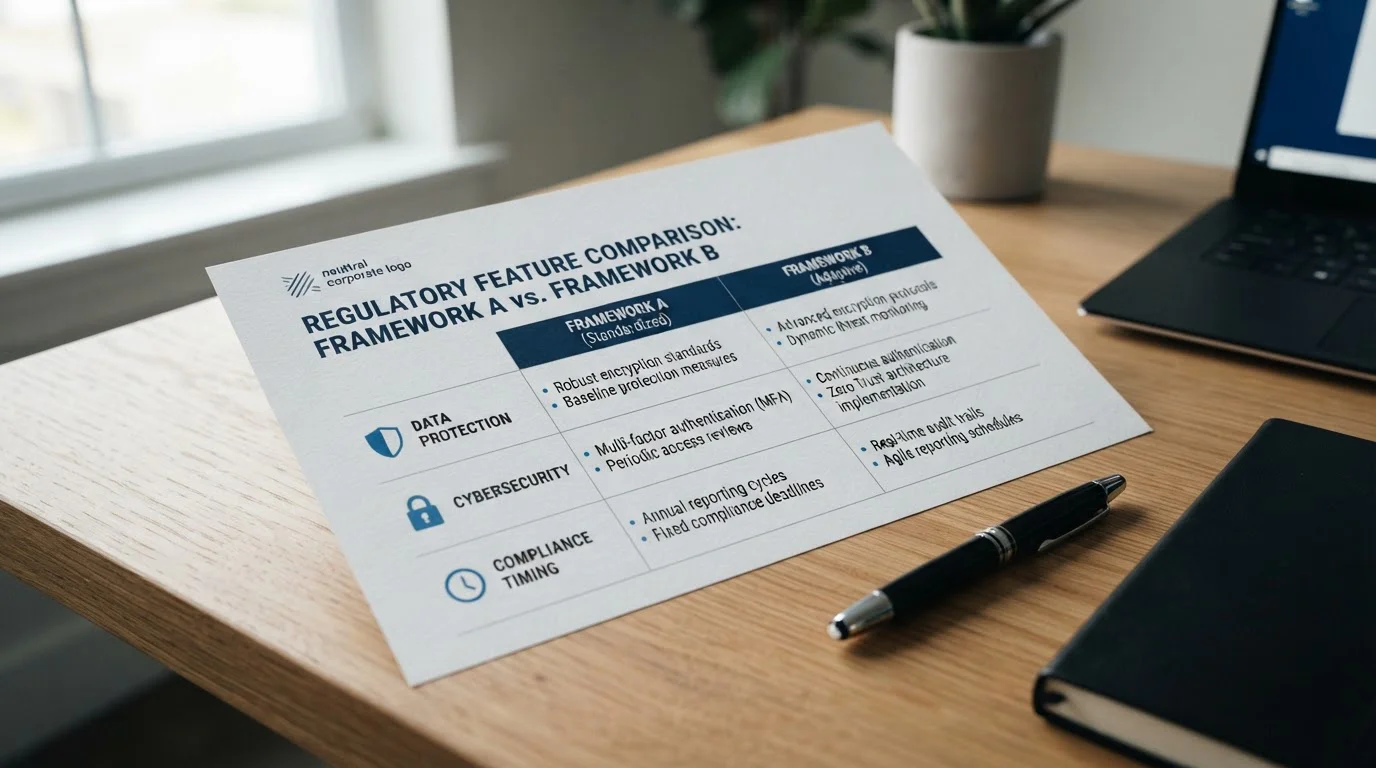
The regulatory divide shapes every operational detail: deposit limits, withdrawal speed, bonus terms, dispute resolution, self-exclusion, even which payment methods the cashier accepts. Understanding the split helps you pick the right category for your priorities.
Regulatory Framework and Player Protections
UKGC-licensed casinos operate under Gambling Commission oversight. That means segregated player funds (your deposits sit in separate accounts, not pooled with the casino’s operating capital), mandatory connection to GamStop (the national self-exclusion scheme), independent dispute resolution via IBAS or EKARA (free for players, binding on the casino up to £10,000), and AML checks tied to national databases. The Gambling Commission can fine operators, suspend licenses, or revoke them entirely for compliance failures. Recent enforcement actions include a £609,104 penalty for AML and social-responsibility breaches published in 2026.
Offshore casinos hold licenses from Curaçao, Anjouan, MGA, Kahnawake, or Costa Rica. Regulatory oversight varies: MGA (Malta) runs a tight ship comparable to the UKGC, Curaçao eGaming tightened rules in 2023 but still operates lighter than UK or Malta, Anjouan and Costa Rica are pay-to-play jurisdictions with minimal enforcement. Player funds are contractually segregated (written into license terms) but not backed by the same statutory protections as UKGC. Dispute resolution routes through the licensor’s complaints process (email forms, weeks of wait) or third-party ADR, neither as robust as UKGC-mandated services.
For individual UK players, using either category is legal. The Gambling Act 2005 criminalizes operators providing unlicensed gambling to UK customers, not players accessing offshore sites. Practically, your safety net differs: UKGC gives you recourse if a casino withholds a withdrawal or breaches terms, offshore licenses leave you negotiating with the operator and hoping the licensor cares.
GamStop and Self-Exclusion
UKGC casinos connect to GamStop automatically. Self-exclude on one UKGC site, you’re blocked across all UK-licensed operators for the duration you chose (six months, one year, five years). The scheme checks your name, date of birth, and address against a national database; registration attempts at any UKGC casino fail instantly. GamStop also ties into NOSES (the National Online Self-Exclusion Scheme), which covers sports betting alongside casino play.
Offshore casinos are not connected to GamStop. UK players on self-exclusion can register, deposit, and play at Curaçao or Anjouan-licensed sites without blocks. That’s the core reason many UK players use offshore casinos: they changed their minds about self-exclusion but can’t unblock UKGC sites until the term expires. Offshore casinos offer account-level self-exclusion (you email support, they close your account), but it’s per-site, not cross-operator, and not enforced through a national database.
The ethical dimension is obvious. If you self-excluded because gambling was harming you, offshore casinos remove the barrier you put in place. If you self-excluded impulsively and now want access, offshore sites provide it. The decision is yours, but understand the protective mechanism you’re bypassing.
Deposit and Withdrawal Differences
UKGC casinos cap slot stakes at £5 per spin for players 25 and over, £2 for players aged 18 to 24 (effective since January 2026). Bonus wagering is capped at 10x the bonus value (also January 2026, down from 50–60x historically). Credit cards have been banned since April 2020. Financial vulnerability checks trigger automatically at £150 net deposits within 24 hours, prompting the casino to ask about your income and gambling budget. KYC happens upfront, often before your first deposit or within 72 hours of registration.
Offshore casinos impose no stake limits — bet £50 per spin if your balance allows. Bonus wagering typically runs 35x to 40x, higher than UKGC but consistent with international norms. Credit cards work at most offshore sites (Visa, Mastercard accepted for deposits despite the UK domestic ban). No automatic financial vulnerability checks, though some operators ask voluntarily. KYC lands on withdrawal rather than deposit: you can fund your account and play immediately, verification requested when you cash out. First withdrawals under £1,000 to £2,000 sometimes clear without documents, larger amounts trigger ID checks.
Processing speed favors offshore casinos. UKGC operators face heavier AML scrutiny, which adds 24 to 48 hours to withdrawal approval even for e-wallets. Offshore casinos process e-wallet and crypto cashouts under 24 hours, often within hours. The lighter KYC and faster payouts come at a cost: less oversight means rogue operators can drag out withdrawals or invent technicalities to void winnings. Established offshore brands (MyStake, Sportaza, Rolletto) have track records suggesting they pay reliably, but the risk is higher than at UKGC sites.
Bonus Terms and Stake Limits
UKGC bonuses have shrunk under tighter regulation. Welcome offers max out around £100 to £200 with 10x wagering. Mixed-product bonuses (using casino funds on sports bets or vice versa) were banned in January 2026. Free spins come with wagering (typically 10x the winnings from spins), max bet limits (usually £5 per spin), and contribution rules (slots 100%, table games 10–20%). The 10x cap is player-friendly compared to offshore standards, but the smaller headline bonus reflects regulatory constraints.
Offshore casinos offer larger bonuses: £500 plus 200 spins at Sportaza, €9,500 across nine deposits at BetiBet, 100% match plus spins at MyStake, Freshbet, Rolletto. Wagering runs 35x to 40x, and max bet rules apply (usually €5 per spin during wagering). Contribution rates favor slots (100%) over table games (10–20% or excluded entirely). The higher wagering and larger bonus suit grinders who’ll play through the rollover; casual players may find a £100 bonus at 10x easier to clear than £500 at 40x.
Stake limits at UKGC sites cap risk but frustrate high rollers. The £5 max (£2 for under-25s) was introduced to curb slot-related harm, but it also means recreational players who occasionally bet £10 or £20 per spin can’t do so at UK-licensed casinos. Offshore sites impose no statutory stake caps, though individual games have max bets set by the provider (commonly €100 to €500 per spin on slots, higher on live dealer).
| Feature | UKGC-Licensed | Offshore (Curaçao, Anjouan, MGA) |
|---|---|---|
| GamStop Connection | Mandatory | None |
| Slot Stake Limit | £2 (18–24) / £5 (25+) | None (provider max only) |
| Bonus Wagering Cap | 10x | Typically 35–40x |
| Credit Cards | Banned (since April 2020) | Accepted at most sites |
| KYC Timing | Upfront (before or shortly after deposit) | On withdrawal (first cashout) |
| Withdrawal Speed (E-Wallets) | 24–48h (AML scrutiny) | 0–24h (lighter checks) |
| Dispute Resolution | UKGC ADR (IBAS, EKARA), binding up to £10k | Licensor complaints process, slower |
| Financial Vulnerability Checks | Automatic at £150 net deposit | Voluntary (rarely enforced) |
| Segregated Player Funds | UKGC-mandated, statutory protection | License-mandated, contractual |
| Monthly Withdrawal Caps | Rare (some operators, low limits) | Common (£3k–£5k standard, lifted at VIP) |
The table frames the trade-off. UKGC sites deliver regulatory safety, GamStop enforcement, and consumer protections at the cost of lower bonuses, stake caps, and slower withdrawals. Offshore casinos offer higher bonuses, faster payouts, no GamStop, and no stake limits, but you trade regulatory oversight for trust in the operator’s track record.
How to Deposit and Withdraw with Jeton at UK Casinos
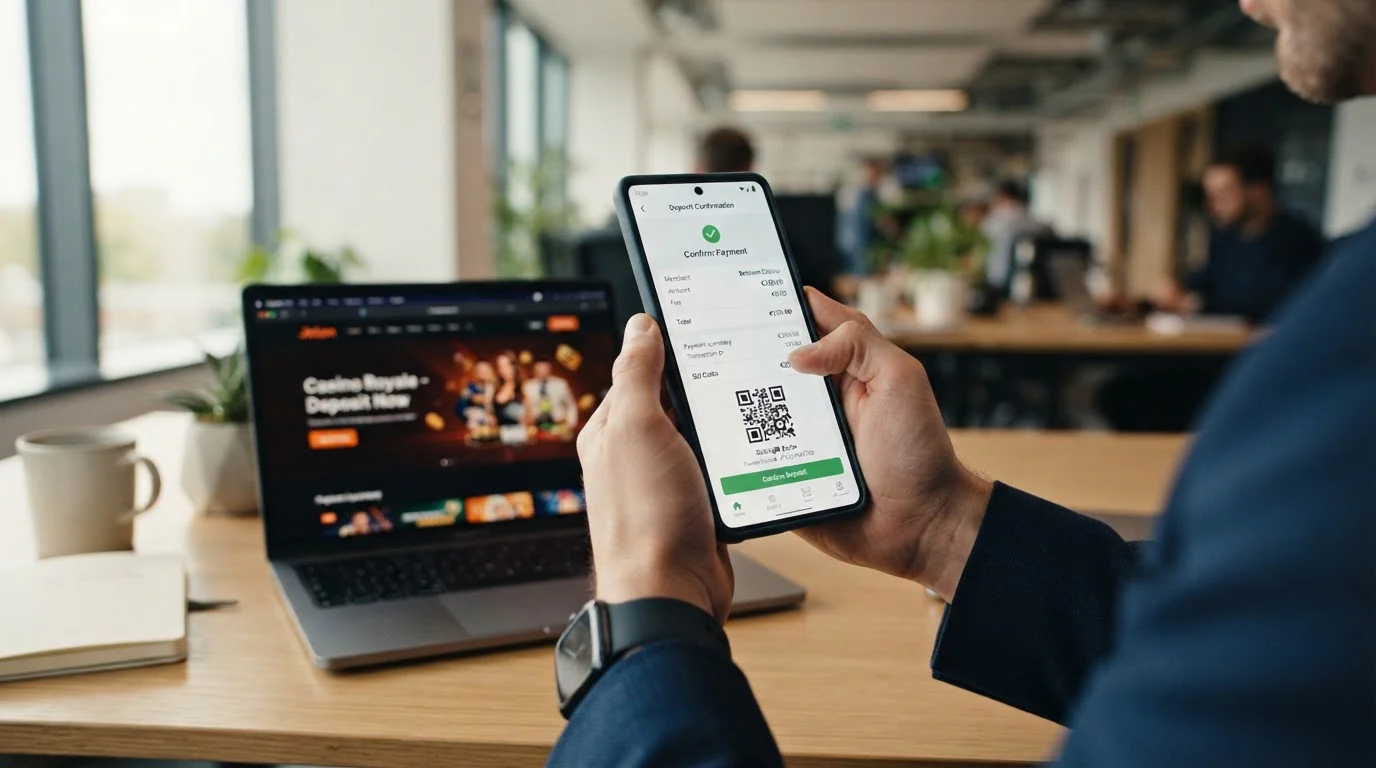
The process is uniform whether the casino is UKGC-licensed or offshore. Jeton integration works the same; regulatory status affects approval speed and KYC timing, not the mechanics of moving money.
Step-by-Step Deposit Guide
Open a Jeton Wallet if you haven’t already. Visit jeton.com, click "Sign Up," enter email and password, complete the short registration form. You’ll receive a confirmation email; click the link to activate the account. Download the Jeton mobile app (iOS, Android) if you prefer mobile transactions — the app handles QR code scanning during deposits.
Fund your Jeton Wallet. Log into your Jeton account, go to "Deposit," select your funding method (bank transfer or debit card). Bank transfers take one to three business days to clear, debit cards post instantly. Enter the amount (minimum typically £10 or €10), confirm. Your wallet balance updates once the funds clear. If using JetonCash vouchers, go to "Deposit" → "JetonCash," enter the 16-digit voucher code, the voucher amount adds to your wallet balance instantly.
Log into the casino and navigate to the cashier or deposit page. Select "Jeton" or "Jeton Wallet" from the payment method list. If Jeton isn’t visible, the casino doesn’t support it — check the cashier FAQ or contact support to confirm.
Enter your deposit amount. Minimum typically £10 (UKGC casinos) or €10/£10 (offshore). Maximum varies by operator, commonly £5,000 to £10,000 per transaction. Click "Deposit" or "Confirm."
Authorize the transaction. The casino redirects to Jeton’s payment gateway or displays a QR code. If using the desktop, log into your Jeton Wallet in the popup window, confirm the amount, click "Pay." If using mobile, scan the QR code with the Jeton app, confirm within the app. The transaction completes in under 30 seconds.
Funds appear in your casino balance instantly. No waiting. You can start playing immediately. The casino charges no fee, Jeton charges no fee. If your wallet currency (GBP) differs from the casino currency (EUR), Jeton applies an exchange rate spread during the transaction; the rate is reasonable but not free.
Step-by-Step Withdrawal Guide
Complete KYC if you haven’t already. UKGC casinos ask for documents upfront (photo ID, proof of address). Offshore casinos request them on your first withdrawal. Upload the documents via the casino’s account verification page or email them to support. Approval takes minutes to hours (UKGC) or hours to a day (offshore). Withdrawals won’t process until KYC clears.
Meet wagering requirements if you claimed a bonus. Bonuses at UKGC casinos carry 10x wagering, offshore casinos typically 35x to 40x. Check your account balance; most casinos separate "real money" from "bonus money." Only real money is withdrawable. If you’re still clearing wagering, the casino will block the withdrawal or ask you to forfeit the bonus.
Navigate to the cashier or withdrawal page. Click "Withdraw" or "Cash Out," select "Jeton" or "Jeton Wallet" from the list. Some casinos require you to withdraw via the same method you deposited (AML regulation); if you deposited with Jeton, Jeton will be the default or only option for cashout.
Enter your withdrawal amount. Minimum typically £20 (UKGC) or €20/£20 (offshore). Maximum varies by operator and your account level (VIP players get higher limits). Click "Withdraw" or "Confirm."
Casino processes the withdrawal. UKGC casinos take 24 to 48 hours for approval due to AML checks. Offshore casinos process under 24 hours, often within hours. You’ll receive an email confirming the withdrawal is approved. The casino charges no fee (most operators), though some offshore sites levy a 1–3% e-wallet withdrawal fee — check terms.
Funds land in your Jeton Wallet. Once the casino approves, money appears in your wallet instantly. No multi-day bank transfer wait. The wallet balance updates, and you receive a notification (email or app push).
Transfer from Jeton Wallet to your bank account if you want the money out of the e-wallet. Log into Jeton, go to "Withdraw," select "Bank Transfer," enter the amount, confirm. Jeton charges a 1.5% fee on this step. The transfer takes one to three business days. Alternatively, keep the balance in your Jeton Wallet for future deposits at other casinos.
Fees, Limits and Processing Times
Deposit fees: Zero from the casino, zero from Jeton. If your wallet currency differs from the casino currency, Jeton applies an exchange rate spread (typically 0.5% to 1% above mid-market).
Withdrawal fees: Zero from Jeton when money moves from casino to wallet. Some offshore casinos charge their own 1–3% e-wallet withdrawal fee — check the cashier terms. When you transfer from Jeton Wallet to your bank account, Jeton charges 1.5%.
Deposit limits: Minimum £10 (UKGC) or €10/£10 (offshore). Maximum typically £5,000 to £10,000 per transaction. Daily and monthly limits depend on your Jeton account tier (standard, VIP) and the casino’s own caps.
Withdrawal limits: Minimum £20 (UKGC) or €20/£20 (offshore). Maximum varies: UKGC casinos rarely impose monthly caps, offshore casinos commonly cap standard players at £3,000 to £5,000 per month, lifted at VIP levels. Per-transaction limits range from £2,000 to £10,000.
Processing times:
- Deposits: Instant (0–30 seconds)
- Withdrawals, casino to wallet: 0–24h (offshore), 24–48h (UKGC)
- Withdrawals, wallet to bank: 1–3 business days (Jeton’s transfer time)
How do I deposit with Jeton at an online casino?
Open a Jeton Wallet, fund it via bank transfer or debit card (or use a JetonCash voucher). Log into the casino, go to the cashier, select Jeton as the payment method, enter your deposit amount (minimum £10), authorize the transaction via the Jeton app or web gateway by confirming the amount. Funds appear in your casino balance instantly. No fees from the casino or Jeton on deposits. If your wallet currency differs from the casino currency, Jeton applies an exchange rate spread during the transaction.
How long do Jeton withdrawals take at UK casinos?
Casino to wallet: 0 to 24 hours for offshore casinos, 24 to 48 hours for UKGC-licensed casinos. The difference stems from AML scrutiny — UKGC operators run heavier checks before approving cashouts. Wallet to bank account: one to three business days once you initiate the transfer from Jeton Wallet to your bank. Total time from "request withdrawal" at the casino to money in your bank account: two to five days (offshore), three to six days (UKGC).
Are there any fees when using Jeton for casino deposits and withdrawals?
Casino deposits: no fees. Jeton charges nothing, most casinos charge nothing. If your wallet currency differs from the casino currency, Jeton applies a currency conversion spread (typically 0.5% to 1% above mid-market rate). Casino withdrawals to wallet: no fees from Jeton, though some offshore casinos levy their own 1–3% e-wallet withdrawal fee. Wallet to bank transfer: Jeton charges 1.5% of the amount. Example: withdraw £1,000 from a casino to Jeton Wallet (no fee), then transfer £1,000 from wallet to your bank (£15 fee deducted, £985 lands in your account).
What are the minimum and maximum deposit limits with Jeton?
Minimum deposit: £10 at most UKGC casinos, €10 or £10 at offshore sites. Maximum deposit per transaction: typically £5,000 to £10,000, varies by operator. Daily and monthly deposit limits depend on your Jeton account tier and the casino’s responsible-gambling caps (UKGC casinos enforce default limits unless you raise them, offshore casinos rarely impose deposit caps). Withdrawal minimums: £20 (UKGC), €20 or £20 (offshore). Withdrawal maximums: no monthly cap at UKGC casinos (individual transaction limits £2,000 to £10,000), offshore casinos commonly cap standard players at £3,000 to £5,000 per month, lifted at VIP tiers.
Jeton vs Skrill, Neteller, PayPal and Other E-Wallets
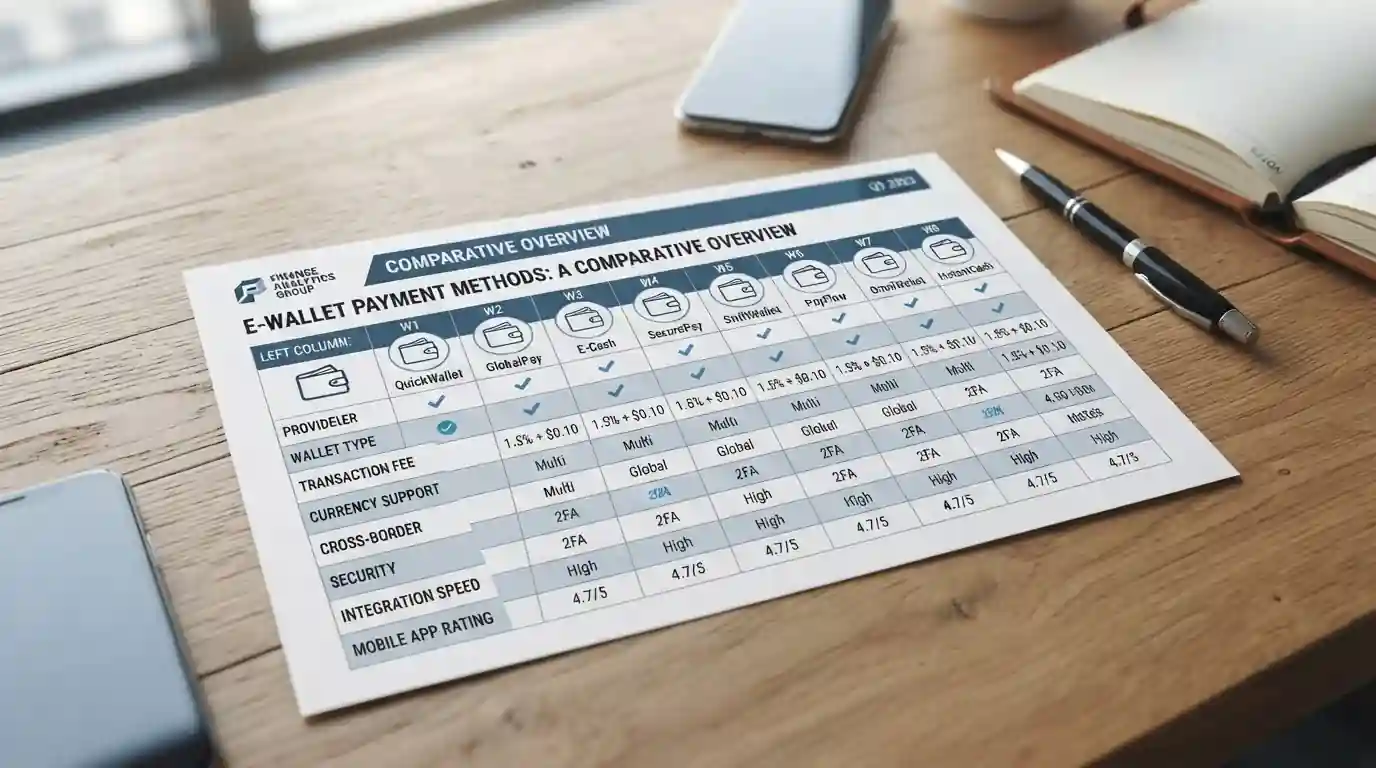
Jeton competes with established e-wallet brands, and the competitive positioning is honest: Jeton is not the market leader, but it occupies a specific niche.
Skrill and Neteller (both owned by Paysafe Group) are the incumbents. They launched in the early 2000s, hold near-universal acceptance at online casinos (UKGC and offshore), and process millions of gambling transactions annually. Withdrawal speeds match Jeton (0–24h), fees run similar (Skrill and Neteller charge currency conversion spreads, 1–3% withdrawal fees to bank accounts). Skrill and Neteller offer VIP tiers with reduced fees, something Jeton lacks. The downside: no voucher product. If you want deposit privacy without linking a bank card, Skrill and Neteller don’t provide it. Jeton’s JetonCash voucher fills that gap.
MuchBetter is the mobile-first challenger, launched in 2017 like Jeton. It targets younger players who prefer app-based transactions. Acceptance is growing but still trails Skrill and Neteller. Fees run low (0% on deposits, small percentage on bank withdrawals), and the gamification angle (loyalty rewards, cashback) appeals to frequent depositors. MuchBetter lacks a voucher product, so privacy seekers look elsewhere. Jeton and MuchBetter are peers rather than leader-challenger — both carving niches in a Skrill/Neteller-dominated market.
Payz (formerly ecoPayz, also Paysafe Group) sits between Skrill and MuchBetter in market penetration. It’s widely accepted, especially at offshore casinos, and offers tiered accounts (Silver, Gold, Platinum, VIP) with improving fee structures. Payz supports crypto top-ups (Bitcoin to wallet, then wallet to casino), which Jeton doesn’t. Payz lacks a voucher product. If crypto integration matters, Payz edges ahead; if voucher privacy matters, Jeton wins.
PayPal is the trust heavyweight. Most UK adults have a PayPal account, and the brand carries mainstream legitimacy that Skrill, Neteller, and Jeton don’t. Casino acceptance is selective: many UKGC operators support PayPal, but fewer offshore casinos do (PayPal’s merchant policies restrict unlicensed gambling transactions). Withdrawal speeds are fast (often same-day), fees are zero for casino transactions in most cases. The catch: PayPal links directly to your bank account or card, so privacy is minimal. If you want your bank statement clean, PayPal won’t help. Jeton’s voucher product and e-wallet layer provide more separation.
Trustly bypasses the e-wallet entirely. It’s a direct bank-transfer service: you log into your bank via Trustly’s secure gateway, authorize a payment, money moves from bank to casino instantly. No account to set up, no balance to top up. Trustly is common at UKGC casinos, rare at offshore sites. The privacy angle is weaker than Jeton or Paysafecard because your bank sees the gambling transaction directly. Speed is excellent (instant deposits, withdrawals clear in hours to a day). Fees run low (usually zero from Trustly, though banks may charge for instant transfers).
Paysafecard is voucher-only, like JetonCash. You buy a prepaid voucher (online or retail), enter the 16-digit code at the casino, deposit complete. No account, no bank link, maximum privacy. The downside: deposits only. Withdrawals require a different method (bank transfer, e-wallet). Paysafecard is accepted at most UKGC and offshore casinos. If privacy is the sole goal and you’re fine withdrawing via another route, Paysafecard and JetonCash are functionally equivalent. Jeton’s advantage is the Wallet backend: you can deposit via voucher and withdraw via wallet, all under one provider.
| Payment Method | Deposit Speed | Withdrawal Speed | Fees | Casino Acceptance (UK) | Key Advantage | |—|—|—|—|—| | Jeton | Instant | 0–24h (offshore), 24–48h (UKGC) | 0% deposit, 1.5% wallet-to-bank | Selective (UKGC), wide (offshore) | Voucher privacy + wallet withdrawals | | Skrill | Instant | 0–24h | 0% deposit, 1–3% wallet-to-bank | Near-universal | Market leader, VIP tiers | | Neteller | Instant | 0–24h | 0% deposit, 1–3% wallet-to-bank | Near-universal | Market leader, VIP tiers | | MuchBetter | Instant | 0–24h | 0% deposit, low % wallet-to-bank | Growing (weaker than Skrill) | Mobile-first, gamification | | Payz | Instant | 0–24h | 0% deposit, tiered wallet-to-bank | Wide (especially offshore) | Crypto top-up support | | PayPal | Instant | Same-day to 24h | 0% (most casinos) | Selective (UKGC strong, offshore weak) | Mainstream trust, bank-direct link | | Trustly | Instant | Hours to 1 day | 0% (most casinos) | Common (UKGC), rare (offshore) | No account needed, bank-direct | | Paysafecard | Instant | Deposits only | 0% deposit | Wide (UKGC + offshore) | Maximum privacy, voucher-only |
When to Choose Jeton Over Competitors
Pick Jeton if you want voucher-deposit privacy without sacrificing e-wallet withdrawals. Paysafecard gives you voucher deposits but forces you to withdraw via bank transfer or another e-wallet. Jeton lets you deposit via JetonCash (no bank link) and withdraw via Jeton Wallet (still no bank trace if you leave funds in the wallet for future deposits). The FCA authorization adds regulatory credibility that unregulated payment apps lack.
Jeton also makes sense if you’re splitting play between UKGC and offshore casinos. One wallet works across both regulatory categories, and offshore operators adopted Jeton widely. If the UKGC casinos you prefer don’t support Jeton (many don’t), but the offshore sites you use do, maintaining a Jeton Wallet simplifies cashier management versus juggling Skrill for UKGC and crypto for offshore.
When Jeton Is Not the Best Option
If casino acceptance matters more than anything, Skrill or Neteller wins. Near-universal support across UKGC and offshore casinos means you’ll never face a "this site doesn’t take Jeton" roadblock. PayPal dominates UKGC cashiers and carries mainstream trust that e-gaming-specific brands don’t.
If you’re chasing VIP perks (reduced fees, dedicated account managers, loyalty cashback), Skrill and Neteller’s tiered programs deliver more than Jeton’s flat fee structure. High-volume players save money on Skrill VIP versus Jeton’s standard 1.5% wallet-to-bank fee.
If crypto integration matters, Payz (which supports Bitcoin top-ups) or moving directly to crypto wallets (Bitcoin, Ethereum, USDT at offshore casinos) offers better privacy and often faster withdrawals than any fiat e-wallet. Jeton doesn’t integrate crypto.
If you want zero middleman, Trustly’s bank-direct service is cleaner than maintaining an e-wallet balance. Deposits and withdrawals route through your bank with one login, no app to download, no wallet balance to manage. The trade-off is your bank statement shows the gambling transaction, but if privacy isn’t a concern, Trustly is simpler.
Is Jeton better than Skrill, Neteller, or PayPal for UK casino banking?
"Better" depends on your priorities. Jeton offers voucher-deposit privacy (JetonCash) plus e-wallet withdrawals, something Skrill, Neteller, and PayPal don’t provide. If keeping gambling transactions off your bank statement matters, Jeton wins. Jeton is also FCA-authorized, adding regulatory credibility. The downside: casino acceptance is narrower than Skrill or Neteller (both near-universal) and weaker than PayPal at UKGC sites. Fees are comparable (0% deposits, 1.5% wallet-to-bank at Jeton versus 1–3% at Skrill/Neteller). For high-volume players, Skrill and Neteller VIP tiers reduce fees below Jeton’s flat rate. If you’re splitting play between UKGC and offshore casinos and want voucher privacy, Jeton is the better pick. If you value universal acceptance and VIP perks, Skrill or Neteller are stronger. If mainstream trust and UKGC coverage matter most, PayPal edges ahead.
Is Jeton Safe and Secure for UK Casino Players?
Jeton holds Financial Conduct Authority authorization (FRN 902088) and operates as a licensed Electronic Money Institution under the Central Bank of Cyprus (License No. 115.1.3.66). The FCA regulates payment firms in the UK, and authorization requires passing capital adequacy, anti-money-laundering, and operational resilience checks. Client funds sit in segregated accounts under the e-money regulations, meaning your balance is protected separately from Jeton’s operating capital. If Jeton collapsed, client balances would be ring-fenced for return to users rather than pooled with creditors.
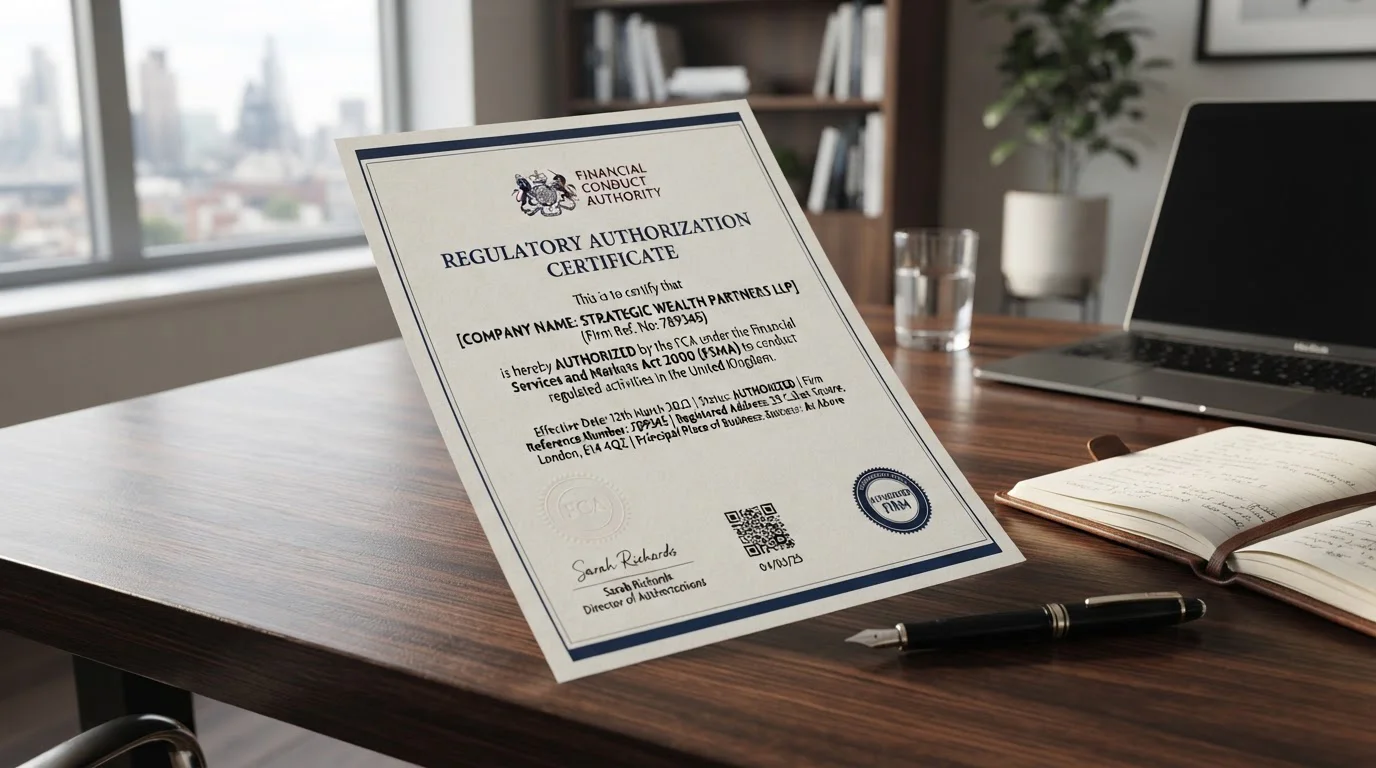
The May 2026 PS25/12 policy statement from the FCA tightened safeguarding rules for payment and e-money firms, mandating stricter client asset protection and independent audits. Jeton falls under these rules, adding an extra layer of oversight compared to unregulated payment apps. You can verify Jeton’s authorization via the FCA Firm Checker at fca.org.uk — search for "LA Orange Limited" or FRN 902088, and the register confirms its status.
Security measures include two-factor authentication (2FA) on login, SMS or email verification for withdrawals, and transaction alerts. The Jeton app supports biometric login (fingerprint, Face ID). Data encryption follows industry standards (TLS for web, AES for app storage). Anti-money-laundering checks run automatically: large transactions trigger review, and KYC documents are mandatory before withdrawals.
FCA Authorization and EMI License
FCA authorization means Jeton operates under UK financial services law, not as an unregulated fintech. The Central Bank of Cyprus EMI license covers the EU side (Jeton operates across Europe, not just the UK). The dual-license structure is common for e-money providers: one EU license (passporting across the EEA), one UK license (post-Brexit, UK authorization is separate). Both regulators can audit Jeton’s financials, review AML compliance, and impose fines or revoke licenses for breaches.
The FCA’s safeguarding rules require Jeton to hold client funds in segregated bank accounts, perform daily reconciliation, and maintain capital reserves proportional to transaction volume. Independent audits verify compliance. If Jeton failed financially, the segregated accounts protect your balance — client funds are not part of the company’s assets available to creditors.
How to Verify Casino Legitimacy
For UKGC-licensed casinos, check the Gambling Commission’s public register at gamblingcommission.gov.uk/public-register/businesses. Search by casino name or domain. The register lists the license number, license holder (legal entity), trading names, and license status (active, suspended, revoked). If the casino isn’t in the register, it’s not UKGC-licensed. Some offshore casinos falsely claim UK licensing — the register is the only reliable verification.
For offshore casinos, check the license seal in the website footer. Curaçao eGaming licenses show a validator link (click the seal, it opens a page confirming the license). MGA licenses display a badge linking to mga.org.mt’s register. Anjouan licenses are harder to verify (the Comoros government doesn’t maintain a public searchable register), so rely on independent reviews (AskGamblers, Casino Guru, Trustpilot) for reputation checks. If the footer shows no license seal or the seal is an image without a clickable link, treat it as a red flag.
Cross-check the casino against blacklist aggregators. Casino Guru, AskGamblers, and The Pogg maintain lists of rogue operators (those withholding withdrawals, voiding wins on technicalities, ignoring complaints). If the casino appears on multiple blacklists with unresolved complaints, avoid it regardless of license status.
Red Flags to Avoid
- No license information in the footer. Legitimate casinos display license seals with validator links. No seal or a static image without a link suggests unlicensed operation.
- Unrealistic bonus terms. “£5,000 bonus with 5x wagering” is too good to be true. Standard offshore bonuses run 35x to 40x wagering; UKGC bonuses cap at 10x. Offers claiming lower than market rates are bait for rogue operators who’ll void your withdrawal on technicalities.
- Delayed or missing KYC. Legitimate casinos request documents before or on your first withdrawal. If the casino approves multiple withdrawals without ever asking for ID, then suddenly demands extensive documents when you win big, that’s a stalling tactic.
- Unresponsive support. Test live chat or email before depositing. Ask a simple question (minimum deposit, Jeton acceptance). If support takes days to reply or gives evasive answers, the casino likely operates with minimal staff and will dodge complaints.
- Payment method mismatch. If the cashier shows Jeton during deposit but not during withdrawal, and support claims “technical issues” when you ask why, the casino may be steering you toward slower methods (bank transfer, where they can delay processing). Legitimate operators support the same methods for deposits and withdrawals per AML rules.
- Review patterns. Check Trustpilot, AskGamblers, Casino Guru. If reviews cluster around withdrawal issues (“they won’t pay,” “account closed after I won,” “bonus voided on technicality”), treat it as a strong signal. One or two complaints are normal; dozens with the same pattern indicate a problem operator.
Jeton itself is safe — FCA-authorized, segregated funds, transparent fees. The risk lies in choosing the wrong casino. Stick to established UKGC operators (Fun Casino, SlotsMagic, Casumo) or well-reviewed offshore brands (MyStake, Sportaza, Rolletto) rather than chasing flashy bonuses at unknown Curaçao sites.
Jeton works best for UK players who value deposit privacy (via JetonCash vouchers) or who split play between UKGC and offshore casinos. The FCA authorization and segregated funds provide regulatory safety lacking in unregulated payment apps. Casino acceptance is narrower than Skrill or Neteller but growing, especially offshore. Withdrawal speeds (0–24h for offshore, 24–48h for UKGC) beat bank transfers but match other e-wallets. Fees run transparent: zero on casino deposits, 1.5% on wallet-to-bank transfers.
The regulatory split between UKGC and offshore casinos shapes your experience more than the payment method. UKGC sites deliver consumer protections, GamStop enforcement, and dispute resolution at the cost of lower bonuses and stake caps. Offshore sites offer higher bonuses, faster payouts, and no GamStop, but you trade regulatory oversight for trust in the operator’s track record. Jeton functions smoothly in both categories — the choice of casino matters more than the choice of e-wallet.
Published by the Payments-casino-uk team.