Casinos That Accept Solana UK 2026 — Which Sites Actually Work
 Available in GB
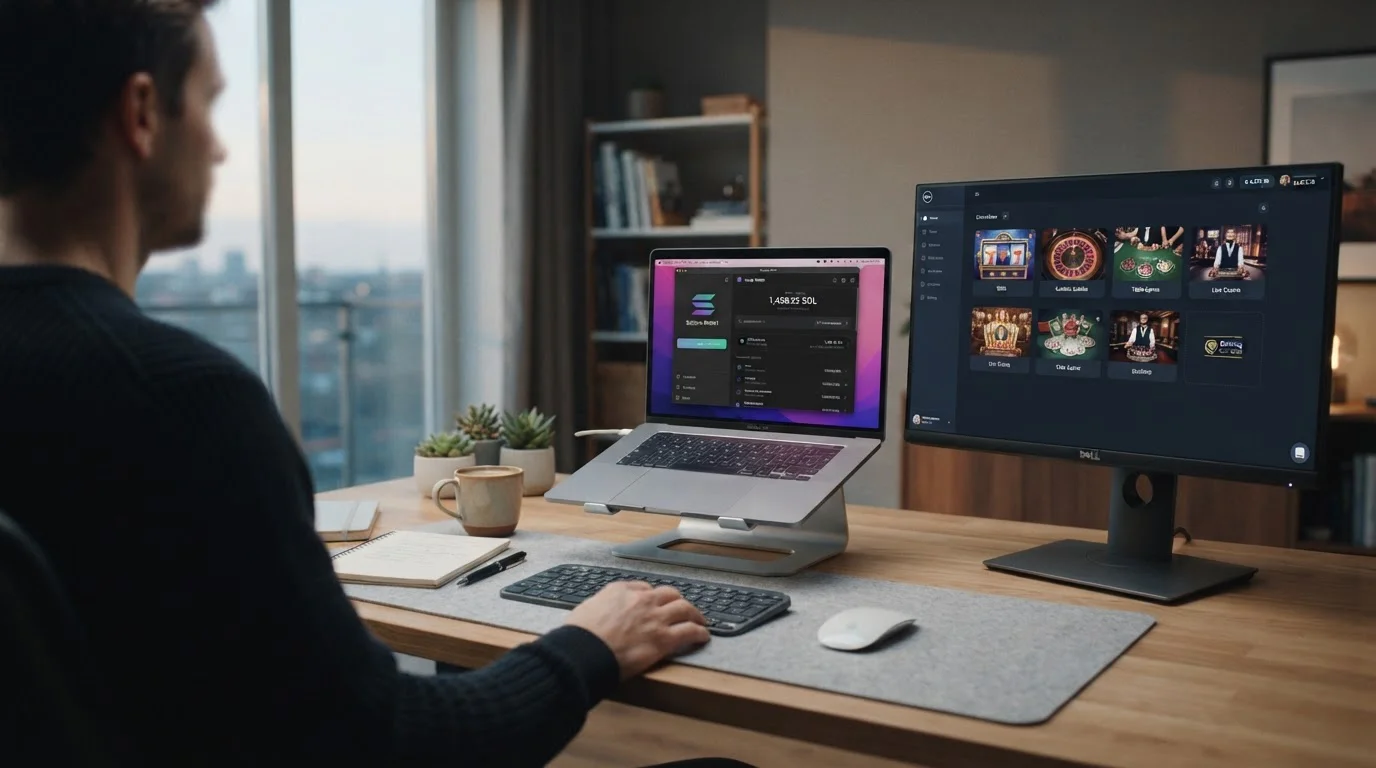
You searched for casinos that accept Solana in the UK. The direct answer: several offshore crypto casinos take SOL deposits and withdrawals, but not one UK Gambling Commission licensee does. If a site accepts Solana, it sits outside UKGC jurisdiction — and outside GamStop. That is the trade.
The five offshore operators genuinely accepting Solana and UK registrations in 2026 are BetPanda, Lucky Block, Wild.io, FortuneJack, and BC.Game. Each operates under a Curaçao, Anjouan, or Costa Rica licence, not the UKGC. Meanwhile the names topping global "best Solana casino" rankings — Cloudbet, Stake, 1xBit — explicitly bar UK players in their terms. So the map a UK-based player needs is different from the one the typical crypto-casino affiliate publishes.
This guide walks through which sites work, why no licensed UK casino can touch crypto, how to move SOL in and out without losing it, what GamStop coverage you forfeit, and the concrete risks you take on. No fluff, no "exciting opportunities," just the applied mechanics and the honest catches.
Is Solana still accepted by online casinos?
Yes. Solana remains widely accepted at offshore crypto casinos in 2026, with deposits confirming in under two seconds and fees below a cent. The coin itself has not "closed" or disappeared. The anxiety behind this search often stems from confusion with a specific site or a brief network outage years back; SOL as a casino payment method is live and functional.
Table of Contents
- Why no UK-licensed casino accepts Solana
- The casinos that actually take Solana and take UK players
- The big Solana names UK players can’t use
- Depositing and cashing out in SOL without losing your coins
- GamStop, self-exclusion and what "not on GamStop" really costs
- The games you’ll actually find (slots, live, table, crash)
- Bonuses, minimum deposits and the wagering fine print
- The risks you’re signing up for (and the Solana alternatives)
Why no UK-licensed casino accepts Solana
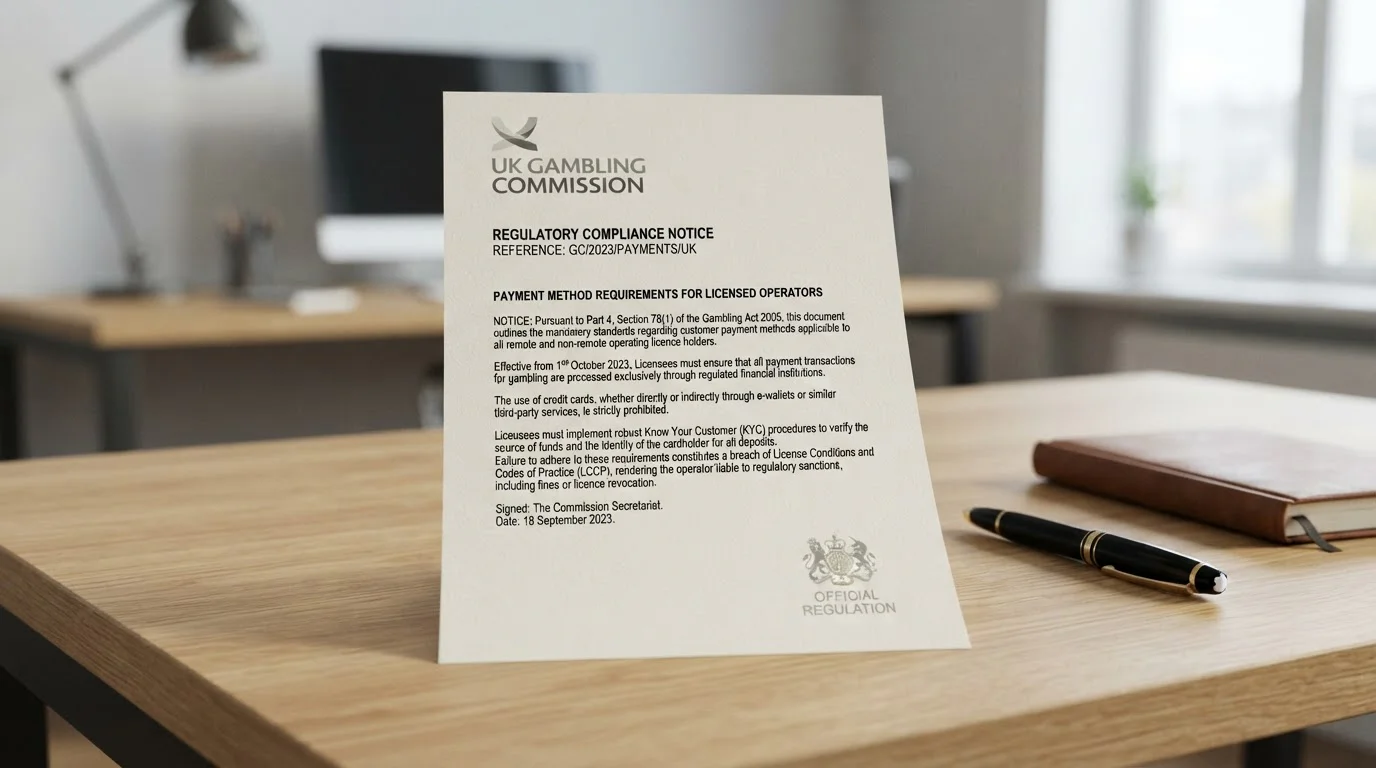
The UKGC’s Licence Conditions and Codes of Practice require that deposits move through a payment method giving the operator a clear, traceable link to a real-world bank account. Cryptocurrency transactions fail that standard. A SOL wallet address does not resolve to a name, a passport, or a branch sort code, which is exactly the point of crypto and exactly why the regulator forbids it.
As of 2026, zero UK Gambling Commission licensees accept crypto deposits. That is not an oversight. If a casino holds a UKGC licence, it cannot process your Solana deposit without breaching its licence conditions. The rule applies to every coin — Bitcoin, Ethereum, Solana, Tether, all of them.
On 26 February 2026, UKGC executive director Tim Miller told the Betting and Gaming Council’s AGM in London that the Commission has begun exploring how crypto assets might serve as a payment method for licensed operators, describing the work as "exploratory" with no set timeline. That announcement followed the Financial Services and Markets Act 2000 (Cryptoassets) Regulations 2025, laid before Parliament and likely coming into force around October 2027, which would bring crypto activities under the Financial Conduct Authority’s remit. Miller framed crypto as one of the two most common search terms leading UK consumers to unlicensed sites and voiced concern about offshore crypto platforms marketing to people who have self-excluded via GamStop.
None of that means a licensed Solana casino will arrive next month or next year. It means the regulator has acknowledged the channelisation problem and assigned a working group. A "sensible pathway" under existing licensing objectives — crime prevention, fairness, protecting the vulnerable — is not the same thing as permission granted, and Miller imposed no "arbitrary deadlines." Until that path is built, tested, and approved, the position remains what it has been since 2005: if you want to deposit Solana, you leave UKGC jurisdiction.
Will a UK Gambling Commission casino ever accept Solana?
Possibly, but not soon. The UKGC’s February 2026 announcement signals exploratory intent, not a policy change. Even if the Commission maps a pathway, that pathway must satisfy the Gambling Act 2005’s objectives around crime, fairness, and vulnerable-person protection — goals crypto’s anonymity and irreversibility actively complicate. The FCA framework coming in late 2027 might create the compliance scaffolding needed, but the UKGC has given no implementation date. Realistically, a licensed UK Solana casino is years away, not months.
The casinos that actually take Solana and take UK players
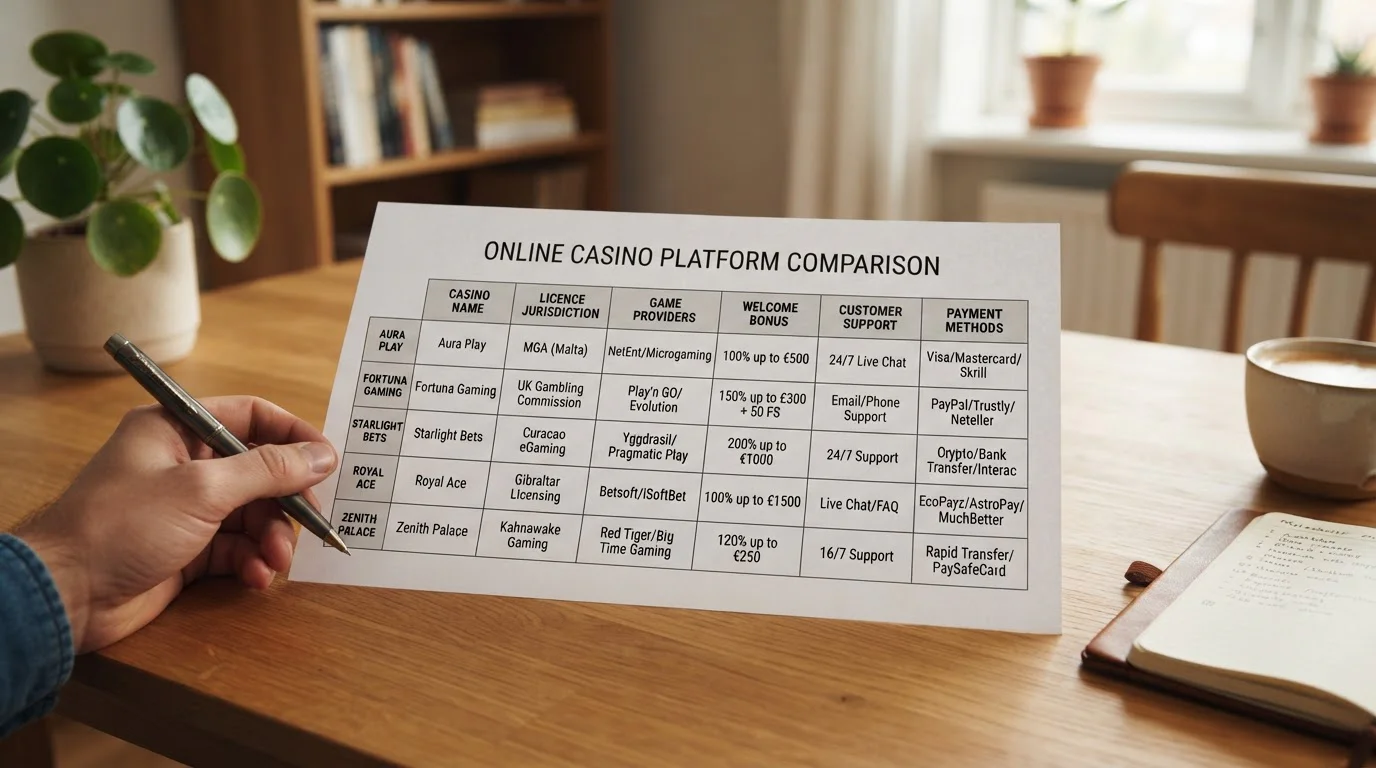
Five offshore operators accept Solana deposits and withdrawals, process UK sign-ups, and have maintained operations long enough to appear in cross-source reviews: BetPanda, Lucky Block, Wild.io, FortuneJack, and BC.Game. Each runs on a licence from Curaçao, Anjouan (Union of Comoros), or a Costa Rica corporate registration — none hold UKGC authority. That means faster cashouts and no GamStop integration, but it also means no UK dispute route and no obligation to honour a UKGC adjudication if something goes wrong.
The table below compares the five on the axes that matter: licence type, Solana withdrawal speed, minimum deposit, and what distinguishes each from the pack.
| Operator | Licence | SOL Withdrawal Speed | Minimum Deposit | Distinguishing Feature | |—|—|—|—| | BetPanda | Costa Rica registration | Minutes (advertised) | ~$5 | No-KYC at sign-up, live-casino cashback, thin licence trail | | Lucky Block | Offshore (Curaçao/Anjouan tier) | ~5 minutes (automated) | $20 | Automated crypto payouts, 200% headline bonus, launched 2022 | | Wild.io | Anjouan ALSI-202504044-FI2 | Under 10 min (median 5.1 min claimed) | Not stated | 350% welcome package, 8,000+ games, visible licence number | | FortuneJack | Anjouan ALSI-202411021-FI1 | ~3 minutes (advertised) | Not stated | 2014 veteran, dedicated SOL page, Trustpilot rating removed | | BC.Game | Anjouan (migrated from Curaçao) | Varies | $5 (bonus-stage entry) | 10,000+ games, hundreds of coins, withdrawal caps tighten when winning |
Each name in that table has a full breakdown below. The order reflects topical relevance to a UK player chasing fast, low-friction Solana access, not an overall "best" ranking. All five accept SOL, all five accept UK sign-ups, and all five come with catches worth reading before you send a deposit.
BetPanda
BetPanda markets itself as a privacy-first crypto casino with minimal account friction. It runs on a Costa Rica company registration — which is corporate paperwork, not a gaming licence in the regulatory sense a Malta or Curaçao eGaming licence would be. That thin licence trail is the first thing to note. The site operates openly, reviews tie it to a legal entity (Star Bright Media S.R.L. surfaces in sportsbook contexts), and the cashier works, but if a dispute escalates, you are dealing with a Costa Rican registration and whatever arbitration clause the terms cite, not a gaming regulator with public adjudication powers.
The offering itself leans into the low-friction angle. Minimum deposit sits around five dollars depending on the coin, SOL among 14 supported (Bitcoin, Ethereum, Tether, Tron, Litecoin, XRP, Solana, BNB, Dogecoin, Shiba Inu, Polygon, USDC, and others). Game library exceeds 6,000 titles. More unusually, BetPanda runs cashback across the board, including live casino play — a rarity, since most sites exclude live dealer from bonus structures. No KYC at sign-up: email, password, pick a coin, and you are in. That does not mean KYC will never trigger. The site reserves the right to demand verification at withdrawal, a standard risk-based control every no-KYC operator actually runs when a cashout crosses some internal threshold or pattern flag.
Payouts process in minutes according to the pitch. Real-world speed depends on whether verification gets triggered, but the absence of a long manual-review queue for routine cashouts is the practical sell. For a UK player who values quick entry and does not want a phone bill or a bank statement uploaded before seeing the first spin, BetPanda fits. Just know the recourse route if something breaks is murkier than it would be at a site holding a Curaçao master licence with a published disputes process.
Lucky Block
Lucky Block launched in 2022, so it sits on the newer end of the offshore-crypto spectrum without being untested. The site pairs a casino with a sportsbook and eSports coverage, all on one crypto wallet. Game library tallies around 4,000 certified titles from studios like Pragmatic Play and Hacksaw. The pitch revolves around automated crypto withdrawals — advertised as instant, practically landing in roughly five minutes for Solana once the operator’s internal checks clear.
The welcome offer gets billed as 200% up to twenty-five thousand euros plus fifty free spins, which reads enormous until you parse the structure. It is a wager-to-release mechanism spread across stages, not a lump sum landing in your balance, and the upper tiers need substantial deposits to unlock. Independent reviews flag that the headline figure is "not what it appears" — high-tier conditionals, real wagering apply, and KYC can wall the cashout even though sign-up was frictionless. That is not unique to Lucky Block; it is the standard offshore-bonus playbook. The point is to read "200% up to €25,000" as a marketing ceiling, not an expectation, unless you plan to deposit in that range and are comfortable with the turnover math.
What Lucky Block does well is payout automation. Crypto withdrawals skip the manual queue entirely if you stay below the threshold that trips a compliance review. For a UK player whose priority is cashing out SOL fast after a winning session, Lucky Block delivers on that axis. The trade-off is the same as every name on this list: no UKGC oversight, no GamStop, and if a dispute lands in deadlock, you are working through whatever jurisdiction the operator’s licence cites.
Wild.io
Wild.io operates under Stack Gaming Ltd., registered in Anjouan, Union of Comoros, and holds Anjouan licence number ALSI-202504044-FI2. That visible licence number is worth calling out because it is rarer than it should be — plenty of offshore crypto casinos cite a jurisdiction without publishing a verifiable registration or licence string. Wild.io puts it on the site, the regulator’s register can verify it, and that small transparency step matters when you are choosing between sites that otherwise blend into one promotional landing page.
Game catalogue claims vary between eight and nine thousand titles depending on which page you read. Take the midpoint as a marketing figure and the reality as "substantive catalogue from recognisable studios." The welcome package spans three deposits: 350% total up to five thousand dollars plus 200 free spins, split as 120/110/120 percent with 75/50/75 spins. Wagering requirement is not published anywhere visible, an honest gap that leaves you reading the full bonus terms before accepting the offer — which you should be doing anyway, but the absence from the front-end summary is noteworthy.
Crypto withdrawals typically process in under ten minutes. Wild.io published a July 2026 figure claiming a median of 5.1 minutes across 5,552 payouts, with 82% landing under the ten-minute mark. Treat that as an operator stat rather than an independent audit, but it aligns with user reports that routine SOL cashouts clear fast. The site accepts Solana among twelve supported coins, runs automatic age and anti-fraud checks, and offers two-factor authentication as an optional account lock.
Wild.io is a slots-and-bonus-heavy pick. If your priority is a large welcome package and a deep slots library with fast Solana payouts, it ticks those boxes. The Anjouan licence and visible registration number give it a procedural legitimacy edge over the thinner-trail operators, though Anjouan itself is not a top-tier gaming jurisdiction in the way Malta or Gibraltar would be. Disputes still route to Anjouan courts, not the UKGC, and the operator can apply terms at discretion within what the licence permits.
FortuneJack
FortuneJack has operated since 2014, making it one of the longest-running crypto casinos still trading. It is older than most of the coins it accepts. The operator is PlayWave SRL, a Costa Rica-registered company, with an Anjouan B2C licence (ALSI-202411021-FI1) issued 4 November 2024 and running to 3 November 2026. That licence is register-verified against both the legal entity and the fortunejack.com domain. The only territory explicitly barred in the terms is the Netherlands; no UK exclusion appears, so UK registrations go through.
Game library sits around 3,000 titles from fifty-plus studios — Pragmatic Play, Evolution, NetEnt, Nolimit City — plus FortuneJack’s own provably-fair Orbital Originals. Solana is one of eleven coins accepted (Bitcoin, Ethereum, Litecoin, Tether, USDC, BNB, Solana, Tron, Polygon, Dash, Dogecoin), and the site maintains a dedicated currency page at fortunejack.com/currency/sol laying out the SOL-specific flow. Crypto withdrawals advertise a three-minute average, though clause 9.5 in the terms permits the operator to pay in instalments on its own timetable, and fiat withdrawals cap at two thousand euros per transaction. Deposits must be wagered up to twice before withdrawal, a higher playthrough than the 0x or 1x many competitors run.
The welcome bonus totals "500%" but splits across four deposits: 100%, then 150%, then 100%, then 150% plus fifteen bonus rounds. Each step needs 10x wagering in slots or Aviator, and bets cap at ten dollars while a bonus is live. It is a multi-stage ladder, not a lump match, and it locks you into the wagering cycle across weeks if you take every tier. If you prefer a clean deposit with no strings, FortuneJack lets you skip the bonus and play with 1x or 2x turnover, which is the trade plenty of players make.
Where FortuneJack stumbles is reputation maintenance. Trustpilot removed its overall rating after finding fake reviews — a guidelines breach — and the remaining 182 reviews skew 61% one-star. The operator has not replied to a Trustpilot thread since 5 March 2026. Complaints follow familiar offshore-casino patterns: verification completed but payment withheld, bonus offers not honoured, and a roughly $120,000 dispute over cancelled sports bets that went to court (the operator says it settled and paid in February 2026, though the player has not publicly confirmed). Clause 2.2 permits confiscation of all funds if the account used "disposable" contact details — a term loose enough to apply at the operator’s discretion. No independent adjudicator is named; disputes route to Anjouan courts.
FortuneJack is the veteran on this list, genuinely crypto-native since before most altcoins existed, with a dedicated Solana page and a working product. But the reputational flags and the terms that tilt power to the house mean you go in knowing the recourse route is thin if something breaks. If longevity and a broad coin selection matter more than spotless public feedback, it is on the table. If a Trustpilot rating removal and unresolved complaints are dealbreakers, cross it off.
BC.Game
BC.Game runs one of the largest crypto-casino catalogues in operation: over ten thousand games, hundreds of supported coins including Solana, and a loyalty program deep enough to justify the "game" in the name. The platform has migrated from Curaçao licensing to Anjouan, a move that followed at least one publicised Curaçao court event per independent reviews. That history is part of the profile — the product is class-leading in breadth, but the trust signals from independent sources run weaker than the marketing volume suggests.
Solana deposits and withdrawals work with no operator fee beyond what the network charges, which for SOL means a fraction of a cent. The welcome structure is a monthly deposit-bonus ladder paying 180% to 360% with rakeback at each of four stages, resetting on the first of the month. Stage one starts at a five-dollar minimum, so entry is cheap. Minimum crypto withdrawal floats around twenty-one Tether or the equivalent in another coin depending on network, with the floor adjusting by chain congestion.
The catch is the withdrawal cap structure. Monthly ceiling sits at ten thousand euros. That drops to five thousand euros once your account balance exceeds ten times your cumulative deposits — meaning the cap tightens exactly when you are winning. If you turned a two-hundred-euro deposit into a three-thousand-euro balance, your monthly cap just halved. That inverted scaling is unusual and worth noting before you deposit a serious stake. KYC can be required at the operator’s discretion, typically at withdrawal, and Trustpilot removed BC.Game’s rating after finding fake reviews.
BC.Game fits the player chasing variety and a massive game library with Solana support and willing to navigate a loyalty structure that rewards volume. The flip side is the withdrawal-cap mechanic and the mixed reputation signals. The site works, the cashouts process, but the trust infrastructure is thinner than a comparable operator holding an active Malta or Curaçao master licence with a published adjudication route would carry. If the game catalogue and coin variety outweigh those concerns, it is the most expansive pick on this list. If transparent withdrawal terms and stable trust signals matter more, the inverted cap is the dealbreaker.
Which casino has the fastest Solana withdrawals?
Lucky Block and Wild.io both advertise sub-ten-minute automated Solana payouts, with Lucky Block leaning on full automation (~5 minutes) and Wild.io publishing a July 2026 median of 5.1 minutes. FortuneJack cites a three-minute average. Real speed depends on whether the withdrawal trips a manual compliance review — no-KYC sites can still flag a payout for verification. For routine cashouts under the radar, all three deliver SOL to your wallet faster than a bank transfer clears.
The big Solana names UK players can’t use
If you search "best Solana casino" on any affiliate site, Cloudbet typically ranks first or second, Stake appears in every top five, and 1xBit surfaces in most top tens. All three accept Solana deposits and withdrawals. All three explicitly bar UK residents in their terms, and attempting to play from the UK risks account closure and balance confiscation at cashout. That gap between what the global rankings say and what a UK-based player can actually use is the biggest information asymmetry in this space.
Cloudbet has operated since 2013, holds Curaçao licence OGL/2024/328/0599 (granted 23 May 2025, active), and is the transparency benchmark in offshore crypto casinos. It publishes a full per-coin fee table, charges no operator fee beyond network cost for Solana, and names an independent adjudicator — CADRE (Curaçao Alternative Dispute Resolution Entity, certified under CGA/ADR/2025/01) — whose decision binds the casino. That makes Cloudbet the only operator we have encountered whose terms specify a neutral third party with enforcement power. KYC becomes mandatory once cumulative deposits hit $2,200. The rewards structure is up to 2,500 USDT paid as cash rakeback with no rollover on the rakeback itself, a cleaner bonus model than sticky deposit matches. Cloudbet transitioned to crypto-only after 31 August 2026, dropping fiat entirely. The problem: the UK sits on Cloudbet’s prohibited-territories list. Playing from Britain breaches clause 2 and exposes your balance to confiscation under the geo-restriction enforcement terms.
Stake accepts Solana alongside Bitcoin, Ethereum, Litecoin, Tether, USDC, Dogecoin, XRP, and Tron. Withdrawals process within minutes, and the site runs a 1x deposit-wagering requirement — among the lowest in crypto gambling. Stake bars roughly forty territories, including the United States and the United Kingdom. Clause 8.9 gives Stake discretion to charge a withdrawal fee, though the rate is unpublished. No UK player can open a verified account or cash out legally under Stake’s terms, despite Stake appearing in dozens of "best Solana casino UK" listicles written by affiliates who either did not read the terms or did not care.
1xBit operates under Oceaventure Limited (British Virgin Islands) with an Anjouan licence (ALSI-202409027-FI2, renewed to 15 September 2027) that covers 1xbit.com, 1xbitx.com, and 1xcrypto.com but critically does not cover 1xbit1.com — the domain players actually land on. That licensing mismatch is a red flag before you even reach the reputation data. 1xBit supports thirty-five cryptocurrencies including Solana, charges no operator deposit or withdrawal fees, and allows MetaMask sign-in for wallet-first onboarding. The welcome offer totals up to 700,000 Tether plus 250 free spins across four deposits with a 10 USDT minimum, but wagering is 40x the deposit amount — among the heaviest in the industry — and live casino, roulette, baccarat, poker, and crash games count zero toward clearing it. KYC is discretionary at withdrawal despite "no-KYC" marketing at sign-up. Clause 2 bars UK residents alongside the USA, Australia, Austria, France, Germany, Netherlands, Spain, Russia, Belarus, North Korea, and Comoros. Trustpilot rates 1xBit at 2.5 out of 5 ("Poor") across 2,186 reviews. A complaint database held twenty-eight cases with roughly a seven percent resolution rate, including ten unresolved non-payment cases worth around $60,000 plus a separate reported $44,000 confiscation. The product works, but the payout record and the UK geo-block make it a non-starter for this audience.
The point is not that these are bad casinos. Cloudbet is arguably the best-run offshore crypto casino by transparency and dispute-resolution standards. The point is that none of them will let a UK player cash out once the compliance check runs and the IP or payment trail flags Britain. Global affiliate rankings treat "UK" as a search term, not a legal filter, so Cloudbet and Stake dominate the lists despite being unusable from the jurisdiction those lists claim to serve. The five operators in the previous section — BetPanda, Lucky Block, Wild.io, FortuneJack, BC.Game — are not better casinos than Cloudbet. They are the ones that will actually process a UK withdrawal.
Depositing and cashing out in SOL without losing your coins
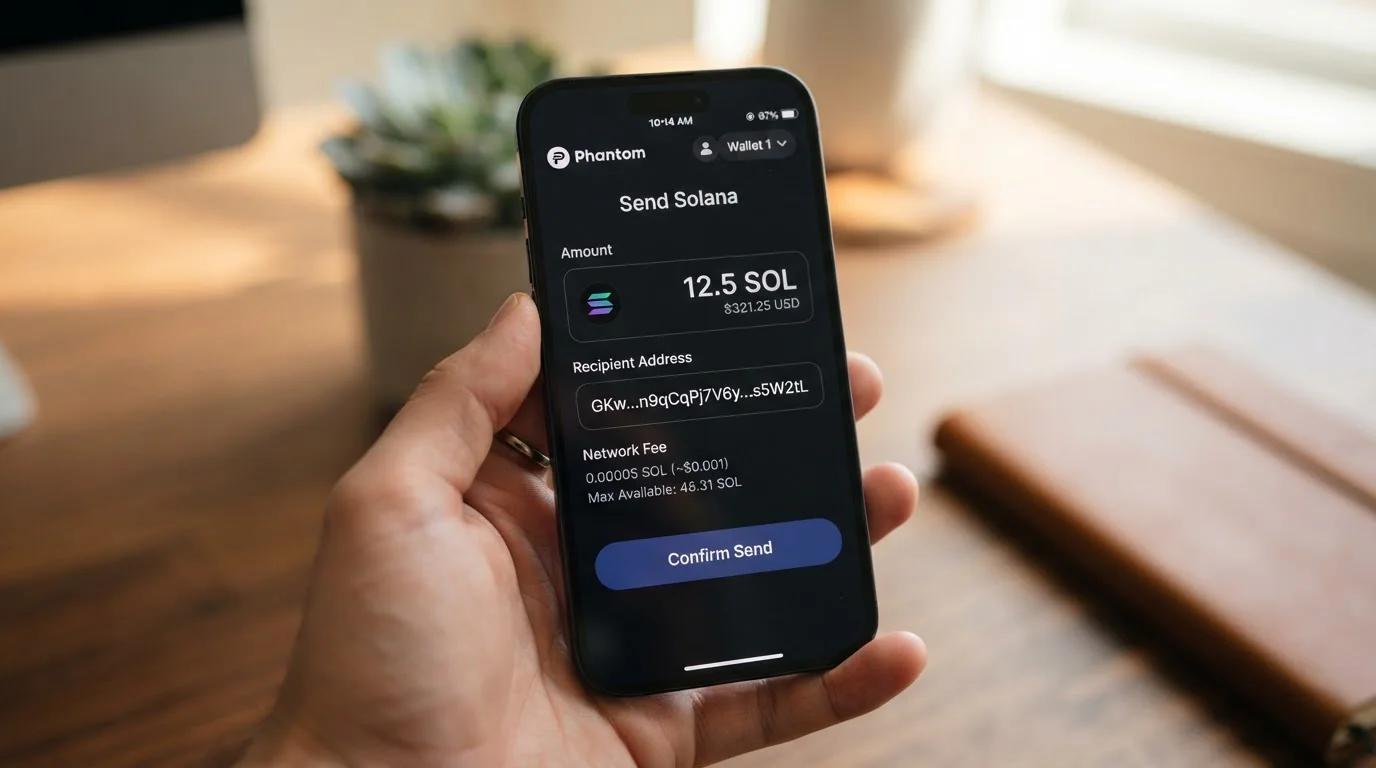
A Solana deposit at an offshore casino confirms in under two seconds and costs a fraction of a cent. That speed and cost floor is the entire practical case for using Solana over Bitcoin or Ethereum. The network handles roughly 65,000 transactions per second through a dual-consensus model — Proof of History timestamps transactions before validators reach Proof of Stake consensus on ordering, which cuts the wait validators would otherwise need to agree on sequence. For a casino deposit, the result is that funds credited to your balance within seconds of your wallet confirming the send.
The delay, when it happens, is the operator’s, not the chain’s. If a withdrawal sits pending for twenty minutes, the Solana network is not the bottleneck — the casino’s manual compliance queue or internal approval process is. That reframing matters because it separates technical performance from operational choice. A slow Bitcoin payout might genuinely be the blockchain catching up during fee-market congestion. A slow Solana payout is the operator deciding not to automate.
The flow itself is straightforward. You buy SOL on an exchange (Coinbase, Binance, Kraken, whichever operates in your region), withdraw it to a self-custody Solana wallet, then send from the wallet to the casino’s deposit address. The casino generates a unique address per deposit or gives you a standing address tied to your account; you paste it into your wallet’s send field, confirm the amount, and broadcast the transaction. Seconds later the balance appears in your casino cashier. Withdrawal reverses the process: request a payout in the casino cashier, paste your wallet’s receive address, and the casino sends SOL back to you.
The wallet matters. Phantom is the most widely used Solana wallet, browser-extension and mobile-app, and integrates smoothly with casino cashiers. Solflare and Backpack are credible alternatives. For larger holdings or cold storage, a Ledger hardware wallet supports Solana. Never leave a serious balance sitting in the casino’s custodial wallet. The offshore casinos on this list are not regulated to the standard a UK bank or FCA-approved exchange would be; if the site folds or locks your account mid-dispute, funds held on-site are at the operator’s mercy. Withdraw to your own wallet after every winning session.
The address and network traps
Solana addresses do not start with 0x. Ethereum addresses do. If you copy a Solana address and paste it into an Ethereum wallet’s send field — or vice versa — the transaction will either fail at broadcast or, worse, send to an address that exists on the wrong chain, in which case the funds are unrecoverable. The two networks are not interoperable, and a mistake here means permanent loss. Always double-check the address format and the network selected before confirming a send.
The same trap applies to stablecoins. USDC and Tether exist on Solana, Ethereum, Tron, and several other chains. If the casino lists "USDC" in the cashier without clarifying the network, you need to verify which chain they expect before you send. USDC on Ethereum sent to a Solana USDC address will not arrive. The coins share a name and a peg, but the networks do not talk to each other. Most offshore casinos clarify the chain in the deposit-address label or give you a network dropdown; read it before you paste.
The universal mitigation is a test send. Solana transactions cost under a cent, so sending one dollar’s worth of SOL to confirm the address works costs you functionally nothing. If the test deposit lands, the full amount will. If it does not, you are out a dollar instead of five hundred. Every casino has a minimum deposit, which blocks test sends if the floor sits at ten or twenty dollars, but most Solana-accepting sites keep minimums low enough that a small proof-of-route send is practical.
Volatility and the USDC hedge
Solana’s price moves. A balance worth two hundred pounds when you deposit might be worth one-eighty when you withdraw, or two-twenty, depending on what the SOL/GBP pair did that week. If you are comfortable holding crypto and treating the casino balance as a speculative position, that volatility is just part of the trade. If you want the speed and privacy of a Solana casino without the price risk, the solution is to hold USDC on Solana instead of SOL itself.
USDC is a dollar-pegged stablecoin. One USDC is worth one US dollar, always, barring a catastrophic depeg event that has not happened to the Circle-issued version. Crucially, USDC exists on the Solana network, so a USDC deposit at a Solana-supporting casino confirms in under two seconds with the same negligible fee SOL carries, but the balance does not swing with altcoin volatility. You get Solana’s speed without Solana’s price risk. Not every offshore casino lists USDC (Solana) separately from USDC (Ethereum) or USDC (Tron), so confirm the network before sending, but the option exists at most of the names on this list.
The Solana card / Solana Pay / Solana instant banking misconception
A chunk of the searches around "Solana casinos UK" includes phrases like "Solana debit card," "Solana card casino," "Solana instant banking," and "Solana Pay casino." None of those are real products in the sense those searches imply. There is no mainstream Solana-branded debit card that powers casino deposits the way a Visa or Mastercard does. "Solana Pay" is a merchant payment protocol, not a consumer banking rail in the Trustly or Apple Pay mould. "Solana instant banking" is not a thing.
Crypto casino deposits work by wallet-to-address transfers. You hold SOL in a self-custody wallet, the casino gives you a deposit address, you send SOL from your wallet to that address, and the transaction confirms on-chain. No card, no instant-banking redirect, no intermediary processor branded "Solana Pay" sitting between you and the casino. The confusion likely stems from players used to traditional online casinos where you click "deposit," pick "Skrill" or "bank transfer," and a third-party interface handles the payment. Crypto cuts that layer out. The wallet is the payment interface.
If a site claims to accept a "Solana debit card," either it is describing a niche card product with negligible uptake or it is baiting the search without offering a real integration. The standard flow remains: buy SOL on an exchange, withdraw it to Phantom or another wallet, send it to the casino’s deposit address. That is how every offshore Solana casino on this list works.
Is there a Solana debit card for casino deposits?
No mainstream one. A few crypto card providers have experimented with altcoin-funded debit cards, but none have achieved the ubiquity or regulatory approval Visa or Mastercard carry, and casino support for such cards is near-zero. The practical deposit method is a direct wallet-to-casino SOL transfer, not a card swipe. If a site advertises Solana card deposits, verify what that actually means before assuming it works like a traditional debit card.
What happens if I send SOL to the wrong network or address?
Funds sent to an incompatible address or the wrong blockchain are generally unrecoverable. Solana and Ethereum are separate networks; a Solana address will not work on Ethereum, and vice versa. If you paste a Solana address into an Ethereum wallet and the transaction goes through, the SOL arrives nowhere you can access. Always confirm the network and address format match before broadcasting a transaction, and send a small test amount first to verify the route.
GamStop, self-exclusion and what "not on GamStop" really costs
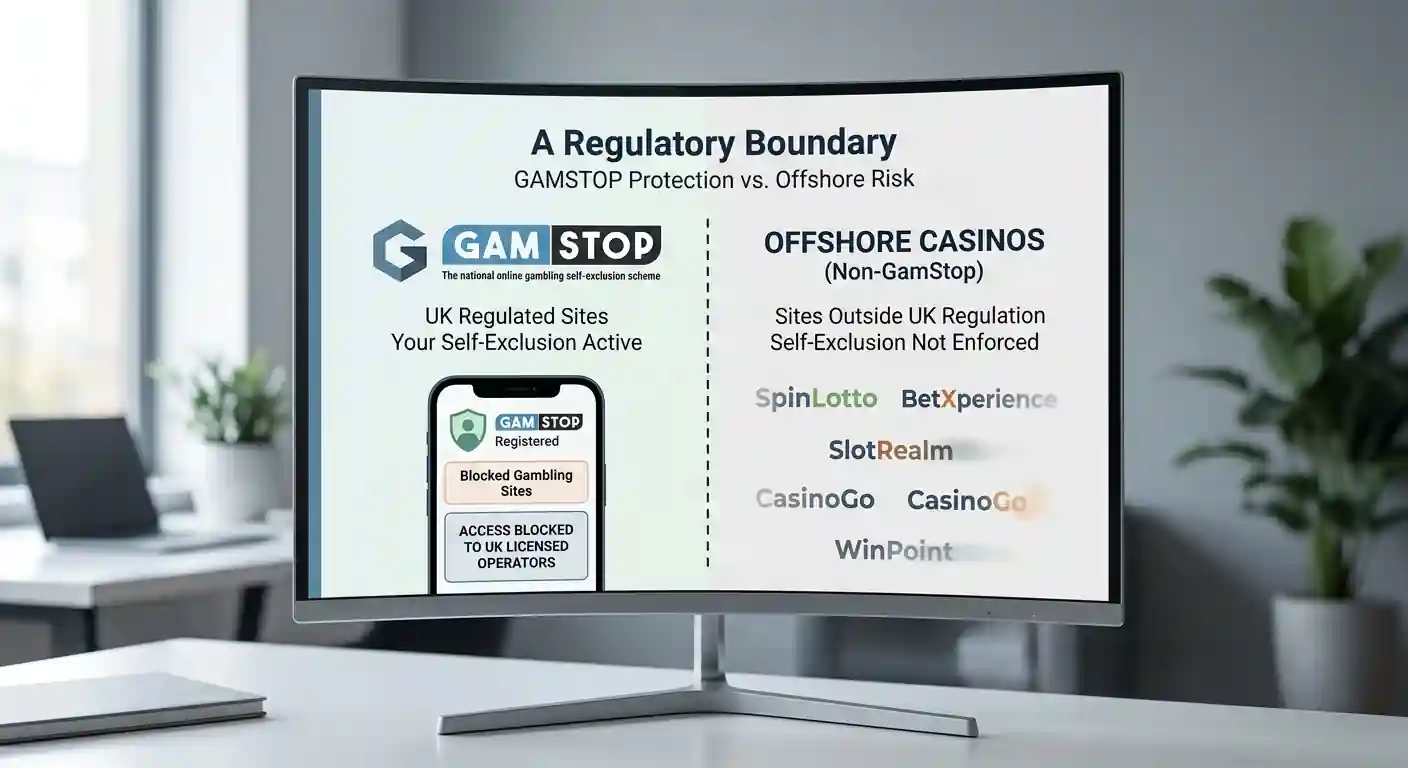
GamStop is the UK’s national self-exclusion scheme. A person who registers with GamStop cannot open a gambling account or place a bet at any UK Gambling Commission-licensed operator for the exclusion period they choose — six months, one year, or five years. The scheme is binding on every UKGC licensee, mandatory by law. If you are on GamStop and you try to register at a licensed UK casino, the sign-up fails.
Offshore Solana casinos are not on GamStop. They cannot be. GamStop covers UKGC-licensed operators only. The casinos listed in this guide — BetPanda, Lucky Block, Wild.io, FortuneJack, BC.Game — sit outside UK jurisdiction, so they do not participate in GamStop’s registry checks and are not legally required to. That structural gap is exactly what the UKGC flagged in February 2026 when executive director Tim Miller said offshore crypto sites marketing to GamStop-excluded players was a live concern driving the exploration of a licensed-crypto pathway.
For a UK player who is not self-excluded and simply wants faster payouts and no KYC friction, "not on GamStop" is functionally neutral. The offshore site offers something the licensed one does not — speed, privacy, Solana support — and GamStop is not relevant to that trade. For a player who chose self-exclusion because gambling was causing harm, "not on GamStop" is the removal of a safety net that person specifically asked for. An offshore Solana casino will accept the registration, process the deposit, and take the stakes without checking whether the person is meant to be locked out.
The question is not whether offshore casinos are morally wrong for existing outside GamStop. The question is whether you need that protection and are about to bypass it. If you self-excluded for a reason — debt, relationships under strain, time you could not afford to lose — the fact that a Solana casino in Curaçao will happily take your money does not make using it a good decision. It makes it an unprotected one. That is the cost of "not on GamStop," and it is not a feature.
Are Solana casinos on GamStop?
No. Offshore crypto casinos operate outside UKGC jurisdiction and do not integrate with GamStop’s self-exclusion registry. If you have self-excluded via GamStop, an offshore Solana casino will not block your registration. Whether that makes the site "better" or removes a safeguard you specifically need depends entirely on why you are asking the question.
The games you’ll actually find (slots, live, table, crash)
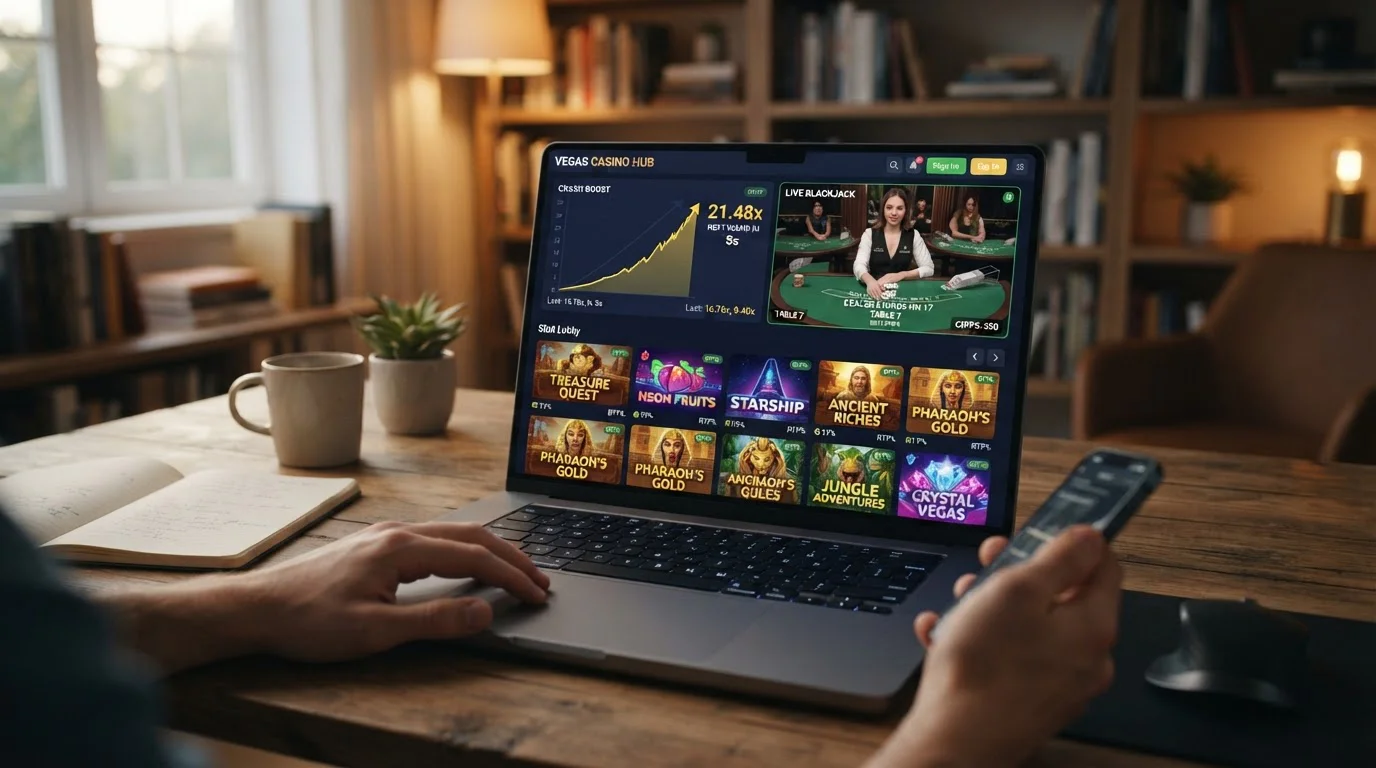
Solana casinos run the same provider catalogues the broader online-casino ecosystem licenses: Pragmatic Play, NetEnt, Evolution, Hacksaw Gaming, Nolimit City, Play’n GO, Red Tiger, and dozens more. The coin you deposit with does not change the games available — the offshore licensing tier does. A Curaçao or Anjouan operator typically carries a deeper, less-restricted catalogue than a UKGC or MGA licensee would, because those stricter jurisdictions impose game-by-game and feature-by-feature compliance reviews before approval.
Slots dominate. Expect thousands of titles across the usual sub-genres: Megaways, cluster pays, hold-and-win, cascading reels, high-volatility max-win chasers, and low-variance grind slots. The big-name series are all there — Gates of Olympus, Sugar Rush, Book of Dead equivalents, Wanted Dead or Alive, various Buffalo clones — plus newer releases and each provider’s back catalogue. RTP is typically higher on offshore sites than on UKGC-licensed ones because the UK capped stake-per-spin and game speed, which pushed some operators to reduce RTP to maintain margin. Offshore sites are not subject to those caps, so many still run games at the studio’s default RTP rather than the negotiated-down variant.
Live dealer coverage depends on the operator. Evolution is the dominant provider; if a casino lists live blackjack, roulette, and baccarat, it is almost certainly Evolution tables. Pragmatic Play Live, Ezugi, and Playtech also appear. Game-show-style live rounds (Crazy Time, Monopoly Live, Lightning Roulette) are widely available. The distinguishing factor between a strong live section and a thin one is often whether the operator runs dedicated tables or shares the generic public pool. A site advertising "exclusive tables" means you are not sitting with players from fifteen other casinos; a site with just the standard Evolution lobby gives you the public feed.
Table games — RNG blackjack, roulette, baccarat, poker variants — are present but secondary. Players chasing table games typically prefer live dealer for the theater and the reduced house-manipulation perception, but RNG versions exist for faster play and lower minimums. Video poker surfaces occasionally but is not a staple at crypto casinos the way slots and live dealer are.
Crash games are the crypto-native genre: Aviator, JetX, Spaceman, and a dozen clones where a multiplier climbs from 1x until the round "crashes" at an unpredictable moment, and you cash out manually before the crash or lose the bet. Solana’s sub-two-second confirmation speed suits crash-game pacing better than Bitcoin’s ten-minute blocks or Ethereum’s variable gas spikes during congestion. The mechanic is simple, the house edge is transparent, and the volatility is high. Crash games are where "provably fair" gets cited most often, because the outcome is generated from a cryptographic seed the player can verify rather than hidden server RNG. That does not mean the house edge disappears — it means you can confirm the round was not rigged after the fact.
Provably fair originals appear at some operators (BC.Game’s in-house games, FortuneJack’s Orbital Originals, others). These are casino-developed dice, plinko, mines, keno, and crash variants where the outcome generation is on-chain or cryptographically verifiable. The transparency is real; the house edge is still present. Provably fair tells you the game was not manipulated; it does not tell you the game is beatable.
| Game Type | Availability at Solana Sites | What to Check |
|---|---|---|
| Slots | Universal; thousands of titles | RTP (look for 96%+), studio (tier-1 names or unknowns) |
| Live Dealer | Common; Evolution-led | Exclusive tables vs public lobby; available stakes |
| Table Games (RNG) | Present but secondary | House edge transparency, blackjack rule variants |
| Crash Games | Crypto-native staple | Provably fair or server RNG; house edge stated or hidden |
| Provably Fair Originals | Operator-dependent | Seed verification process published; edge explicit |
The game quality is not the differentiator between offshore Solana casinos and UKGC-licensed ones. The studios are the same, the titles are the same, and the RTP is often higher offshore. The differentiator is recourse. A studio-certified RNG running under a Malta licence has a regulatory audit trail and a disputes process. The same RNG running under an Anjouan licence at an offshore crypto casino has the studio’s internal certification and whatever terms the operator published. If a session feels off, your escalation route is the operator’s support, then the licensing jurisdiction’s complaints process — which for Anjouan or Costa Rica is thin — not the UKGC or an ADR scheme with enforcement teeth.
Bonuses, minimum deposits and the wagering fine print
Offshore crypto casinos advertise bonuses in the "200% up to €25,000" range, figures that read absurd next to the 100% up to £100 a UKGC site might offer. The gap is not generosity; it is structure and jurisdiction. UKGC rules cap bonus abuse potential and require transparent breakdowns of turnover, time limits, and max-bet restrictions. Offshore sites face no such requirements, so they can front-load a massive headline figure and bury the conditionals five paragraphs deep in the terms.
The "200% up to €25,000" at Lucky Block is not a lump sum. It is a wager-to-release package tied to turnover, likely spread across tiers, with each euro of bonus unlocking as you clear a multiple of the stake through eligible games. The €25,000 ceiling assumes you deposit enough to hit that cap and play through the required turnover without hitting a max-bet breach or a restricted-game penalty. Most players never see the upper tiers because the deposit and turnover needed to unlock them exceed what a recreational session involves. Treat the headline as a theoretical maximum, not an expectation, and read the actual wagering requirement before you click "claim."
Wild.io advertises 350% up to $5,000 plus 200 free spins. That total spans three deposits with different match rates and spin allocations per tier. Wagering is unpublished on the landing page — a transparency gap that pushes the onus onto the player to dig into the full terms. If you take the bonus, you are locked into clearing it under whatever turnover multiple the site applies, with max-bet caps (commonly $5 or $10 per spin while a bonus is live) and game-weighting rules that count slots at 100%, table games at 10% or zero, and live dealer at zero. Breach the max bet once and the bonus voids, along with any winnings it generated.
FortuneJack splits its "500%" across four deposits with 10x wagering at each step. That is heavier than the 1x or 0x turnover a no-strings deposit would carry, but lighter than the 40x or 60x wagering some competitors impose. The catch is the $10 max-bet cap while the bonus is active and the zero contribution from live casino, roulette, baccarat, poker, and crash games. If you play any of those, the wagering does not tick down, so you are spinning slots until you clear the requirement or forfeit the bonus.
The smart play at an offshore casino is often to skip the bonus and play with a clean deposit at 1x or 0x turnover. You lose the headline match, but you gain freedom — no max-bet cap, no restricted-game penalties, no multi-week grind to unlock a cashout. A $200 deposit with no bonus is $200 in your balance, withdrawable after one lap through the casino (if the operator runs 1x anti-laundering turnover) or immediately (if it is 0x). A $200 deposit with a 200% match is $600 in restricted funds that might take thirty hours of slot play to convert into withdrawable cash, assuming you never breach a condition.
Minimum deposits range from $5 (BetPanda, BC.Game’s bonus-stage entry) to $20 (Lucky Block, Wild.io). FortuneJack and some others leave the floor unstated, which typically means it sits in the $10–$20 range. Solana’s low transaction cost makes a $5 deposit practical where a Bitcoin deposit would eat half the amount in network fees during congestion. The minimum withdrawal is usually slightly higher to cover the casino’s internal processing overhead, but rarely exceeds $20–$50.
Do Solana casinos require ID verification (KYC)?
Most advertise "no-KYC at sign-up," meaning you can register with an email, pick a password, and start playing without uploading documents. That does not mean KYC will never trigger. Every offshore operator reserves the right to demand verification at withdrawal under risk-based triggers — large cashout, suspicious bet patterns, duplicate accounts, hitting an internal threshold. The practical outcome is that small recreational cashouts ($50–$500) often process without verification, while four-figure payouts or anything that trips a compliance flag will prompt a document request (photo ID, proof of address, sometimes a selfie or a face-verification check). "No-KYC" is more accurately "KYC-at-discretion," and the discretion is the operator’s.
The risks you’re signing up for (and the Solana alternatives)
An offshore Solana casino gives you speed, privacy, and access to a coin UKGC licensees cannot touch. The trade-offs are structural and non-negotiable, and pretending they do not exist does not make them disappear.
SOL price volatility. Solana is not a stablecoin. The GBP-equivalent value of your balance moves with the crypto market. A £200 deposit can be worth £180 by the time you withdraw if SOL drops ten percent that week, or £220 if it climbs. If you are comfortable holding crypto and treating the balance as a speculative position, that is fine. If you want the mechanics of a Solana casino without the price risk, hold USDC on the Solana network instead. USDC pegs to the US dollar, so a $200 balance stays $200 regardless of SOL’s price. The deposit and withdrawal confirm just as fast because USDC lives on Solana’s chain, but the volatility is gone. Not every casino lists USDC (Solana) cleanly; confirm the network before sending.
Irreversibility. A Solana transaction that lands in the wrong wallet or the wrong network is unrecoverable. Send SOL to an Ethereum address by mistake and the funds are gone. Paste a Solana address missing one character and the transaction fails at broadcast or sends to an address you do not control. There is no chargeback, no customer-service override, no "undo" button. The mitigation is simple — send a test transaction first — but the consequence of skipping that step is permanent loss.
KYC can still trigger, despite "no-KYC" marketing. Every offshore casino on this list reserves the right to demand verification at withdrawal. Small cashouts often slide through without a document request; larger ones or anything that trips an internal flag will prompt KYC. If you are expecting true anonymity, you are misreading the offer. What "no-KYC" really means is "no verification at sign-up, verification at our discretion later." If you refuse to verify or cannot provide the documents requested, the withdrawal stays locked. The operator holds the power, and the terms you agreed to at registration give them that discretion.
No UK dispute route. If a payment dispute escalates at a UKGC-licensed casino, you can escalate to the operator’s ADR provider (IBAS, CEDR, eCOGRA), and if that fails, the UKGC itself can intervene. The operator is legally bound to participate in that process. At an offshore Solana casino, the dispute route is the operator’s own support, then whatever arbitration process the licensing jurisdiction cites — which for Curaçao might be CADRE (if the operator names it, like Cloudbet does), for Anjouan is Anjouan courts, and for a Costa Rica registration is functionally nothing. You are not powerless, but you are working through a process the operator controls and a jurisdiction with limited enforcement reach into UK banking or UK assets. If the operator decides to close your account and withhold your balance under a terms-breach claim, your realistic recourse is public complaint threads and whatever pressure the licensing body applies, which for lower-tier jurisdictions is minimal.
Network-outage risk. Solana has experienced network halts in its history — full-chain stoppages where no transactions processed for hours. The network is more stable in 2026 than it was in 2022, but the possibility has not been architecturally eliminated. A halt mid-session means deposits and withdrawals freeze until validators restart consensus. That is not an operator issue; it is a blockchain-infrastructure issue, and it can trap funds on either side of a transfer until the chain recovers. Bitcoin and Ethereum have higher network-uptime records; Solana trades that stability for speed. The probability of hitting a halt during your session is low, but it is not zero.
The alternative to Solana is using a different coin on the same offshore platform. Most of the casinos listed here support Bitcoin, Ethereum, Litecoin, Tether, and USDC on multiple chains. Bitcoin confirms slower (ten minutes average) and costs more during fee-market spikes. Ethereum sits between Bitcoin and Solana on speed and cost, but gas fees during congestion can hit double digits in pounds. Litecoin is faster than Bitcoin and cheaper than Ethereum but lacks Solana’s two-second floor. Tether and USDC are stablecoins, so they remove price volatility, and both exist on Solana if you want stablecoin stability with Solana speed.
If the Solana-specific risks outweigh the speed benefit for you, the same offshore casino likely accepts USDC (Solana), which gives you the fast confirmation and low fee without the SOL price swing. Or you deposit in Bitcoin and accept the slower payout in exchange for a more mature network with a longer uptime track record. The offshore-casino trade-offs — no UKGC oversight, no GamStop, thin dispute routes — remain regardless of which coin you choose. The coin affects speed, cost, and volatility. The jurisdiction affects recourse.
Every offshore Solana casino reachable from the UK sits outside the regulatory perimeter a UKGC licence would impose. That is the structure, not an accident. The five names that accept UK players and process SOL — BetPanda, Lucky Block, Wild.io, FortuneJack, BC.Game — are functional, auditable by their public track record and cross-source reviews, and faster on payouts than any licensed UK alternative. They are also unprotected by the dispute mechanisms, the transparency requirements, and the consumer safeguards UK law mandates for licensees.
Whether that trade works for you depends on what you value and what you can afford to lose. If you are depositing a stake you would be comfortable seeing disappear and you want the speed and privacy an offshore SOL casino delivers, the tools exist. If you need the protection a UKGC licence provides — transparent complaints processes, binding ADR, GamStop if you asked for it — that protection is not available at any site that accepts Solana in 2026, and will not be until the UKGC’s exploratory work lands in policy years from now.
The map is honest. The rest is your call.
Published by the Payments-casino-uk team.